


Every June, Goa welcomes the monsoon not with silence, but with music, flowers, decorated boats and jubilant leaps into rain-filled wells. At the heart of the celebrations lies Siolim’s iconic São João festival, where faith, folklore and community converge to preserve one of Goa’s most distinctive cultural traditions.
At a Glance
- São João is celebrated every year on 24 June, commemorating the birth of St. John the Baptist.
- Siolim hosts Goa’s most recognised São João celebrations, featuring the famous Sangodd, or traditional decorated boat parade.
- The 2026 festivities included colourful floating tableaux, traditional music, cultural performances and the symbolic Oze ceremony.
- The Department of Tourism promoted the festival as one of Goa’s flagship monsoon tourism experiences.
- The celebration blends centuries-old Catholic traditions with Goan agrarian customs rooted in the arrival of the southwest monsoon.
When the Monsoon Arrives, Goa Celebrates Rather Than Waits
The first heavy rains had already transformed Goa into a canvas of deep green. Rivers swelled, wells brimmed with fresh rainwater and the familiar scent of wet earth drifted through villages that have welcomed the monsoon in the same way for generations. Yet in Siolim, the season does not simply arrive. It is celebrated.
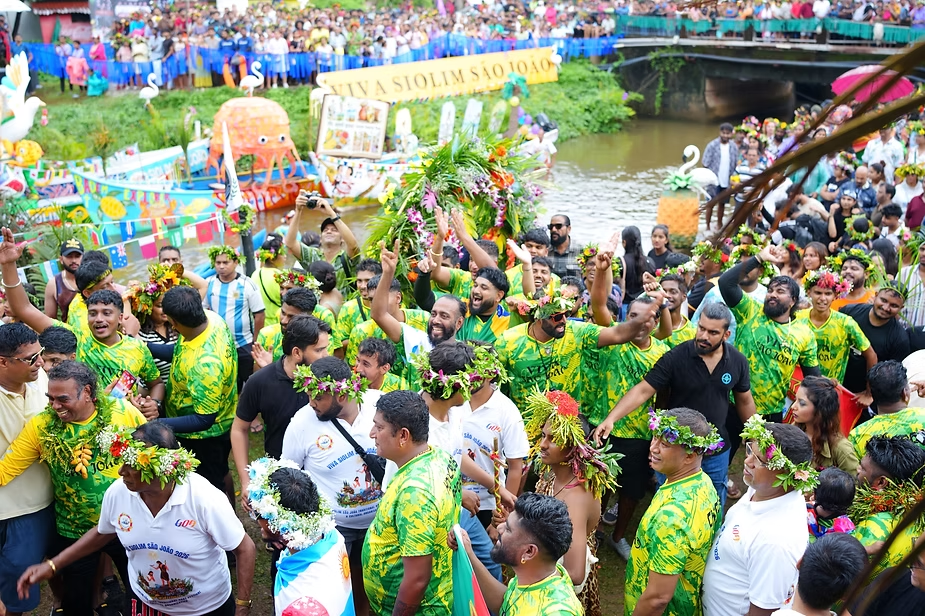
As drums echoed across the Chapora River and elaborately decorated boats floated past cheering crowds, hundreds gathered wearing floral crowns known as kopels. Families waved from riverbanks, children watched wide-eyed as performers danced aboard colourful floating stages and the sounds of traditional Goan music blended effortlessly with the falling rain.
The annual São João celebrations once again transformed Siolim into the cultural capital of Goa’s monsoon season.
Unlike many festivals built around spectacle alone, São João remains deeply personal. It celebrates gratitude for rain, honours St. John the Baptist and strengthens traditions that have connected Goan communities for centuries. Every boat tells a story. Every floral crown carries symbolism. Every leap into a village well represents faith, joy and renewal.
In an age where festivals across the world increasingly become commercial events, São João continues to demonstrate how cultural authenticity itself can become Goa’s greatest attraction.
More Than a Festival, Siolim Once Again Became the Heart of Goa’s Monsoon Celebrations
The 2026 edition of Viva São João centred around Siolim’s celebrated Sangodd boat parade, recognised as the largest organised São João celebration in Goa.
Beginning during the afternoon opposite St. Anthony’s Church, dozens of decorated boats sailed along the river carrying performers, musicians, village associations and thematic cultural displays. Traditional dances, live music and community participation transformed the river into a moving stage that reflected Goa’s unique cultural identity.
Visitors also witnessed the Oze tradition, where newly married sons-in-law are welcomed by their wives’ families and presented with seasonal fruits, sweets and local delicacies before participating in festive celebrations. The ceremony reflects themes of family, fertility and gratitude that have long been associated with São João.
The iconic kopel, handmade from fresh flowers and monsoon creepers, remained one of the festival’s most recognisable symbols. Every participant wearing one contributed to a tradition passed from one generation to another, turning simple natural materials into expressions of Goan identity.
While the festivities attract thousands of tourists today, the festival itself remains community-led, with local residents, village associations and volunteers continuing to organise much of the celebration.
Why Goa’s Cultural Calendar Depends on Festivals Like São João
Tourism in Goa has historically been associated with beaches and winter travel. Yet the state’s tourism strategy has increasingly focused on encouraging year-round visitation through cultural experiences.
São João represents one of the strongest examples of this shift.
Instead of promoting infrastructure alone, Goa is showcasing traditions that cannot be replicated elsewhere. Visitors are no longer passive spectators. They experience authentic village celebrations, local cuisine, folk music, religious customs and community participation within a single event.
This approach supports what tourism planners describe as experiential tourism, where travellers seek meaningful cultural engagement rather than conventional sightseeing.
The festival also benefits local businesses beyond hotels. Florists preparing kopels, musicians, artisans, restaurants, transport operators, photographers and small vendors all experience increased economic activity during the celebrations.
Equally important is the cultural dividend.
As younger generations participate alongside elders, traditions remain relevant rather than becoming museum exhibits. The continued popularity of São João demonstrates that heritage can evolve while preserving its essential character.
Centuries of Faith, Monsoon Gratitude and Village Traditions
Although São João commemorates the birth of St. John the Baptist, the Goan celebration developed its own distinctive identity over centuries.
According to Christian tradition, St. John leapt with joy while still in his mother’s womb upon the arrival of Mary. Goan communities gradually connected this symbolism with the abundance brought by the monsoon. Jumping into wells became both a joyful re-enactment of the biblical story and an expression of thanksgiving for life-giving rain.
The timing proved equally significant.
June marks the arrival of the southwest monsoon after months of intense summer heat. For agrarian communities, full wells represented survival. Water meant successful farming, healthy livestock and food security for the coming year.
The kopel itself reflects this relationship with nature. Woven using seasonal flowers and creepers that emerge during the rains, it celebrates both ecological abundance and spiritual renewal.
Over time, villages across Bardez and other parts of Goa adopted their own local customs. Siolim gradually emerged as the festival’s best-known destination because of its river-based Sangodd procession, which today has become synonymous with São João itself.
Why Residents Value São João Beyond the Celebrations
For many Goans, São João is not merely an annual festival but an emotional marker of belonging.
Families return from cities to participate alongside relatives. Young people learn songs, rituals and customs from grandparents. Village communities work collectively for weeks to prepare boats, decorations and performances.
The festival reinforces social cohesion in ways difficult to measure statistically.
Children witness traditions firsthand rather than through textbooks. Cultural associations remain active throughout the year. Local artists receive opportunities to showcase folk music and performances before large audiences.
Residents also benefit from increased visitor spending without sacrificing the village-centred nature of the celebrations. Unlike highly commercial festivals, São João continues to rely heavily on community ownership.
That balance between tourism and tradition explains why Siolim has become an example frequently cited in discussions about sustainable cultural tourism.
Government Sees Cultural Festivals as Economic Assets
The Goa Department of Tourism has increasingly positioned São João as one of the state’s flagship monsoon experiences.
Official promotional campaigns for Viva São João 2026 highlighted Siolim’s boat parade, traditional Oze celebrations, cultural performances and community festivities while encouraging visitors to experience Goa beyond its beaches.
This aligns with broader tourism objectives aimed at reducing seasonal dependence on winter travel by promoting festivals, heritage circuits, hinterland experiences and village tourism.
Officials have consistently emphasised that preserving authentic traditions while improving visitor experiences can strengthen both cultural conservation and local economic development.
Rather than creating new attractions, the strategy focuses on celebrating what already exists within Goa’s villages.
Balancing Celebration with Preservation Remains an Ongoing Challenge
While São João enjoys widespread public support, conversations around its future increasingly focus on preserving authenticity as visitor numbers continue to grow.
Cultural observers and heritage enthusiasts have consistently argued that the festival’s greatest strength lies in its community ownership. The Sangodd boat parade, kopel-making traditions, village music and local participation distinguish São João from commercial entertainment events. They caution that these traditions should remain central even as tourism promotion expands.
Environmental concerns have also become part of the discussion. With celebrations centred around rivers, wells and village ecosystems, organisers have in recent years encouraged responsible waste management, reduced use of single-use plastics and greater community-led cleanliness drives after festivities conclude. Many village committees now place greater emphasis on ensuring celebrations leave minimal ecological impact.
Overall, however, São João continues to enjoy broad consensus across Goa as a celebration that successfully combines faith, culture and tourism without losing its local identity.
Culture Experts See São João as One of Goa’s Strongest Heritage Assets
Historians and tourism experts often describe São João as one of the finest examples of Goa’s living cultural heritage because it continues to evolve without becoming disconnected from its origins.
Unlike heritage sites that preserve the past through monuments, festivals preserve history through participation. Every family preparing a kopel, every volunteer decorating a Sangodd boat and every child jumping into a rain-filled well becomes part of a tradition that has survived for centuries.
Experts in cultural tourism also point out that travellers increasingly seek authentic experiences rather than standard sightseeing itineraries. Festivals such as São João therefore contribute to destination branding in ways that conventional tourism infrastructure alone cannot achieve.
Goa’s monsoon season, once considered an off-season for tourism, is gradually being reimagined as a season of culture, cuisine, biodiversity and village experiences. São João has become one of the strongest symbols of that transformation.
The festival also reflects an important lesson in heritage management. Traditions remain relevant not because they are preserved in isolation but because communities continue to celebrate them naturally in their everyday lives.
By the Numbers: Understanding the Scale Behind the Celebration
Several indicators illustrate why São João occupies a unique place in Goa’s cultural calendar.
The festival is celebrated annually on 24 June, marking the feast of St. John the Baptist.
Siolim’s Sangodd is recognised as Goa’s most prominent São João celebration, attracting thousands of residents and visitors every year.
Dozens of decorated traditional boats participate in the floating parade, each representing village associations, cultural organisations or community groups.
The kopel, handcrafted from fresh flowers and seasonal foliage, remains an iconic symbol worn by participants throughout the celebrations.
The festival coincides with the arrival of the southwest monsoon, a season that replenishes Goa’s rivers, wells and agricultural fields after the dry summer months.
Tourism officials increasingly promote São João as part of Goa’s strategy to encourage year-round visitation through heritage, festivals and rural experiences instead of relying exclusively on peak beach tourism.
These figures tell only part of the story. The greater achievement lies in the continuity of traditions that have remained relevant across generations despite rapid social and economic change.
Can Growth and Authenticity Continue Together?
As São João attracts larger audiences each year, several important questions remain for policymakers, tourism planners and village communities.
Can visitor numbers continue to increase without altering the intimate, community-driven character that defines the festival?
How can infrastructure such as parking, sanitation, traffic management and public transport improve while preserving the village atmosphere?
What additional measures can encourage environmentally sustainable celebrations, particularly around rivers and public spaces?
Can younger generations continue to take ownership of organising cultural traditions in an increasingly urbanised society?
How should digital promotion balance global visibility with local authenticity?
These are not challenges unique to Goa. Cultural destinations across the world face similar questions as traditional festivals become internationally recognised. The choices made today will influence how future generations experience São João decades from now.
The Future of Goa’s Monsoon Festival Looks Increasingly Promising
Looking ahead, São João is expected to remain one of the defining events of Goa’s annual cultural calendar.
The Department of Tourism has steadily expanded its emphasis on monsoon tourism, promoting experiences that include heritage walks, spice plantations, waterfalls, village festivals, local cuisine and cultural events alongside the state’s coastal attractions.
Within this broader strategy, São João occupies a distinctive position because it combines religious heritage, environmental symbolism, community participation and tourism appeal in a single celebration.
Continued collaboration between government agencies, village panchayats, cultural organisations and local residents will likely determine how successfully the festival grows while protecting its authenticity.
If managed thoughtfully, São João can continue demonstrating that cultural preservation and economic opportunity are not competing priorities but complementary ones.
A Wider Story of Cultural Revival Across Goa
São João is part of a larger movement to celebrate Goa’s rich cultural landscape throughout the year.
Festivals such as Chikhal Kalo in Marcel, Bonderam on Divar Island, Shigmo, Carnival, Sao Joao celebrations across Bardez villages, and numerous temple and church feasts collectively showcase the state’s extraordinary diversity.
Alongside these celebrations, Goa has increasingly invested in heritage restoration, museum development, hinterland tourism, spiritual circuits and local artisan promotion.
Together, these initiatives signal a broader shift in how Goa presents itself to visitors. Rather than being known solely for beaches, the state is increasingly positioning itself as a destination where culture, history, ecology and community experiences remain central to its identity.
São João stands as one of the clearest examples of this evolution.
As decorated boats drifted across the Chapora River and voices echoed with cries of “Viva São João,” the celebration offered more than a festive spectacle. It reaffirmed that Goa’s greatest strength lies not only in its landscapes, but in the traditions its people continue to cherish, renew and proudly share with the world.
Sources & References
- Goa Department of Tourism – Viva São João 2026 official campaign and event announcements.
- Goa Tourism Development Corporation (GTDC) – Official festival information.
- Goa Tourism – São João Festival overview and cultural significance.
- Directorate of Tourism, Government of Goa.
- Government of Goa cultural calendar and tourism promotion material.
- UNESCO resources on Intangible Cultural Heritage principles.
- Historical references on St. John the Baptist and Goan Catholic traditions.
- Local reporting from The Navhind Times, Herald Goa, The Goan and Times of India (Goa editions) covering São João celebrations and Sangodd processions.