


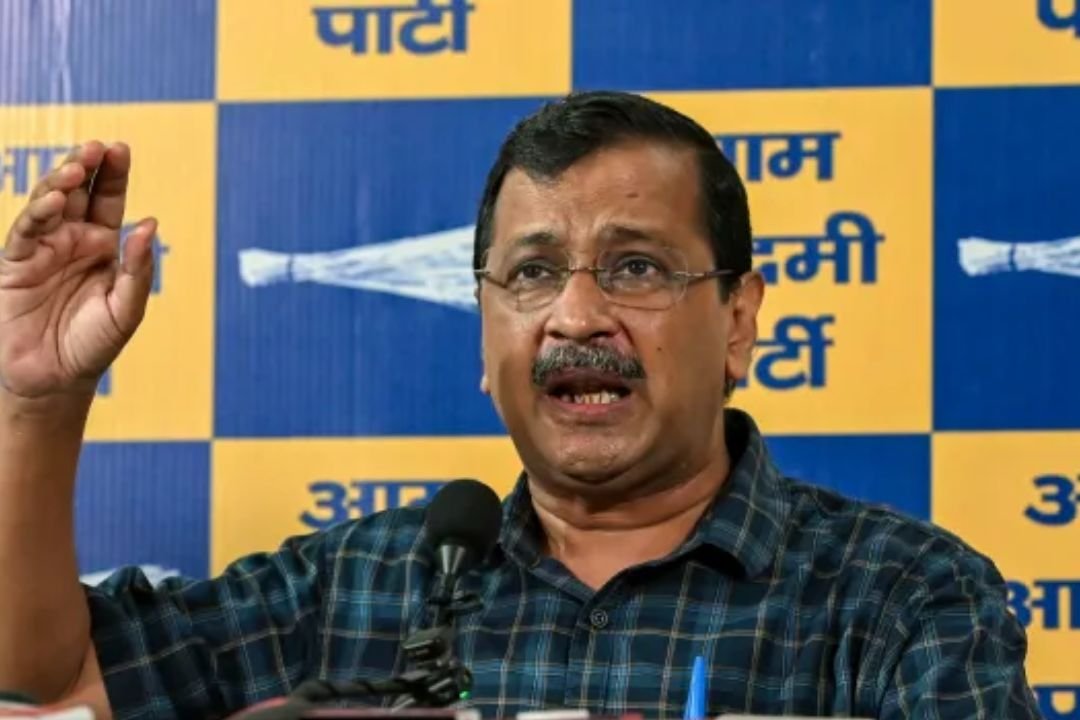
Arvind Kejriwal has announced six guarantees for Goa ahead of the 2027 Assembly elections. AAP’s record in Delhi and Punjab raises questions about unfulfilled promises, delayed welfare delivery and rising public debt. From women’s financial assistance to free electricity and bus travel, Goa’s voters must examine what AAP delivered, what it delayed and how it plans to fund its new guarantees.
Arvind Kejriwal wants Goa’s voters to trust AAP’s six guarantees ahead of the 2027 Assembly elections. He promises 300 units of free electricity every month, a waiver of domestic power arrears, ₹3,000 monthly assistance for women aged 18 and above, free bus travel for women, health insurance cover of up to ₹10 lakh per family, repeal of Section 39A of the Town and Country Planning Act, and a sports ground in every village.
These promises offer potential benefits to households, but Goa’s voters must look beyond election announcements. AAP’s record in Delhi and Punjab raises a fundamental question: can Kejriwal deliver every guarantee on time while protecting the state’s finances?
The party has implemented several welfare measures in its existing jurisdictions. However, its record also includes delayed commitments and proposals that never reached implementation. Goa’s voters must weigh both sides before accepting another set of electoral promises.
Delhi: Unfulfilled Welfare Promises and Execution Gaps
Before the 2025 Delhi Assembly elections, Kejriwal promoted the Mahila Samman Yojana, which promised eligible women ₹1,000 per month. He also pledged to increase the amount to ₹2,100 if AAP returned to power.
However, the AAP government did not implement the proposed scheme before it lost the election. Women did not receive payments under that promise during AAP’s tenure.
This failure raises a direct question for Goa, where Kejriwal now promises ₹3,000 every month to women aged 18 and above. What funding arrangements, eligibility rules and implementation timelines will prevent another gap between an election promise and actual delivery?
AAP did deliver subsidised electricity and free bus travel for women in Delhi. Yet voters must distinguish between schemes that reached beneficiaries and promises that never became operational.
Delhi’s transport management also raises questions about planning, bus procurement, fleet utilisation and operational efficiency. These concerns highlight the challenge of maintaining reliable public transport while funding subsidised services. However, transport management problems alone do not establish that free bus travel caused financial losses.
The question for Goa: How will AAP finance free bus travel, maintain its fleet and improve services without placing additional pressure on public transport finances?
Read Also: Why Goa’s Opposition Ticket is a Voter’s Greatest Gamble
Punjab: A Delayed Promise and a Growing Debt Burden
Punjab offers an even more direct comparison. Before the 2022 Assembly elections, AAP promised women ₹1,000 per month. The government implemented its 300-unit free electricity scheme, but women had to wait years for the government to announce a dedicated monthly assistance scheme.
In March 2026, the Punjab government announced the Mukh Mantri Mawan Dhian Satikar Yojana, proposing ₹1,000 monthly assistance for women and ₹1,500 for women from Scheduled Castes. The state allocated ₹9,300 crore to the scheme in its 2026–27 Budget.
The delay raises a legitimate political question: why did the government take years to announce a scheme linked to a major election promise?
Punjab’s finances add another concern. The state’s outstanding liabilities are projected to reach 45.1% of GSDP by the end of 2026–27. The state also budgeted a fiscal deficit of ₹39,971 crore, equivalent to 4.1% of GSDP.
These figures do not prove that AAP’s welfare schemes alone caused Punjab’s debt. However, they demonstrate the financial pressure the government faces as it funds subsidies, welfare programmes, salaries, pensions and development projects.
Goa’s voters should therefore demand more than assurances that political will can overcome financial constraints. Kejriwal must explain how much his six guarantees will cost annually, which revenue sources will fund them and how his government will avoid unsustainable borrowing.
What Goa Must Ask Before Trusting the Guarantees
Kejriwal’s promises extend beyond recurring subsidies. He has pledged to repeal Section 39A within 30 days of taking office, but he must explain how the government would maintain transparent land-use planning and protect Goa’s interests after the repeal.
Similarly, a sports ground in every village would require land acquisition, construction, equipment and long-term maintenance. The proposed ₹10 lakh health insurance cover for every family would need clear eligibility rules, coverage conditions and a reliable system for settling claims.
The ₹3,000 monthly assistance promise also demands a detailed budget. AAP must estimate the number of eligible women, calculate the annual expenditure and identify the revenue that would finance the payments.
Without these details, voters cannot judge whether the guarantees represent a workable development plan or a set of ambitious campaign commitments.
Goa Needs Delivery, Not Just Guarantees
Delhi’s unimplemented women’s assistance proposal and Punjab’s delayed cash-transfer commitment raise questions about its ability to meet electoral timelines.
Punjab’s mounting liabilities further underline the importance of fiscal discipline, although several factors contribute to the state’s debt burden. Goa should not assume that welfare spending alone causes debt, but it should demand transparent accounts of how any new commitments will affect public finances.
Kejriwal must now answer three questions: How much will his guarantees cost? Where will the money come from? And what will happen if the government fails to deliver?
Goa’s voters deserve those answers before they decide whether to trust AAP’s promises. The 2027 election should test not only the generosity of political guarantees, but also the ability of parties to implement them on time, finance them responsibly and remain accountable to the public.
Goa needs a government that delivers on its commitments, not one that leaves voters waiting for promises to become reality.
Read Also: Why Goa’s Opposition Ticket is a Voter’s Greatest Gamble