


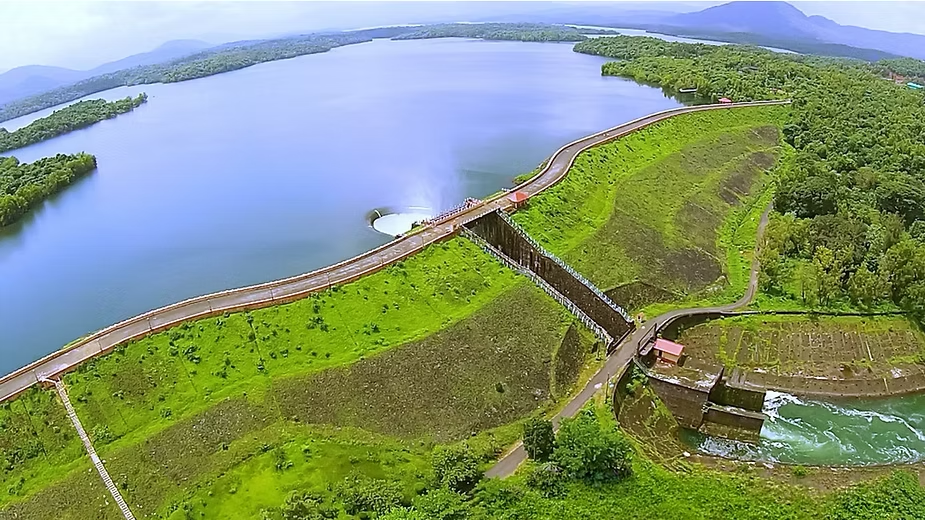
Every year, the arrival of the monsoon marks more than just a change in weather for Goa. It signals the beginning of a crucial cycle that sustains households, agriculture, industry, tourism, and everyday life across the state. While residents eagerly await cooler temperatures and greener landscapes, another question quietly takes center stage: Are Goa’s water systems prepared for the months ahead?
As June begins and the first monsoon showers approach the Konkan coast, Goa’s network of reservoirs and dams is entering its most critical period of the year. Reservoir levels are naturally at their lowest after supporting the state’s water requirements through the long summer months. Yet these reserves continue to serve as the backbone of Goa’s water security until sustained rainfall arrives.
Current monitoring data shows that Goa’s major reservoirs continue to hold operational reserves despite the extended dry season:
- Salaulim Dam – 31%
- Tillari Dam – 34%
- Anjunem Dam – 16%
While these figures may appear modest, they represent the final phase of an annual water management cycle designed to ensure continuous supply until monsoon replenishment begins. The true measure of preparedness lies not only in reservoir levels, but also in the systems, infrastructure, and planning mechanisms that support them.
Salaulim: South Goa’s Water Lifeline
Located in Sanguem, Salaulim Dam remains Goa’s most important freshwater reservoir. Supporting large parts of South Goa, the reservoir supplies drinking water to urban centres, residential communities, institutions, and industries throughout the region.
At 31% capacity, Salaulim continues to provide a stable buffer as the state awaits stronger rainfall activity. Water treatment facilities connected to the reservoir process millions of litres daily, ensuring uninterrupted supply to key population centres.
The reservoir’s performance highlights the importance of long-term water infrastructure investments. Throughout the year, stored monsoon water is carefully managed and distributed to meet growing demand while maintaining adequate reserves during the peak summer period.
Tillari: Supporting North Goa’s Growth
Holding approximately 34% capacity, the Tillari reservoir remains a critical source of water for North Goa. Through an extensive canal and distribution network, Tillari supports drinking water requirements across multiple talukas while also serving tourism, commercial establishments, and agriculture.
The reservoir plays a particularly important role in supporting rapidly growing urban areas and the state’s tourism economy. During the summer months, when demand reaches its annual peak, the system continues to ensure reliable supply across major residential and commercial zones.
The reservoir also demonstrates the value of interstate cooperation, with the Tillari project serving as a successful example of shared resource management between neighbouring states.
Anjunem: Supporting Goa’s Agricultural Heartland
Situated in the foothills of the Western Ghats, Anjunem Dam currently stands at 16% capacity. Although lower than the state’s larger reservoirs, Anjunem serves a different and equally important function.
The reservoir supports agricultural communities in the hinterland, providing irrigation support for plantations and farms that sustain rural livelihoods. Heavy summer utilisation often results in lower pre-monsoon levels, making Anjunem one of the first indicators of seasonal stress and recovery.
Fortunately, its location within one of Goa’s highest rainfall zones also allows for rapid replenishment once monsoon activity intensifies. Historically, sustained rainfall in the Western Ghats can significantly improve reservoir levels within a short period.
Beyond Reservoirs: The Infrastructure Behind Preparedness
Water security depends on much more than storage capacity. Across Goa, multiple departments undertake extensive pre-monsoon preparedness measures to ensure that infrastructure remains resilient throughout the rainy season.
Drainage systems are being cleared to improve stormwater flow and reduce the risk of flooding in urban centres. Maintenance work on pumping stations, treatment facilities, pipelines, and distribution networks helps ensure uninterrupted service even during periods of heavy rainfall.
Simultaneously, the power sector undertakes preventive maintenance on transformers, distribution lines, and critical infrastructure that supports water pumping and treatment operations. These efforts are essential because reliable water supply depends heavily on uninterrupted electricity.
Emergency response agencies have also strengthened preparedness measures for monsoon-related incidents, including flooding, landslides, fallen trees, and road disruptions. Coordination between departments remains a key component of ensuring rapid response when required.
Supporting Goa’s Farmers
For Goa’s farming communities, the arrival of the monsoon represents the beginning of a new agricultural season. Across the state, preparations for paddy cultivation are already underway as farmers await sufficient rainfall to begin sowing operations.
Reservoir reserves play an important supporting role during this transition period. Stored water can provide temporary irrigation support if rainfall patterns become inconsistent during the early stages of cultivation.
The relationship between reservoirs, irrigation infrastructure, and agriculture demonstrates how water management directly influences food production, rural incomes, and economic stability across the state.
The Challenge of Changing Rainfall Patterns
One of the most significant challenges facing water managers today is the increasing unpredictability of weather patterns.
Goa has witnessed periods of intense rainfall concentrated within short durations, followed by extended dry spells. These changing patterns require more sophisticated planning and monitoring than ever before.
Reservoir management now depends on continuous data collection, weather forecasting, and operational decision-making to balance flood mitigation with long-term water conservation. Modern monitoring systems help authorities make informed decisions regarding storage, releases, and distribution throughout the season.
A State Prepared for Replenishment
The current reservoir levels reflect a system that has successfully supported Goa through another summer while maintaining essential reserves ahead of the monsoon.
More importantly, they demonstrate the importance of long-term investments in dams, treatment facilities, transmission networks, drainage systems, and disaster preparedness mechanisms that collectively safeguard the state’s water security.
As monsoon clouds gather over the Western Ghats and the Arabian Sea, Goa enters the season with operational reserves, active monitoring systems, and infrastructure prepared to capture and store the rainfall that will sustain the state through the year ahead.
The coming weeks will determine how quickly reservoirs recover, but one thing is clear: water security is not built during the monsoon itself. It is built through year-round planning, infrastructure development, and responsible resource management.
For now, Goa waits for the rains prepared, watchful, and ready for replenishment.