


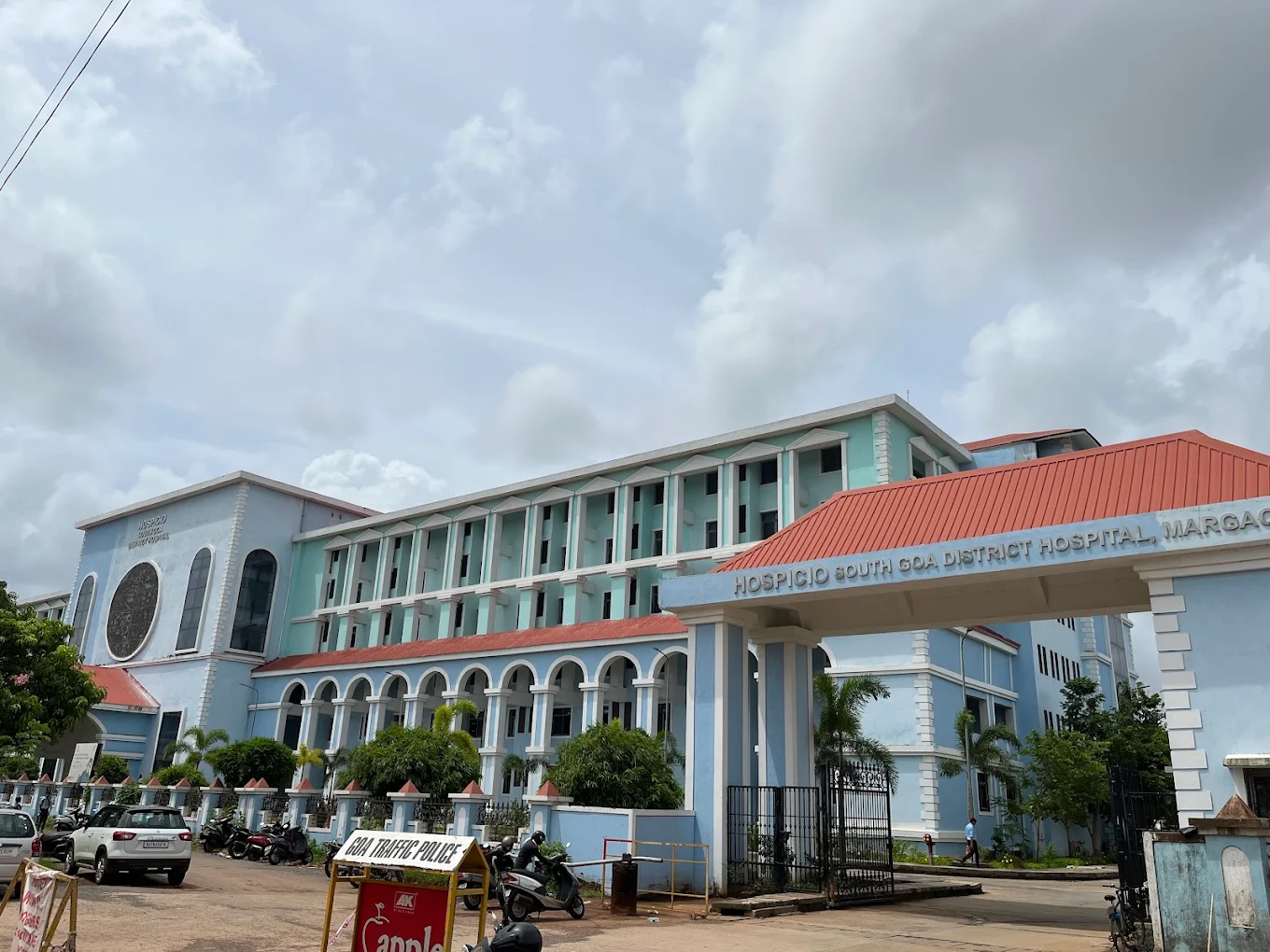
PANAJI: If you want to know whether a government’s health spending is reaching people, don’t start at the flagship medical college. Start at the district hospital nobody outside the taluka pays attention to. By that test, South Goa District Hospital just had a quietly remarkable year.
The numbers out of Margao
In 2025, South Goa District Hospital handled 6,996 patient referrals from Primary Health Centres – more than Goa Medical College and more than North Goa District Hospital, the two institutions that typically dominate the state’s healthcare conversation. That alone is a signal: a second-tier hospital is now absorbing serious patient load instead of funnelling everyone toward an already-stretched GMC.
It didn’t happen by accident. Health Minister Vishwajit Rane has confirmed that cardiologist, nephrologist and neurologist posts at the hospital are now filled – specialities that, in most district hospitals in India, exist on paper more often than in the building. A GMC cardiologist visits weekly to backstop the in-house team, and a Victor Hospital urologist supports on an honorary basis. The hospital’s MRI unit has been live since July 23; day-care chemotherapy started June 11; a 9-bed ICU is fully functional; a new Blood Centre is operational, with a Blood Component Separation unit in trial; and a STEMI protocol – the fast-response pathway for heart-attack patients, run with TRICOG’s cardiac diagnostics support – is now in place, meaning a suspected heart attack in South Goa doesn’t automatically require a transfer to Panaji before treatment starts.
None of this generated a press conference. That is, itself, worth noting.
Why one hospital’s year matters more than it looks
Public healthcare critics in Goa – including this state’s own newspapers – have made a specific, fair argument for years: GMC “perennially battles severe overcrowding,” with patients travelling long distances for things as routine as a prescription renewal, precisely because district and peripheral facilities aren’t equipped to handle them locally. The prescription that follows from that critique is not more investment in GMC alone – it’s building out the second tier so GMC can specialise instead of absorbing everything.
South Goa District Hospital’s 2025 numbers are what that prescription looks like when it’s actually followed, not just proposed.
The wider build-out
That hospital’s turnaround sits inside a bigger pattern. Goa’s 2026-27 budget allocated ₹2,217 crore to health – ₹963 crore to the Directorate of Health Services, ₹1,063 crore to GMC and its hospital, plus allocations for the Dental College and Food and Drugs Administration. It included free vaccines for an estimated 50,000 senior citizens, a 100-bed hospital expansion at IPHB targeted for December 2026, and a new ₹45 crore day-care centre there.
At GMC itself, the government has committed roughly ₹500 crore to campus infrastructure – a new lecture-hall complex (₹40 crore, three halls, 1,200-student capacity) already inaugurated, and a planned overbridge physically connecting the main campus to the Super Speciality Block, part of what Chief Minister Pramod Sawant has called turning GMC into a “five-star campus.” His stated reasoning is worth quoting directly: “If needed, a road project can be delayed, but when it comes to health, we will never cut down on funds or step back.” It’s a strong claim – the kind that should be checked against a budget line, not just a soundbite – and the 2026-27 numbers back it up.
Underneath all of it sits the Deen Dayal Swasthya Seva Yojana – Goa’s near-universal cashless health insurance scheme, open to any resident of five years’ standing. As of the 2025-26 cycle, DDSSY covers 1.81 lakh families, roughly 6.6 lakh individuals, across 11 government and 67 private empanelled hospitals, with annual coverage recently expanded to ₹4 lakh for smaller families and ₹6 lakh for larger ones. Median claims run under ₹35,000, and more than 94% of enrolled families use less than ₹1.5 lakh a year – a scheme that is, by design, catching ordinary hospital bills rather than sitting unused as a headline number.
The honest version of the story
Goa’s government hasn’t built a flawless health system. What it has built, measurably, is a wider one than it had five years ago: a functioning insurance backbone covering two-thirds of the resident population, a flagship medical college getting real capital investment instead of just promises, and – this is the part that’s easy to miss – district hospitals like South Goa’s quietly picking up the load that used to funnel entirely into Panaji. That last part is the one that will decide whether the rest of it holds up. On the evidence from 2025, it’s moving in the right direction.