


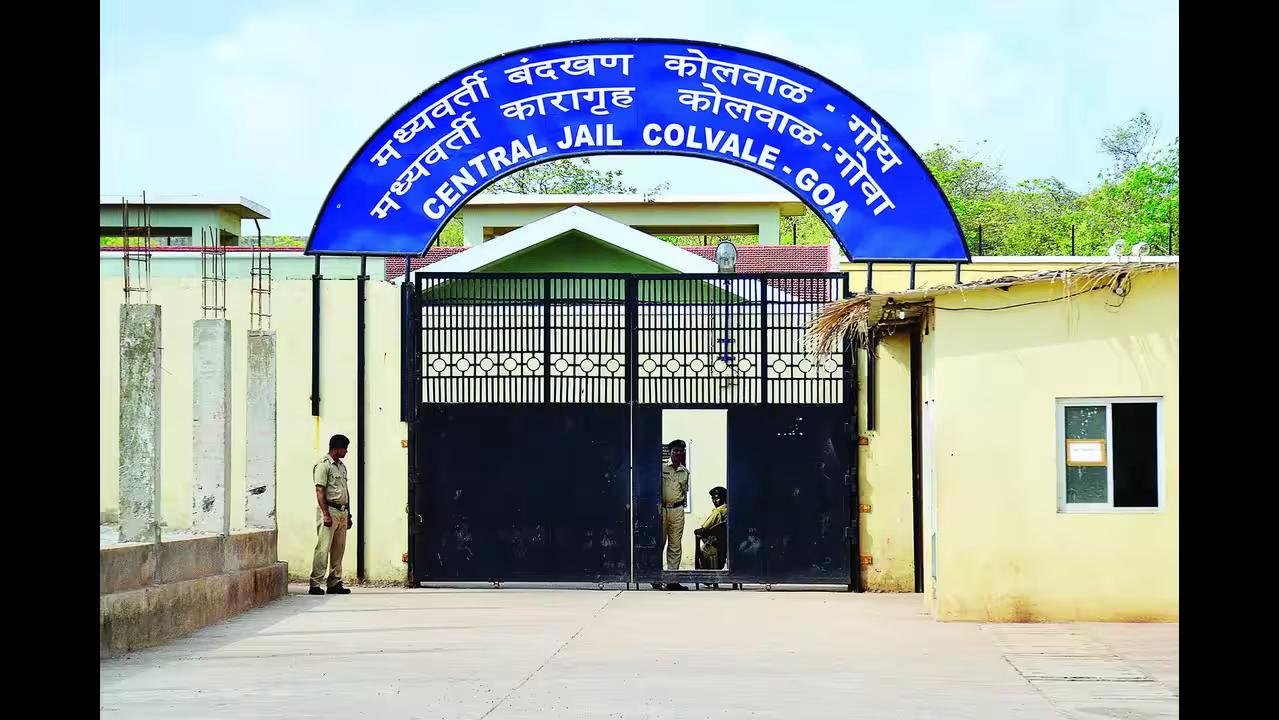
The Goa Government has proposed tougher action against the use and smuggling of mobile phones inside prisons, with offenders facing up to three years in jail and a fine of up to ₹25,000 under the proposed Goa Prisons and Correctional Services Bill, 2026.
The Bill, tabled by Chief Minister Dr Pramod Sawant, seeks to replace existing prison legislation with a comprehensive framework covering prison security, prisoner discipline, contraband control, organised crime, rehabilitation and correctional services.
Strict Action Against Unauthorised Phones
A key provision of the proposed legislation targets mobile phones and other electronic communication devices inside prisons.
The Bill proposes making the possession, operation or use of prohibited communication devices a cognizable and non-bailable offence. A separate provision proposes imprisonment of at least two years, extendable to three years, along with a fine of up to ₹25,000.
The provision would also cover electronic or wireless communication devices, their components and related equipment.
Those who assist, abet or instigate the supply of such devices to prisoners could also face punishment. The Bill further proposes action against individuals involved in manipulating, damaging or destroying prison equipment.
For prisoners, any sentence imposed under these provisions would run after completion of the sentence they are already serving.
Read More: Colvale Jail Under Scanner: CM Sawant Directs DGP to Probe Irregularities
Officials And Visitors Also Covered
The proposed restrictions are not limited to inmates.
Prisoners, visitors and prison officials would be prohibited from possessing or using unauthorised communication devices, introducing or removing prohibited articles, supplying them to inmates or facilitating unauthorised communication.
Officials who knowingly allow such activities could also face punishment.
The move is aimed at strengthening accountability and preventing the possibility of unauthorised communication or the movement of contraband through prison premises.
Surveillance Of High-Risk Prisoners
The Bill also proposes enhanced intelligence gathering and surveillance of high-risk, hardened and habitual offenders to prevent gang activity, organised crime, witness intimidation and criminal operations from being coordinated from inside prisons.
Prison authorities would gather intelligence and monitor inmates in coordination with the State Police Intelligence Wing.
High-risk barracks and cells would be subjected to periodic searches for contraband and mobile phones. The proposed measures also include advanced jamming solutions and frequent surprise checks.
Staff deployed in sensitive barracks and cells would be periodically rotated to reduce the risk of inmate-staff nexuses and prevent complacency.
Read Also: ₹0 Borrowed, ₹1,103 Crore Repaid: Goa Keeps Its Finances On Track
Monitoring After Release
The proposed legislation also provides for monitoring certain high-risk offenders after their release.
The release of hardened or habitual offenders after completion of their sentence, undertrials released on bail, and inmates temporarily released on parole or furlough would have to be reported to the concerned district Superintendent of Police.
Rehabilitation Alongside Security
While the Bill takes a tougher approach towards prison security, it also focuses on rehabilitation and reintegration.
The government would be empowered to establish open and semi-open correctional institutions, with facilities and concessions aimed at helping eligible prisoners return to society.
The proposed law also covers skill development, vocational training, rehabilitation and protection of prisoners’ basic human rights.
The legislation draws from the Model Prisons and Correctional Services Act, 2023, circulated by the Union Government, seeking to consolidate prison laws while introducing stronger security and reformatory measures.
The Bill comes amid criticism over alleged illegal activities at Colvale Correctional Home. With tougher provisions against mobile phones and contraband, stronger surveillance and measures for rehabilitation, the proposed legislation seeks to create a more secure and structured correctional system in Goa.