


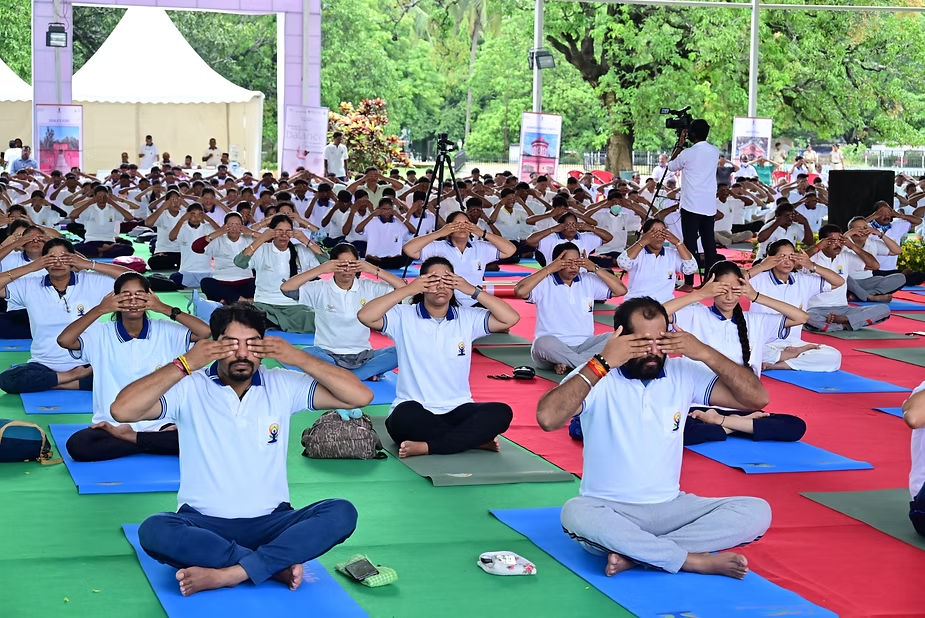
As dawn broke over Goa on June 21, 2026, thousands of citizens across the state gathered in public grounds, schools, community halls, beaches and sports facilities to mark International Yoga Day. What unfolded over the course of the morning was one of the largest public wellness initiatives in Goa’s recent history. According to official figures, more than 2.52 lakh people participated in yoga sessions conducted across 1,452 locations, reflecting the growing acceptance of yoga as a tool for preventive healthcare, active living and community well-being.
The celebrations were organised around the global theme, “Yoga for Healthy Ageing,” which focused attention on the role of yoga in helping people maintain physical health, mental balance and mobility as they grow older. The theme resonated strongly across Goa, where increasing awareness about lifestyle diseases, preventive healthcare and healthy living has become an important part of the public conversation. Participants included school students, college youth, government employees, senior citizens, healthcare workers, teachers and members of local community organisations, making the event one of the most inclusive public gatherings held in the state this year.
The main state-level celebration took place at the Shyama Prasad Mukherjee Indoor Stadium in Taleigao, where Chief Minister Dr. Pramod Sawant, Union Minister of State Shripad Naik and other dignitaries joined participants in performing the Common Yoga Protocol. The event also featured a live address by Prime Minister Narendra Modi, who spoke about yoga’s role in promoting individual health and collective well-being. His remarks reinforced the idea that yoga continues to serve as a bridge between traditional knowledge and contemporary health challenges.
While the state-level programme attracted significant attention, the true scale of the initiative became visible through its reach across Goa. From urban centres such as Panaji, Margao, Vasco and Mapusa to villages spread across North and South Goa, yoga sessions were organised simultaneously, ensuring that participation was not limited to a handful of large venues. Educational institutions, panchayats, government offices, sports complexes and community spaces became centres of activity as citizens came together to participate in guided sessions led by trained instructors.
One of the distinguishing features of this year’s celebrations was the use of a digital certification platform. Participants registered online and received official certificates, allowing the state to record and verify participation figures. This approach introduced a level of transparency and accountability that is often difficult to achieve in large public events. It also demonstrated how technology can support public health initiatives by enabling better outreach, record-keeping and citizen engagement.
The scale of participation reflected months of planning and coordination between multiple government departments and institutions. The Department of AYUSH, Department of Sports and Youth Affairs, Department of Education, healthcare agencies, local bodies and community organisations worked together to ensure that programmes could be conducted across the state. Schools incorporated yoga sessions into their celebrations, government offices encouraged employee participation and local organisations helped mobilise communities at the grassroots level.
The emphasis on healthy ageing added a deeper public health dimension to the event. Across the world, policymakers and healthcare experts are increasingly focusing not only on increasing life expectancy but also on improving the quality of life in later years. Physical mobility, mental well-being, social engagement and independence have become important indicators of healthy ageing, and yoga is widely recognised as a practice that can contribute to all four.
Regular yoga practice is associated with improvements in flexibility, balance and muscular strength, all of which become increasingly important as people age. Better balance can help reduce the risk of falls, while stretching and strengthening exercises can support joint mobility and physical independence. Controlled breathing techniques and relaxation practices may also contribute to reduced stress levels and improved cardiovascular health. These benefits make yoga a valuable addition to broader preventive healthcare efforts aimed at reducing the burden of chronic lifestyle-related illnesses.
Beyond its physical benefits, yoga also provides opportunities for social connection. Community yoga sessions bring together people from different age groups and backgrounds, creating shared experiences that strengthen social bonds. This aspect was particularly visible during the celebrations, where senior citizens practised alongside school students, families participated together and local communities gathered in large numbers. Such interactions contribute to social well-being and help address concerns such as isolation and loneliness, which can affect quality of life, particularly among older adults.
The event also highlighted Goa’s broader efforts to position wellness and preventive healthcare as important elements of its development agenda. Over the years, the state has invested in public health awareness campaigns, AYUSH initiatives and wellness programmes designed to encourage healthier lifestyles. International Yoga Day provided an opportunity to bring these efforts together under a single statewide initiative while encouraging citizens to adopt simple and accessible wellness practices.
The growing focus on wellness also has implications beyond healthcare. Globally, wellness tourism has emerged as one of the fastest-growing segments within the travel industry. Travellers increasingly seek destinations that offer experiences centred on health, mindfulness, nature and personal well-being. Goa’s established reputation for hospitality, combined with its growing emphasis on yoga, Ayurveda and holistic wellness, places it in a strong position to benefit from this trend.
The inauguration of the Sanyog ISM Yoga Summit alongside the International Yoga Day celebrations reflected this broader vision. By bringing together discussions on yoga, Ayurveda and healthy ageing, the summit highlighted opportunities to strengthen Goa’s position as a destination for wellness-oriented travel and learning. Such initiatives complement the state’s existing tourism offerings while supporting diversification into sectors that attract long-stay visitors and encourage year-round engagement.
Equally significant was the geographic spread of participation. Organising programmes at 1,452 locations ensured that access to yoga was not restricted to major urban centres or specialised institutions. Residents of rural areas, smaller towns and remote villages were able to participate within their own communities. This widespread outreach supports the idea that wellness should be accessible to all citizens, regardless of income level, age or place of residence.
The success of the programme also demonstrates the potential of community-based public health campaigns. Government initiatives often achieve the greatest impact when they are supported by schools, local organisations, volunteers and community leaders. The collaborative approach adopted for International Yoga Day enabled the message of healthy living to reach diverse sections of society while encouraging local ownership of the initiative.
From a governance perspective, the event reflected an increasing focus on preventive healthcare. Public health systems around the world face growing pressure from non-communicable diseases such as diabetes, hypertension and cardiovascular illnesses. Encouraging healthier lifestyles through activities such as yoga, regular exercise and wellness education can help reduce these risks over time. While no single intervention can address all public health challenges, sustained efforts to promote healthy habits can contribute to better long-term outcomes for individuals and communities.
The use of digital tools further strengthened the initiative. The online certification system not only recorded participation but also provided citizens with a tangible acknowledgement of their involvement. Such recognition can play an important role in encouraging continued engagement and building a culture of participation around public wellness programmes.
Looking ahead, the long-term impact of International Yoga Day 2026 will depend on how effectively the momentum generated during the event is sustained throughout the year. One-day celebrations can raise awareness, but lasting benefits require consistent practice and continued access to opportunities for participation. The state’s efforts to integrate yoga into educational institutions and expand community-based programmes provide a foundation for this next phase.
There is also potential to strengthen local wellness infrastructure through regular public sessions, training programmes and partnerships with educational and healthcare institutions. Community spaces that hosted International Yoga Day events could continue to serve as venues for wellness activities, helping residents incorporate yoga and related practices into their daily routines. Such continuity would allow the benefits of the initiative to extend far beyond a single commemorative event.
The participation of 2.52 lakh citizens across 1,452 locations demonstrates the scale at which public wellness initiatives can be implemented when government agencies, institutions and communities work together. More importantly, it reflects a growing recognition among citizens that health is not defined solely by treatment and medical intervention but also by daily habits that support physical and mental well-being.
International Yoga Day 2026 will be remembered not only for its participation numbers but also for the message it conveyed. The event highlighted the importance of healthy ageing, encouraged greater awareness of preventive healthcare and brought communities together around a shared commitment to wellness. As Goa continues to expand its focus on public health, active living and holistic well-being, the celebrations offer a useful example of how large-scale citizen participation can support broader social and developmental goals.
For one morning, thousands of people across Goa paused their routines to focus on movement, breathing and mindfulness. The result was more than a successful public event. It was a reminder that meaningful progress in public health often begins with simple, accessible practices embraced collectively by communities. The challenge now is to carry that spirit forward, ensuring that the enthusiasm witnessed on June 21 becomes part of a sustained effort to build a healthier and more resilient Goa.