


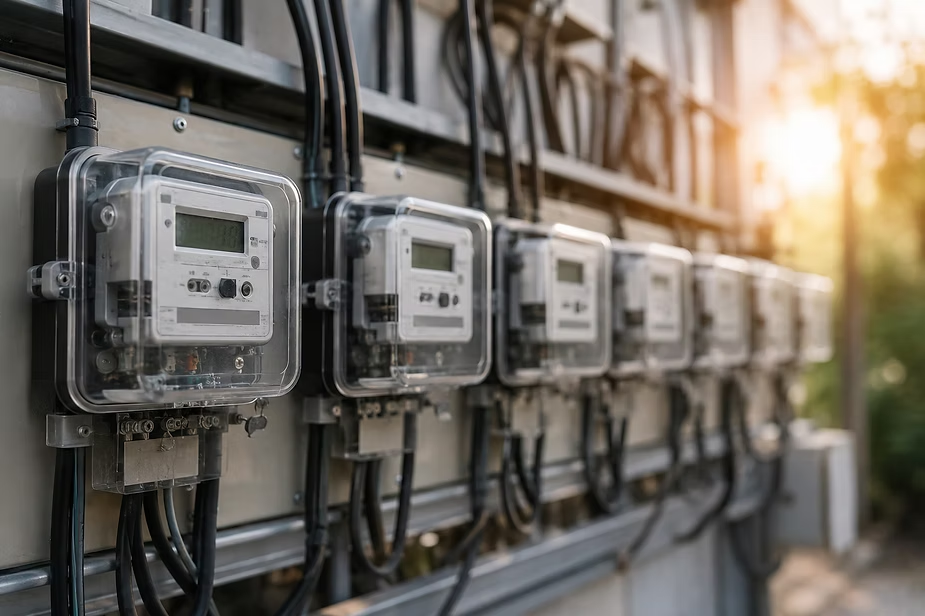
The Goa government has taken an important step towards improving the accuracy and efficiency of electricity billing records by approving the deletion of 9,525 “ghost consumer” records from the Goa Electricity Department’s billing system.
Goa’s Electricity Department just took a big step towards cleaner, more trustworthy billing records.
The state government has approved wiping out 9,525 fake or outdated consumer accounts from the department’s digital billing system, along with ₹12.2 crore in arrears that were never really owed by anyone.
Read Also: Porvorim’s Elevated Corridor set for Inauguration on 10 September, Boosting North Goa’s Connectivity
It’s a solid example of governance getting a genuine tech-driven upgrade.
What’s a ‘Ghost’ Account, Anyway?
These Ghost accounts were for connections that had already been permanently disconnected, but somehow kept showing up as ‘active’ in the department’s digital system.
Some records had even been duplicated during data transfers over the years.
The result?
Bills and late payment charges kept piling up on connections that, in reality, no longer existed.
Read Also: Goa Builds a Digital Shield as Cyber Crime Goes Interstate
Goa’s electricity billing has gone through several tech upgrades over the past two decades:
- 2014: Goa Electronics Ltd (GEL) was brought in to digitise billing across the state’s remaining subdivisions
- 2016–17: Everything was migrated to a centralised SAP-based billing and collection system
Big upgrades like this are a good thing, but they also come with a catch.
When old records get carried over from one system to another, mistakes creep in. Some disconnected accounts got carried forward as active.
Others got counted twice. And because ‘arrear locks’ weren’t applied to some of these dead accounts, the charges kept accumulating year after year, long after the actual consumer was gone.
To fix this, the Electricity Department didn’t just run a data script and call it done; they sent people out.
Assistant engineers, junior engineers, head clerks, meter readers, and vigilance teams physically verified records on the ground, checking whether consumers could still be traced or whether the address on file even had a connection anymore.
That fieldwork is what led to the Cabinet’s decision to formally delete these 9,525 records, and cancel the ₹12.2 crore in arrears attached to them.
Read Also: Goa Is Building the Team Behind Every Champion With a Sports Science Network
Why This Matters for Goa
It’s easy to think of this as just paperwork, but accurate records matter for everyday governance:
Cleaner books mean the department’s outstanding dues figures actually reflect reality, not phantom debt from accounts that don’t exist.
Better planning becomes possible when the consumer base on record matches the consumer base that actually exists.
Fewer disputes down the line, since old ghost accounts won’t resurface to confuse billing or ownership records.
This isn’t just about electricity bills; it’s a small but telling example of Goa’s push to clean up its digital governance as more public services move online.
As departments modernise, periodic audits like this one will matter more, not less, to make sure the systems meant to serve people don’t end up haunted by their own outdated data.
Read Also: Goa’s Students Are Learning the Technology of Tomorrow