


For a small state like Goa, maintaining a revenue surplus while investing in infrastructure, healthcare, education, and public welfare is a significant achievement. With limited geographical area and a relatively smaller resource base compared with larger states, Goa must carefully manage its finances to meet growing public needs while sustaining economic development.
At a time when several Indian states face pressure on their revenue accounts, Goa’s ability to project a revenue surplus for 2026–27 highlights its focus on fiscal discipline. The achievement becomes particularly significant when viewed against the scale of development commitments the state continues to undertake.
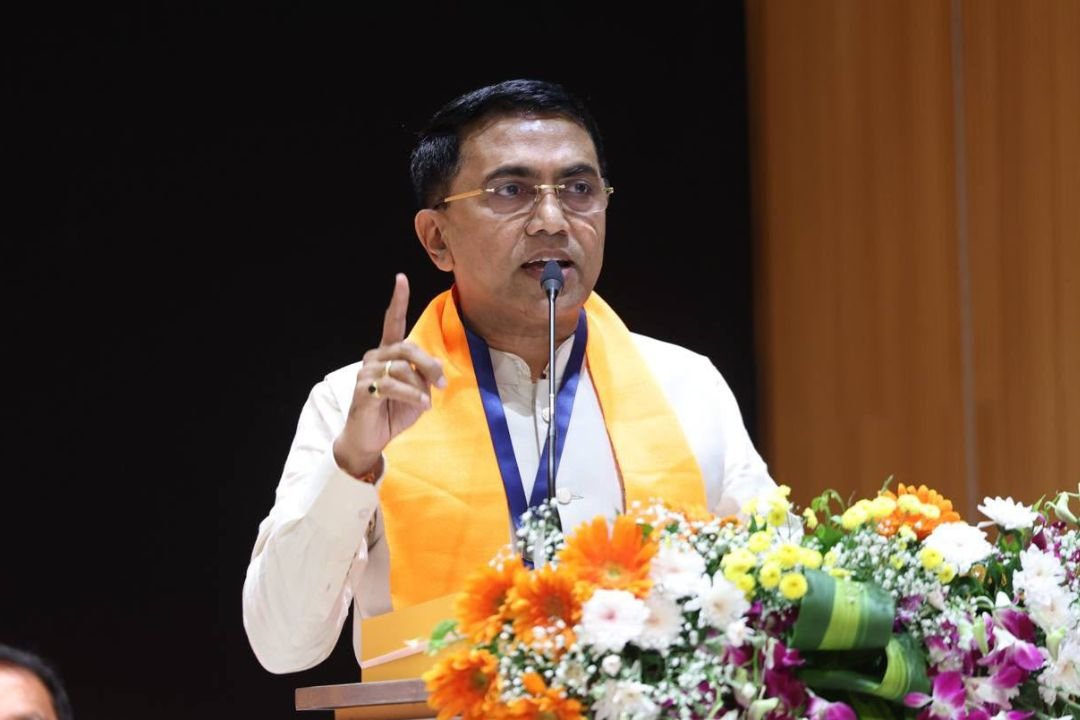
Presenting the Goa Budget 2026–27 on March 6, 2026, Chief Minister Dr Pramod Sawant projected a revenue surplus of ₹1,667 crore, equivalent to 1.3% of the state’s Gross State Domestic Product (GSDP). The government estimates total expenditure at ₹30,194 crore and total receipts at ₹29,181 crore for the financial year.
Goa’s projected GSDP stands at ₹1.31 lakh crore for 2026–27. The state has also demonstrated this financial strength in its actual accounts, recording a revenue surplus of ₹2,868 crore in FY 2024–25, according to PRS Legislative Research.
This achievement is not merely about maintaining a positive balance in government accounts. It reflects the importance of managing recurring expenditure responsibly while creating room for investments that can strengthen the state’s economy and improve citizens’ quality of life.
Vigilance Awareness Week 2026: CM Sawant Calls for Accountability, Citizen-First Governance in Goa
Why Goa’s achievement stands out
A revenue surplus is not simply a matter of having money left over. It means the state has projected enough revenue income to meet its recurring expenditure, including salaries, pensions, interest payments and subsidies, while retaining a positive balance.
Goa’s position is particularly noteworthy because the state is undertaking substantial development commitments despite its smaller size. The 2026–27 Budget provides ₹6,083 crore for capital outlay, which goes towards creating long-term public assets.
However, the comparison with other states should focus on their respective budget estimates for the same financial year. A fair comparison must distinguish between revenue surplus and fiscal surplus: a state can record a revenue surplus and still have a fiscal deficit because it borrows to finance capital investments.
Goa’s achievement becomes even more significant when compared with the financial positions of other states. While much larger states like Tamil Nadu and Karnataka have projected revenue deficits for 2026–27, Goa has projected a revenue surplus. This places Goa in a stronger revenue position and highlights its ability to manage recurring expenditure while continuing to pursue development priorities.
This also contradicts many claims that have risen recently, saying that Goa’s tourism has declined e However, such revenue figures would suggest the opposite. In fact, these numbers indicate that Goa has been able to diversify its tourism industry to create a more resilient business model – expanding its appeal beyond the traditional peak tourist season.
Over the past few years, Goa has invested heavily in expanding its Tourism footprint into both off-season time periods and into areas beyond it beaches,
Investments in Monsoon tourism have played an important role in this transformation. Goa’s green landscapes, waterfalls, spice plantations, hinterland villages, heritage sites and nature-based experiences offer opportunities to attract visitors during the rainy season and attracting tourists during these times has helped transform Goa’s tourism into a round the year business.
A stronger year-round tourism strategy with focus expanding into cultural heritage and inland sights has benefited homestay owners, local guides, restaurants, taxi operators, small businesses and communities beyond the coastal belt.
By promoting hinterland tourism, cultural experiences and sustainable tourism activities, Goa has distributed tourism-related economic opportunities more widely and encouraged businesses to operate throughout the year.
What Is a Revenue Surplus and Why Does It Matter?
A revenue surplus occurs when a government’s regular income exceeds its regular expenditure.
In simple terms, when the government earns more money through taxes, fees, grants and other revenue sources than it spends on salaries, pensions, interest payments, subsidies and routine public services, it records a revenue surplus.
For FY 2026–27, Goa estimates revenue receipts of ₹23,636 crore against revenue expenditure of ₹21,970 crore. Based on the budget estimates, PRS reports a projected revenue surplus of ₹1,667 crore, or 1.3% of GSDP.
This matters because a revenue surplus indicates that the government can meet its regular expenditure through its revenue income without borrowing to cover a revenue deficit.
It also provides greater financial flexibility to plan development projects, strengthen public services and invest in infrastructure. However, a revenue surplus does not mean that the state has no debt or does not borrow for development.
For ordinary Goans, responsible financial management can support better roads, improved hospitals, reliable water supply, public transport and welfare services.
From Soil Health to Higher Farm Income: Goa Takes Natural Farming to Villages
“Rajya Cho Ek Sudha Paiso Ami Khavche Na”: CM’s Message on Accountability
Chief Minister Dr Pramod Sawant has repeatedly emphasised the importance of protecting public money and ensuring accountability in governance.
Reinforcing this commitment, he said:
“Rajya cho ek sudha paiso ami khavche na ani konak khavpak bin divche na.”
The statement reflects his position that not a single rupee belonging to the state should be misused and that his government will not allow anyone to do so.
The Chief Minister also highlighted Goa’s growing budgetary capacity. He said that when he assumed office as Chief Minister, Goa’s budget stood at approximately ₹19,000 crore, and it has now increased to around ₹31,000 crore, while the state continues to maintain a revenue-surplus budget.
The expansion reflects the growing scale of the government’s financial planning and development commitments. More importantly, the Chief Minister’s message places accountability alongside expenditure: public money must translate into public benefits.
Financial Discipline Powers Infrastructure Development
Goa’s development is increasingly visible through major connectivity and infrastructure projects. Bridges, highways and upgraded transport corridors are changing how people travel, access services and conduct business.
The 2026–27 Budget provides ₹6,083 crore in capital outlay to create assets and strengthen infrastructure. The roads and bridges sector receives approximately ₹1,143 crore in capital outlay.
Projects such as the Atal Setu, Zuari Bridge and Porvorim elevated corridor demonstrate the importance of improving connectivity across the state. These developments can reduce travel time, ease congestion, improve access to commercial centres and support tourism.
The government has also allocated ₹1,215 crore to water supply and sanitation, including ₹598 crore for urban water supply and ₹170 crore for rural water supply.
These investments show how financial planning can translate into infrastructure that serves people for years to come.
Stronger Healthcare and Better Public Services
Development must improve people’s quality of life, and healthcare remains an essential part of that responsibility.
The government has allocated ₹2,210 crore to Health and Family Welfare for 2026–27, including ₹1,063 crore for Goa Medical College.
The Budget also proposes enhanced insurance coverage under the Deen Dayal Swasthya Seva Yojana, with new coverage slabs of ₹4 lakh and ₹6 lakh. The government plans to increase MBBS seats from 200 to 250, strengthening medical education and the future healthcare workforce.
These investments can improve access to medical treatment, strengthen public healthcare facilities and create more opportunities for aspiring doctors.
Alongside healthcare, investments in education, drinking water, transport and social welfare demonstrate the government’s focus on essential services. The Budget allocates ₹3,868 crore to Education, Sports, Arts and Culture and ₹1,179 crore to Social Welfare and Nutrition.
Building Towards Viksit Goa 2037
Goa’s development ambitions extend beyond a single financial year. Through its Viksit Goa 2037 vision, the government aims to build a state with modern infrastructure, stronger economic opportunities, improved public services and sustainable growth.
The state’s projected revenue surplus, capital expenditure and investments across essential sectors provide an important foundation for this journey.
However, the real measure of success will lie in how effectively the government converts budgetary allocations into completed projects, improved services and visible benefits for citizens.
Goa’s economic journey is therefore not just about a bigger budget. It is about managing public finances responsibly while creating opportunities, strengthening infrastructure and improving people’s lives.
A financially stronger Goa can build a more connected, prosperous and developed future for every Goan.
What This Means for Goans
A revenue-surplus budget becomes meaningful when its benefits reach households, businesses and communities.
For Goans, the government’s financial and development priorities can translate into:
- Better connectivity: Improved roads and bridges can make daily travel easier.
- Improved healthcare: Greater investment can strengthen treatment facilities and medical access.
- More employment: Infrastructure and tourism growth can generate economic opportunities.
- Reliable water supply: Investments can improve essential public infrastructure.
- Stronger local businesses: Year-round tourism can support small enterprises and livelihoods.
- Better public services: Responsible spending can strengthen essential government services.
Empowering Farmers, Enriching Fields: How Goa Govt Schemes Are Transforming Agriculture