


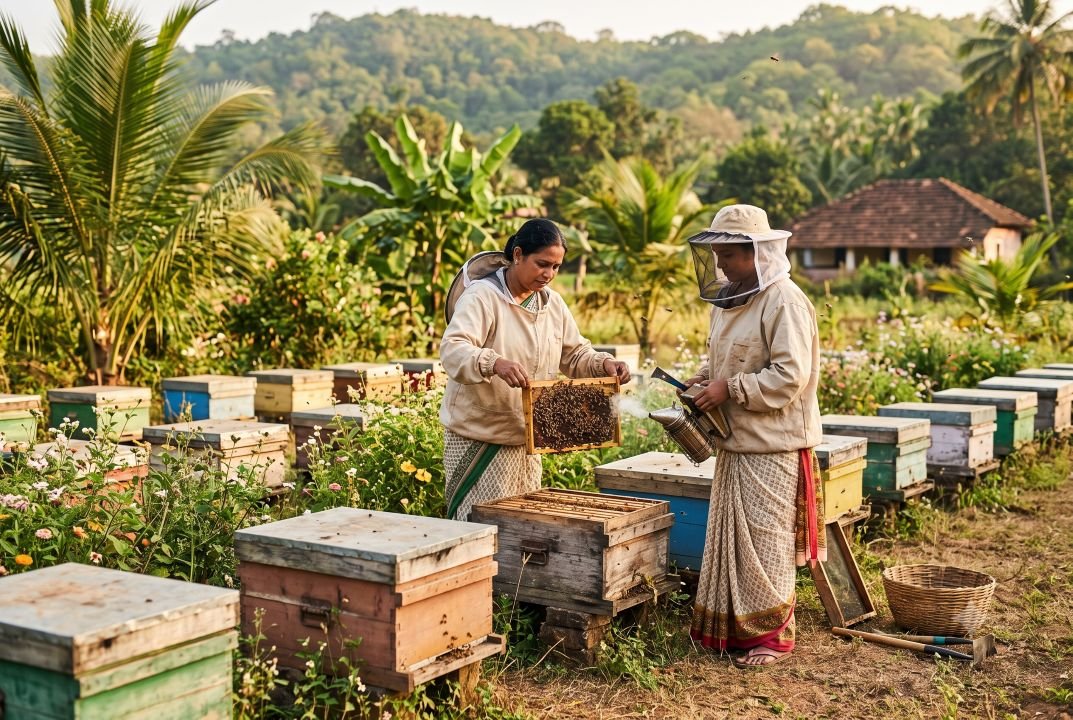
Women from remote villages across Canacona are taking up beekeeping to create an additional source of income while continuing their existing farming and household activities. The women-led Kushavati Beekeeping Farmer Producer Organisation (FPO) has brought together around 300 women from Gaondongrim, Cotigao, Poinguinim, Shristhal, Agonda and Loliem for the initiative.
The initiative aims to build a complete livelihood system around beekeeping, covering scientific training, bee colony management, honey collection, processing, packaging, branding and marketing.
Beekeeping Creates New Income Opportunities
The FPO plans to involve about 300 women and provide five bee boxes or colonies to each participant. The initiative specifically targets women who do not have a regular income but already participate in agriculture, horticulture, household work, wage labour or forest-based livelihood activities.
Beekeeping allows women to add another income stream without abandoning their existing occupations. They can maintain bee boxes around their homes, farms and suitable agricultural areas, making the activity easier to integrate into their daily routines.
The initiative has set a proposed production target of around 40 kg of honey per woman annually. If the target is achieved across 300 women, the programme could produce about 12,000 kg of honey each year.
Read Also: Empowering Goa’s Farmers: ₹1.5 Crore Machinery Drive Reaches 250 Agriculture Workers
Training and Technical Support
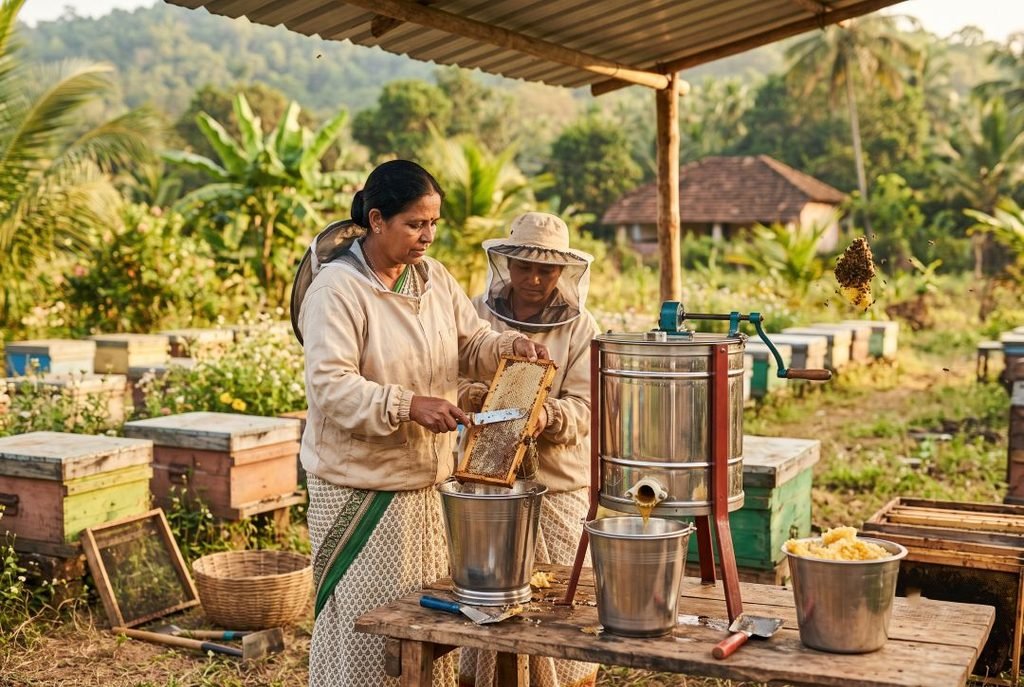
The Kushavati Beekeeping FPO will train women in scientific beekeeping, colony management and bee-box maintenance. It will also support women in establishing colonies and provide technical guidance for honey harvesting and hygienic handling.
The FPO will further bring producers together for collective honey collection and processing. It plans to improve packaging and quality, develop a common brand and connect the women with potential buyers and markets.
According to FPO chairperson Savita Tawadkar, a woman can potentially earn around ₹8,000 annually from each bee box under proper management. However, actual earnings will depend on factors such as colony strength, flowering seasons, management practices and honey yield.
Supporting Rural Women Through Beekeeping
The initiative gives women in Canacona an opportunity to build a supplementary livelihood without requiring large amounts of land or major changes to their existing work.
By combining traditional rural livelihoods with scientific beekeeping practices, the women can participate in honey production while continuing agriculture, household activities and forest-based work.
The proposed model also creates opportunities beyond honey production. Collective processing, packaging, branding and marketing can help women participate in more stages of the value chain and strengthen their role as rural entrepreneurs.
With around 300 women targeted under the initiative, Canacona’s beekeeping programme aims to develop a locally rooted honey economy while creating new livelihood opportunities for women across its remote villages.
Read Also: Goa WRD Pushes 200 Rainwater Harvesting Projects to Strengthen Groundwater Security