


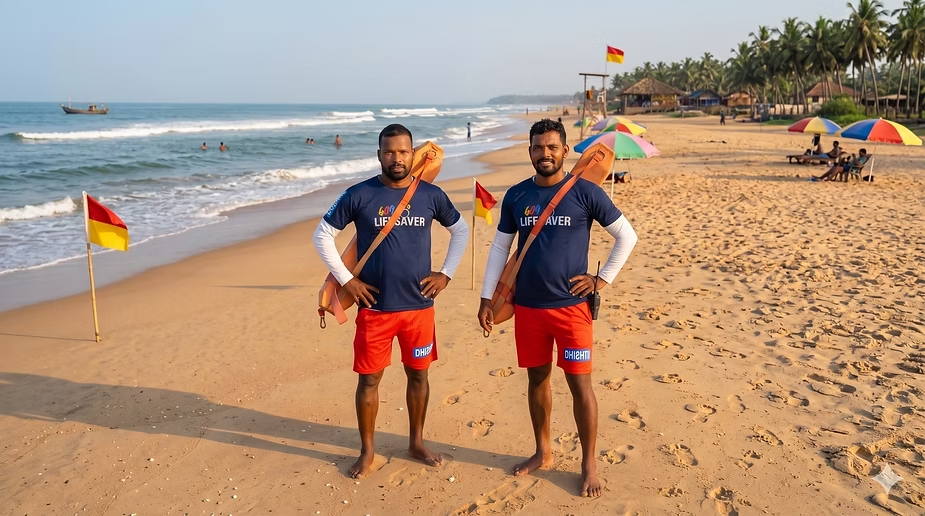
On a busy evening at Morjim Beach, what could have become a major tragedy instead became a powerful demonstration of Goa’s growing beach safety infrastructure. Nine young visitors from Delhi were rescued from drowning after being swept into deeper waters by a strong current, thanks to the rapid intervention of trained lifeguards and a coordinated coastal safety response system.
The incident unfolded when a group of around 25 tourists entered the waters at Morjim Beach in North Goa. According to reports, around 15 members of the group ventured into the sea despite repeated warnings from lifeguards and beach safety personnel about dangerous conditions. As the group moved further offshore, six individuals managed to return to safety on their own, but nine others found themselves trapped in deeper waters and unable to swim back.
What happened next highlights why Goa’s investment in professional beach safety systems has become increasingly important. Lifesavers from Drishti Marine immediately launched a multi-layered rescue operation. Four individuals were brought ashore using rescue boards, two were rescued using a jet ski, and three others were recovered with rescue tubes. The operation involved multiple trained personnel working simultaneously in challenging conditions. All nine individuals were rescued successfully and reported to be in stable condition.
While the rescue itself is remarkable, the larger story is about the systems, training, equipment and preparedness that made such an outcome possible. Goa welcomes millions of tourists every year, and its beaches remain among the most visited coastal destinations in Bharat. As tourist footfall increases, so does the need for sophisticated safety mechanisms capable of responding within minutes to emergencies in the water.
The Morjim rescue demonstrates how modern beach management has evolved beyond merely placing warning signs along the shoreline. Today’s coastal safety framework relies on trained lifeguards, surveillance systems, rapid response equipment, beach marshals, emergency medical coordination and continuous monitoring of changing sea conditions. The success of this rescue operation shows these systems functioning exactly as intended.
Morjim Beach itself presents unique conditions. Located in North Goa and known for its scenic coastline, the beach attracts both domestic and international visitors. However, like many beaches along Goa’s coast, changing tides, rip currents and sudden shifts in sea conditions can quickly create dangerous situations for inexperienced swimmers.
Experts consistently identify rip currents as one of the leading causes of beach rescue incidents worldwide. These powerful channels of fast-moving water can pull swimmers away from shore within seconds. Even physically fit individuals often panic when caught in such currents, increasing the risk of drowning. Many visitors mistake calm-looking sections of water for safe swimming zones, unaware of the hazards beneath the surface.
Goa’s beach safety personnel deal with these challenges daily. According to figures released by Drishti Marine, lifesavers conducted hundreds of interventions during 2025, rescuing 548 people from water-related emergencies. These rescues included both domestic and foreign tourists as well as local residents. In total, lifesavers responded to 614 reported incidents and assisted 829 individuals through various interventions ranging from drowning rescues and medical emergencies to tracing missing children and providing first aid.
These numbers reveal an important reality. Most visitors only notice lifeguards when a dramatic rescue occurs, but the majority of beach safety work happens before emergencies escalate. Lifeguards continuously assess water conditions, monitor swimmer behaviour, issue warnings, identify high-risk zones and intervene before situations become life-threatening.
The Morjim incident provides a textbook example of why these preventive measures matter. Reports indicate that warnings were repeatedly issued before the group entered dangerous waters. Despite these warnings, several visitors proceeded further into the sea. When the situation deteriorated, the lifeguards’ preparation and rapid response prevented what could have been a mass drowning event.
Goa’s coastal safety ecosystem has undergone significant professionalisation over the years. Modern rescue operations increasingly rely on specialised equipment such as rescue boards, rescue tubes, jet skis and emergency medical kits. These tools allow rescuers to reach victims quickly while reducing risks to both the victim and the responder.
The equipment used during the Morjim rescue illustrates this approach. Rescue boards provide buoyancy and stability in turbulent waters, making them ideal for recovering distressed swimmers. Rescue tubes allow rescuers to support multiple victims simultaneously. Jet skis enable rapid access to offshore incidents where every second can determine the outcome. Together, these assets create a layered rescue capability capable of handling complex emergencies.
Importantly, technology and equipment alone are not enough. Effective rescue operations depend on training, coordination and experience. The Morjim rescue involved multiple lifeguards performing different roles simultaneously, from offshore extraction to shoreline coordination and medical support. Such operations require constant drills, communication protocols and operational discipline.
The names of the rescuers involved deserve recognition. Lifeguards Vinod Salelkar, Vikram Talkar, Sant Parab, Vikas Chavan and Mahadev Gaude played key roles in bringing the victims to safety, supported by an onshore team that coordinated medical assistance. Their actions reflect the professionalism that Goa’s beach safety workforce brings to the coastline every day.
The incident also highlights a broader public safety narrative. Effective governance is often measured not only by infrastructure projects or policy announcements but by outcomes. In this case, the outcome is straightforward: nine people entered a life-threatening situation and all nine survived because a functioning safety system was in place.
This is not an isolated example. Throughout 2025 and 2026, Goa’s beach safety teams responded to numerous rescue situations across beaches such as Baga, Calangute, Candolim, Ashwem, Agonda, Colva and Morjim. Many of these incidents involved rip currents, strong waves or swimmers venturing into dangerous areas despite warnings. In each case, rapid intervention prevented potentially fatal outcomes.
Data from recent years also reveals patterns that policymakers and beach managers must continue addressing. Peak tourism seasons naturally generate higher incident volumes. Post-monsoon reopening periods, holiday weekends and festive seasons often witness increased beach activity and corresponding rescue operations. October and December have historically recorded elevated levels of beach-related incidents due to increased visitor numbers.
This makes public awareness just as important as rescue capability. Lifeguards can respond quickly, but the safest rescue is the one that never becomes necessary. Tourists who follow flag warnings, remain within designated swimming zones and heed instructions from safety personnel significantly reduce their risk of getting into trouble.
The Morjim rescue therefore carries two lessons. The first is a positive one: Goa’s beach safety infrastructure is capable, responsive and effective. The second is a reminder that personal responsibility remains essential. Ignoring warnings can quickly transform a recreational outing into an emergency situation.
For Goa, maintaining high safety standards is also an economic imperative. Tourism remains one of the state’s most important sectors, supporting livelihoods across hospitality, transport, food services, retail and recreation. Visitor confidence depends not only on attractive destinations but also on the assurance that safety systems are robust and reliable.
Every successful rescue reinforces that confidence. Families choosing Goa for holidays want to know that professional assistance is available if emergencies arise. International tourists expect globally comparable safety standards. Effective rescue services contribute directly to the reputation of Goa as a secure and well-managed tourism destination.
The Morjim operation also demonstrates the value of preparedness over reaction. Rescue personnel were already positioned, trained and equipped before the emergency occurred. Communication channels were established. Equipment was available. Medical support was coordinated. Because these systems existed beforehand, responders could act immediately when the situation developed.
This is a hallmark of mature public safety infrastructure. Success is not defined by the absence of emergencies but by the ability to manage them effectively when they occur.
As Goa continues strengthening its tourism ecosystem, stories like the Morjim rescue deserve attention not merely as isolated incidents but as indicators of institutional capacity. They show how investments in training, equipment, coordination and professional standards translate into measurable outcomes.
Nine visitors arrived at Morjim expecting a day at the beach. Instead, they experienced the potentially deadly power of the sea. Yet because trained responders were present and prepared, all nine returned safely to shore.
For Goa, that outcome represents more than a successful rescue. It reflects a coastal safety network that is increasingly capable of protecting residents and visitors alike.
It demonstrates how governance, infrastructure and professional public service intersect to save lives. And it serves as a reminder that behind every rescue statistic is a family spared from tragedy.
At Morjim this week, nine lives were saved. The numbers are important. But the larger story is that Goa’s beach safety system worked exactly as it was designed to work.