


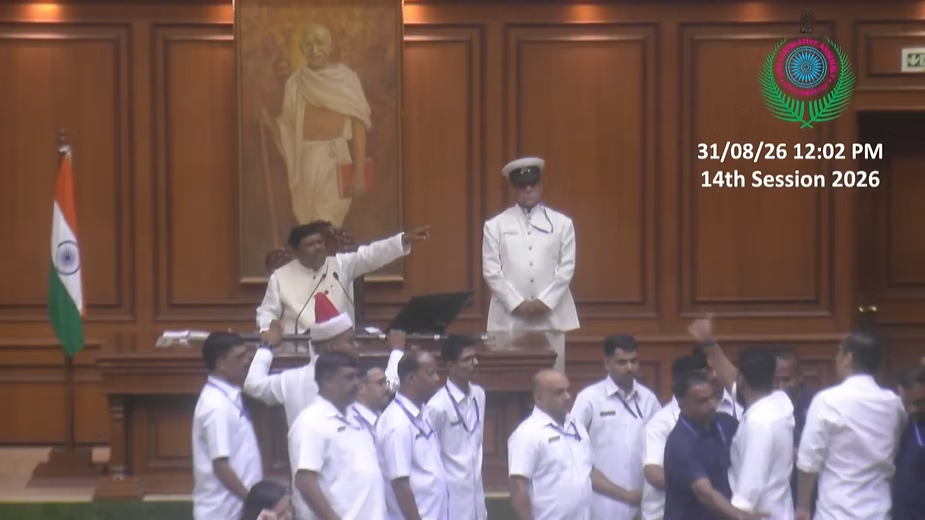
The first day of the Goa Legislative Assembly’s Monsoon Session took a disruptive turn within minutes, after Opposition MLAs from Congress, AAP and RGP entered the well of the House protesting the Speaker’s decision to disallow a question on No Development Zones (NDZs).
Led by Leader of Opposition Yuri Alemao, the Opposition sought to challenge Speaker Ganesh Gaonkar’s ruling during Question Hour. The protest eventually led to the House being adjourned for 10 minutes.
However, the episode has also raised questions over whether the Opposition followed the established rules and procedures governing the conduct of Assembly business.
A Ruckus Within Minutes of the Session Beginning
The disruption came within the first 10 minutes of the Assembly proceedings, turning what was scheduled to be the opening of the session into an immediate confrontation between the Opposition and the Chair.
The issue centred on Question No. 4B, concerning the declaration and interpretation of No Development Areas under Section 39A of the Town and Country Planning Act and the Regional Plan 2021.
The question had already been listed in the Assembly’s business for the day. The Speaker, however, ruled that it could not be taken up, citing provisions of Rules 9B and 16B and noting that the subject matter involved issues that were sub judice before the High Court.
Rather than allowing the proceedings to continue after the ruling, Opposition MLAs entered the well of the House and began protesting.
Speaker’s Ruling Was Part of the Assembly’s Procedure
The Speaker’s decision did not come without reference to the Assembly’s rules.
The question had gone through the prescribed process before being listed. Once the Speaker ruled that the question was inadmissible under the applicable rules, the Opposition could raise its objection through the procedural mechanisms available to members, including a Point of Order.
Leader of Opposition Yuri Alemao did raise a Point of Order.
But the subsequent decision by Opposition members to enter the well and disrupt proceedings took the disagreement beyond a procedural objection and into a direct disruption of the House.
The distinction is important: disagreeing with a ruling is part of parliamentary democracy; disrupting the functioning of the House after a ruling has been made is a different matter.
Read Also: Goa Government Opens New Doors for Inclusion, Access and Independence
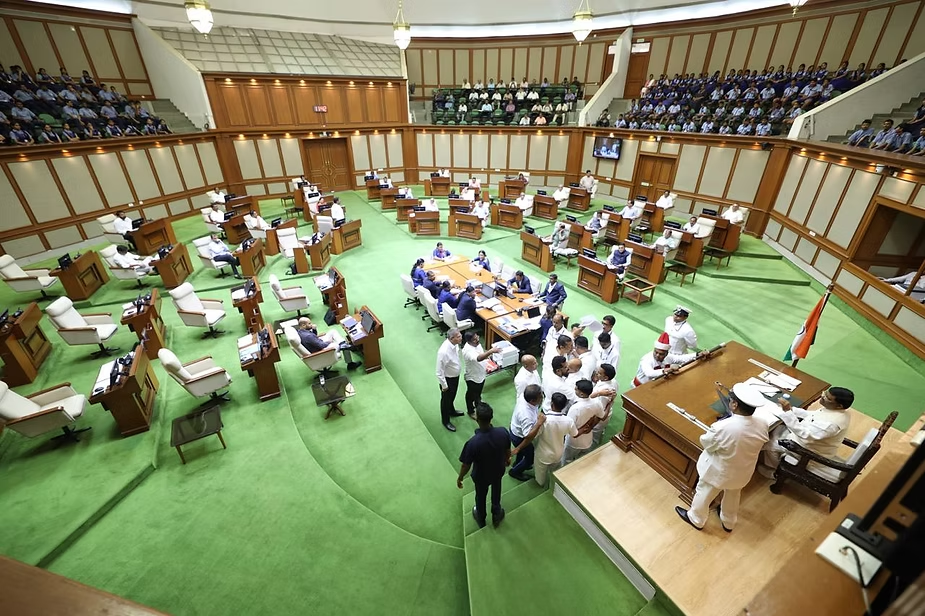
Opposition Protest Changes the First-Half Narrative
The NDZ issue was expected to be discussed as part of the Assembly’s Question Hour. Instead, the Opposition’s protest quickly became the dominant development of the opening proceedings.
Congress, AAP and RGP MLAs collectively protested the Speaker’s decision, raising slogans and entering the well.
The result was an avoidable interruption to the business of the House barely minutes after proceedings began.
With the protests continuing, Speaker Ganesh Gaonkar adjourned the Assembly for 10 minutes.
A Question of Rules, Not Just NDZs
The larger issue emerging from the incident is therefore not simply whether the Opposition had concerns over NDZs.
Opposition MLAs have every right to question the government, challenge decisions and raise issues affecting their constituencies. But the Assembly functions through established rules that determine what can be raised, when it can be raised and how members can challenge a ruling of the Chair.
When those procedures are bypassed and the well of the House becomes the first resort, a legitimate political disagreement can quickly turn into disruption.
On the very first day of the session, the Opposition’s protest consequently shifted the focus from legislative business to an early confrontation with the Chair.
First Day, First Disruption
The episode has set an unfortunate tone for the opening of the session.
What began as a disagreement over the admissibility of one question ended with Opposition legislators in the well and the Assembly being adjourned.
The NDZ issue may continue to be politically and legally significant. But the opening minutes of the session have also highlighted another question: if Assembly rules provide a procedure for challenging the Chair’s ruling, should legislators respect that procedure rather than disrupt the House?
For the Opposition, the protest may have been intended to put NDZs in the spotlight. But within the first few minutes of the session itself, it also placed their conduct inside the Assembly under scrutiny.
Read Also: A Home for Every Goan CM’s Housing Scheme Set for Launch