


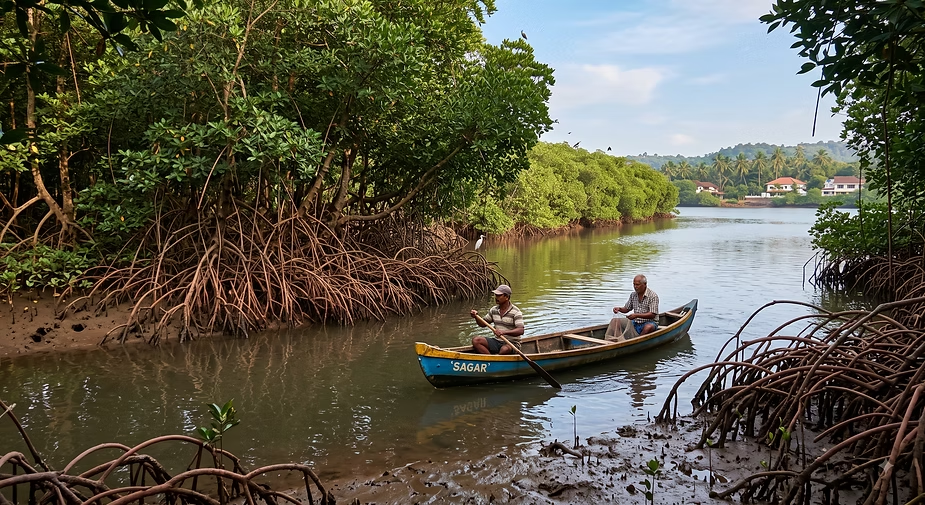
With a dedicated Mangrove Management Plan, restoration drives, wetland protection and community participation, Goa is building a multi-layered approach to safeguard its vital coastal ecosystems
Goa’s mangroves along the Mandovi, Zuari, Chapora, Sal, and Mapusa rivers remain an important element of the state’s coastal infrastructure, stabilising shorelines, buffering against tidal surges and erosion, and sustaining fish nurseries and bird habitats.
The government has responded with a multi-track strategy spanning protection, restoration, wetland regulation, and community-based conservation, anchored by a comprehensive Mangrove Management Plan released in 2025.
Read Also: From Forest to Feast: Goa’s Ran-Bhaji Festival Is Bringing Wild Cuisine Back to the Table
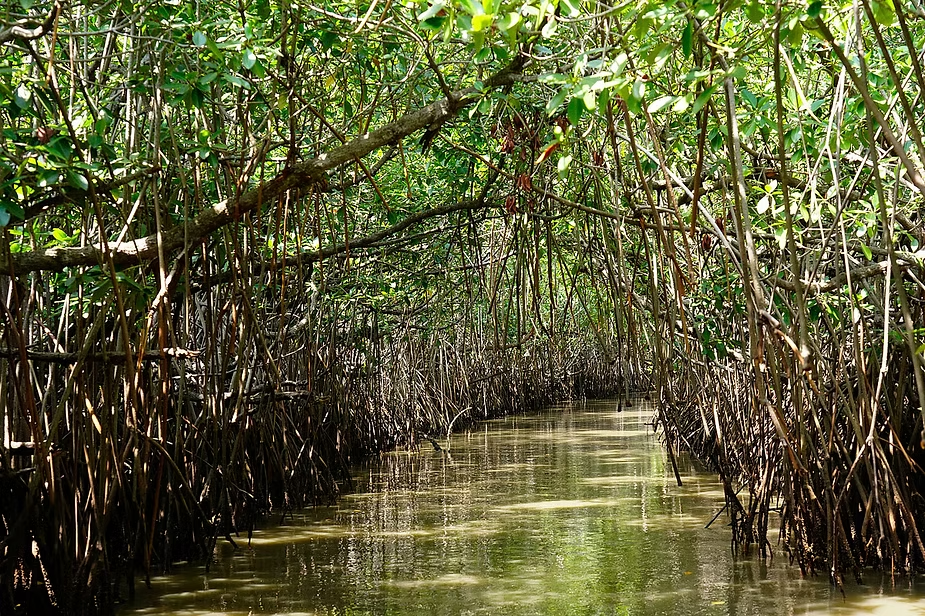
Goa’s Mangrove Plan of 2025 aimed to enhance non-intrusive eco-tourism activities including guided nature walks, bird watching, and non-motorised boat rides. It laid out the future plan of developing an integrated tourism plan and infrastructure that blends with natural surroundings
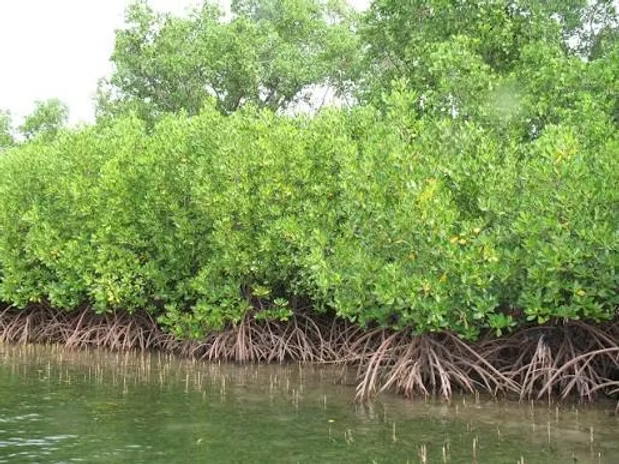
Earlier this year, the Goa government shared its plan of restoring 570 hectares of degraded mangrove ecosystems under the centre’s MISHTI (Mangrove Initiative for Shoreline Habitats & Tangible Incomes) Scheme over the period of the next three years.
This Monday, CM Dr. Pramod Sawant inaugurated Phase I of the Candolim Mangrove Park at an estimated cost of ₹15 crore and laid the foundation for Phase II.
The park’s stated features, a guided mangrove walkway and an AI chatbot for visitor education, position it as an eco-tourism and environmental-education hub.
The inauguration was attended by Minister Subhash Shirodkar, Calangute MLA Michael Lobo, and former cricketer Shikhar Dhawan.
Goa, in recent years, has shifted from passive protection to active, multi-layered management.
Read Also: 18,575 Goan artisans benefit from PM Vishwakarma Scheme