


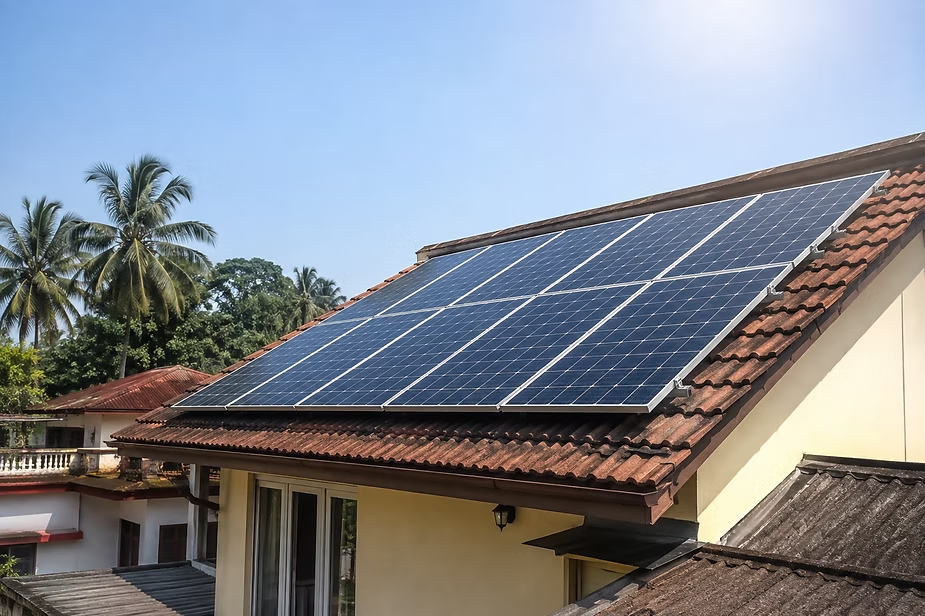
The Goa government has introduced the Grid-Connected Rooftop Solar Promotion Scheme to encourage more people and organisations to install rooftop solar systems. The scheme provides State Financial Assistance (SFA) in addition to the Central Financial Assistance available under the PM Surya Ghar: Muft Bijli Yojana.
The scheme came into effect from April 1, 2026, and will remain valid until March 31, 2028. Goa has also been allotted a target of 65 MW of rooftop solar capacity by FY 2026–27 under the national programme.
At a Glance:
- Grid-Connected Rooftop Solar Promotion Scheme will support rooftop solar installations across Goa
- Scheme is valid from April 1, 2026, to March 31, 2028
- Goa has a target of 65 MW rooftop solar capacity by FY 2026–27
- Residential consumers can receive up to 50% subsidy for systems up to 10 kWp
- Residential State assistance ranges from ₹20,000 for 1 kW to ₹2.20 lakh for 10 kW
- Housing societies, RWAs and educational institutions can receive 50% subsidy, up to 90 kWp
- Commercial, industrial and other establishments can receive 20% State subsidy, up to 90 kWp
- State assistance is provided over and above Central Financial Assistance, wherever applicable
Read Also: Goa’s New District Kushavati Marks Historic First Independence Day
Who Are the Beneficiaries?
The scheme covers a wide range of electricity consumers in Goa with a permanent electricity consumer account number. This includes residential consumers, group housing societies, Resident Welfare Associations (RWAs), educational institutions, NGOs, commercial and industrial establishments, and other eligible establishments.
For residential consumers, the State government will provide a subsidy of up to 50% of the benchmark cost for rooftop solar systems up to 10 kWp. The State assistance ranges from ₹20,000 for a 1 kW system to ₹2.20 lakh for a 10 kW system, in addition to Central Financial Assistance wherever applicable.
Group Housing Societies and RWAs installing rooftop solar for common facilities, including EV charging, can receive a 50% subsidy for projects up to 90 kWp, at ₹22,500 per kW. Educational institutions are also eligible for the 50% subsidy, subject to the applicable project limit, while NGOs are covered under the scheme.
For commercial, industrial and other eligible establishments, the government will provide a 20% State subsidy for projects up to 90 kWp, at ₹9,000 per kW.
This Goa government scheme expands financial support across households, communities, institutions and businesses while contributing towards the State’s 65 MW rooftop solar target.
Read Also: From Skills to Jobs: How Goa Is Building an Inclusive Future for All
Installation and Subsidy Process
Beneficiaries must install their rooftop solar systems through vendors empanelled under the PM Surya Ghar scheme and approved by GEDA. State subsidies will be released on a first-come, first-served basis, subject to the availability of budgetary allocations.
For eligible beneficiaries, the State Financial Assistance will be released within five working days of the disbursement of Central Financial Assistance by the Ministry of New and Renewable Energy (MNRE) to the beneficiary’s bank account, subject to budget availability.
Overall, the scheme expands financial support for rooftop solar across households, housing communities, educational institutions, NGOs and businesses. By reducing the upfront cost of installation, the initiative is designed to encourage wider adoption of solar power and support Goa’s target of achieving 65 MW of rooftop solar capacity.
Read Also: A New Ride for Goa: How New KTCL Buses Will Transform Public Transport
How Will It Benefit Goans?
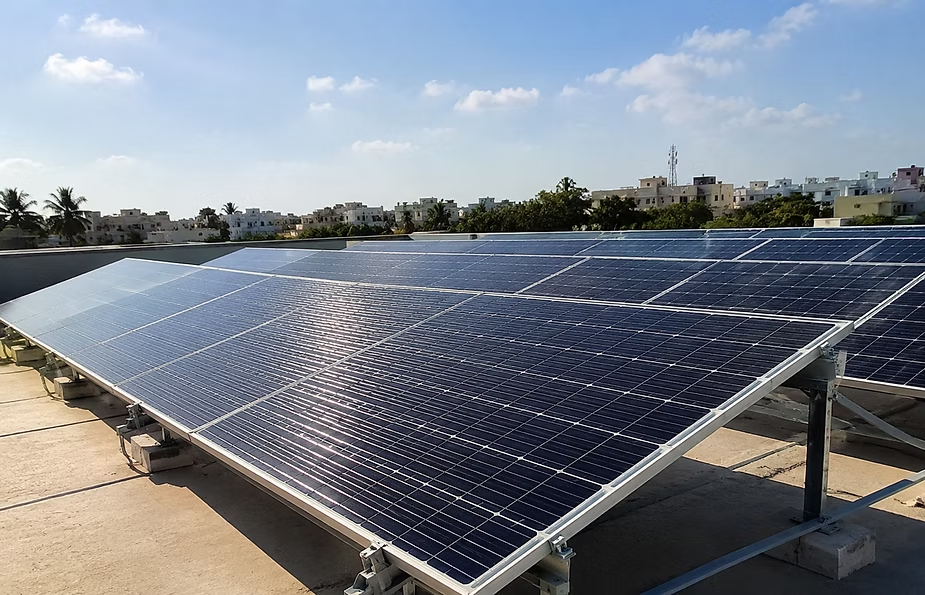
The additional State subsidy can make the initial investment in rooftop solar more affordable for Goan households and other eligible consumers.
For families, greater adoption of rooftop solar can help them generate part of their own electricity and potentially reduce dependence on conventional power. For housing societies and institutions, solar can support common electricity requirements, including EV charging facilities.
Businesses and industries can also use rooftop solar to meet part of their electricity needs while investing in renewable energy.
The wider adoption of rooftop systems will also help Goa move towards its 65 MW target, strengthening the State’s renewable energy capacity and supporting a cleaner and more sustainable energy future.