


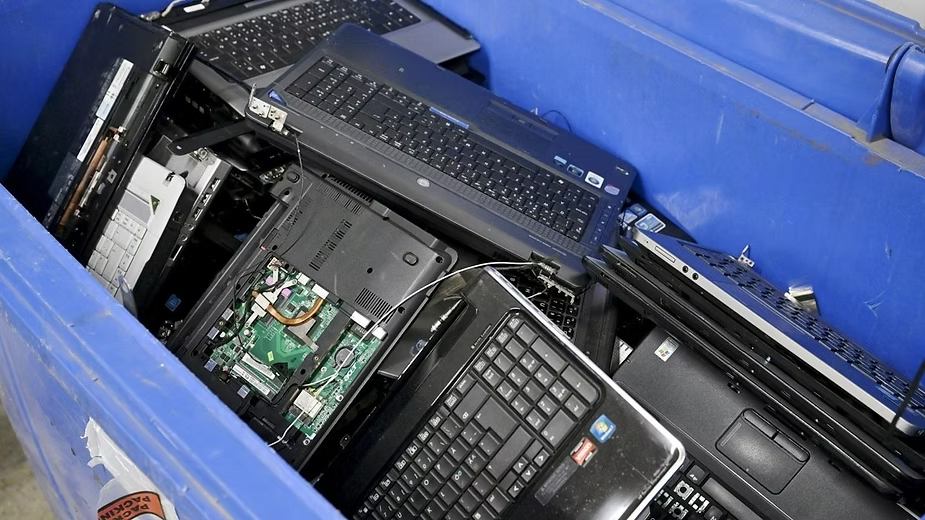
As gadgets become an inseparable part of daily life, Goa is preparing for the next environmental challenge before it spirals out of control. The state will begin systematic e-waste management from August 28, signalling a shift from reactive clean-ups to long-term environmental planning.
At a Glance
- Goa will launch systematic e-waste management from August 28.
- The initiative was announced by Chief Minister Dr. Pramod Sawant.
- The objective is to create an organised system for collecting, handling and disposing of electronic waste.
- Goa already has regulatory mechanisms under the Goa State Pollution Control Board and the E-Waste Management Rules. The new initiative aims to strengthen implementation and citizen participation.
- The move comes as electronic consumption continues to rise across India, making e-waste one of the world’s fastest-growing waste streams.
The Biggest Waste Problem in Your Home Isn’t Plastic. It’s Sitting Inside a Drawer.
Every Goan probably has one.
An old mobile phone that still powers on.
A cracked tablet nobody uses.
A laptop that was replaced years ago.
A box filled with chargers, earphones, batteries and forgotten cables.
We rarely think of them as waste.
Yet collectively, they are becoming one of the fastest-growing environmental challenges in the world.
As Goa embraces digital lifestyles, smart homes, electric mobility and rapid economic growth, the number of electronic devices entering households is only increasing. Every new gadget purchased today eventually becomes tomorrow’s e-waste.
That is why Goa’s latest announcement may be far more significant than it first appears.
Instead of waiting for overflowing landfills and hazardous dumping sites, the state wants to build an organised e-waste management system before the problem reaches crisis levels.
From August 28, Goa plans to begin systematic e-waste management across the state, marking another step in its broader environmental agenda.
Goa Wants to Build the System Before the Waste Piles Up
Chief Minister Dr. Pramod Sawant announced that systematic e-waste management will commence on August 28 with the objective of promoting organised disposal practices and strengthening Goa’s position in sustainable waste management.
Unlike household garbage, electronic waste requires specialised handling because it contains both hazardous substances and valuable recoverable materials such as copper, aluminium and precious metals.
The Goa State Pollution Control Board already administers authorisations, collection centre guidelines and compliance under the E-Waste Management Rules. The new initiative is expected to expand organised collection and improve public participation.
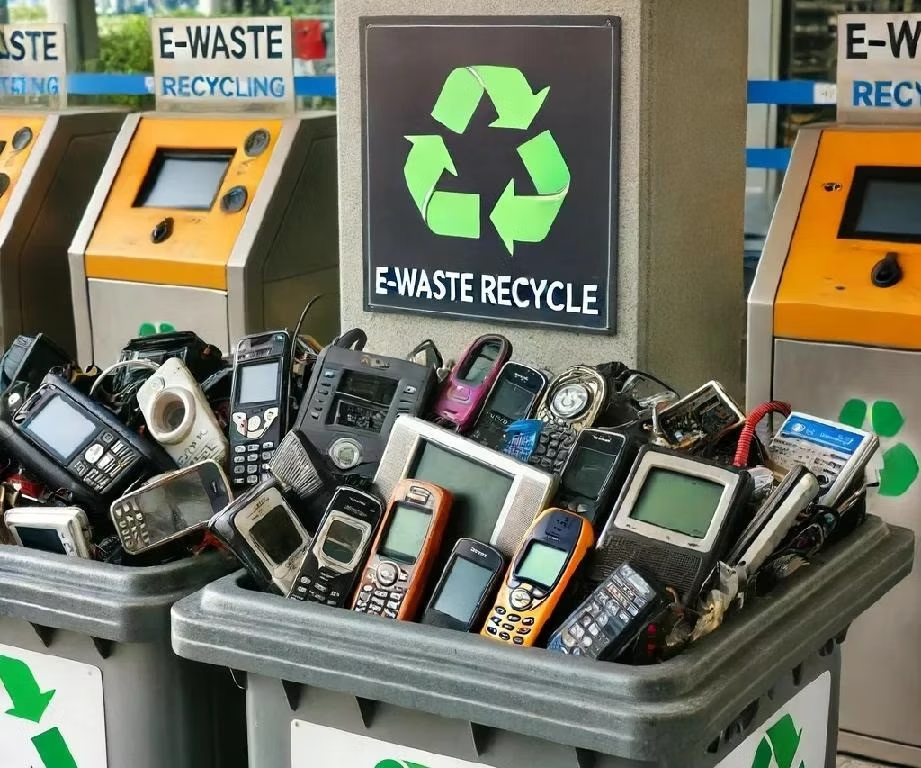
This Is Really About Goa’s Future, Not Just Its Garbage
Electronic waste is growing because society itself is changing.
People replace smartphones every few years.
Televisions have become smarter.
Homes purchase more appliances.
Businesses upgrade computers.
Schools digitise classrooms.
Every one of these upgrades creates another device that eventually reaches the end of its life.
Rather than treating e-waste as tomorrow’s problem, Goa appears to be preparing today.
That reflects a shift in governance thinking.
Instead of reacting after environmental damage occurs, the emphasis is increasingly on building systems before challenges become unmanageable.
Goa Already Built the Foundation. Now It Wants Citizens to Join In.
Goa is not starting from zero.
The state already follows India’s E-Waste Management Rules through the Goa State Pollution Control Board, which regulates manufacturers, recyclers, refurbishers and collection centres while maintaining compliance mechanisms and annual reporting.
What has often been missing is widespread public participation.
Many households continue storing unused electronics or disposing of them with ordinary household waste.
The August 28 initiative aims to move towards a more organised system where electronic waste is treated as a separate category requiring specialised collection and processing.
What This Means for Every Goan Household
For citizens, the biggest change is awareness.
Instead of throwing damaged electronics into regular dustbins or leaving them unused indefinitely, residents may increasingly be encouraged to channel them through authorised collection systems.
Proper recycling prevents hazardous materials from entering soil and groundwater while recovering valuable metals that can be reused in manufacturing.
It also reduces pressure on landfills and supports a circular economy.
According to Chief Minister Dr. Pramod Sawant, the objective is to introduce systematic e-waste management from August 28 so that Goa adopts organised disposal practices and strengthens its waste management ecosystem.
The broader message is clear.
As Goa develops, environmental infrastructure must develop alongside it.
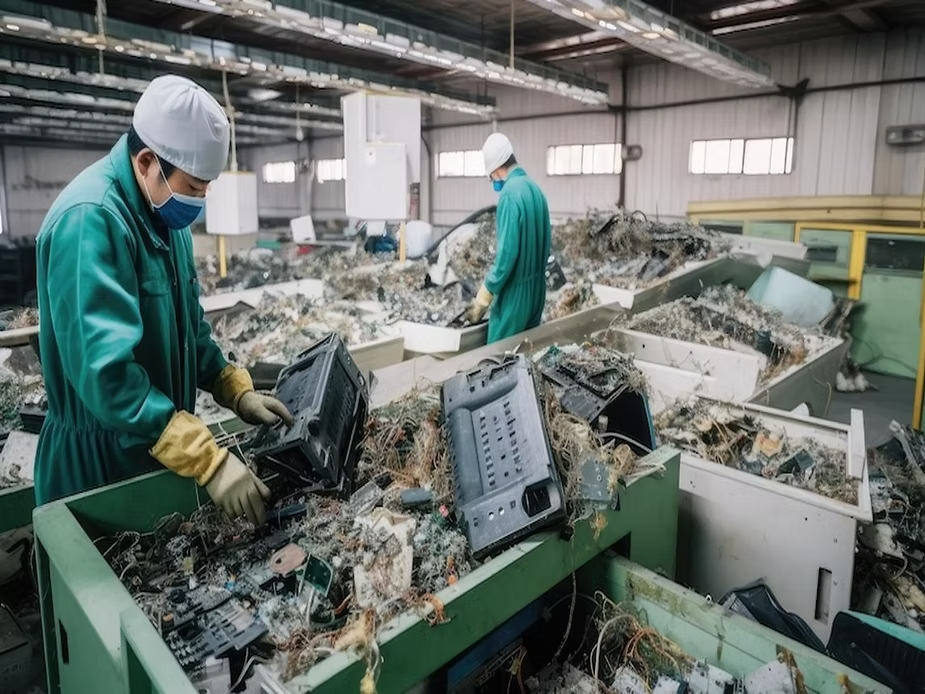
What Happens Next?
August 28 marks the beginning rather than the end.
The real measure of success will be whether Goa can build a reliable network connecting households, businesses, collection centres and authorised recyclers.
If successful, the initiative could strengthen Goa’s reputation for environmental planning while preparing the state for increasing electronic consumption over the coming decade.
The bigger story is not simply about recycling.
It is about recognising that a growing Goa also produces new environmental challenges and choosing to prepare before those challenges become crises.