


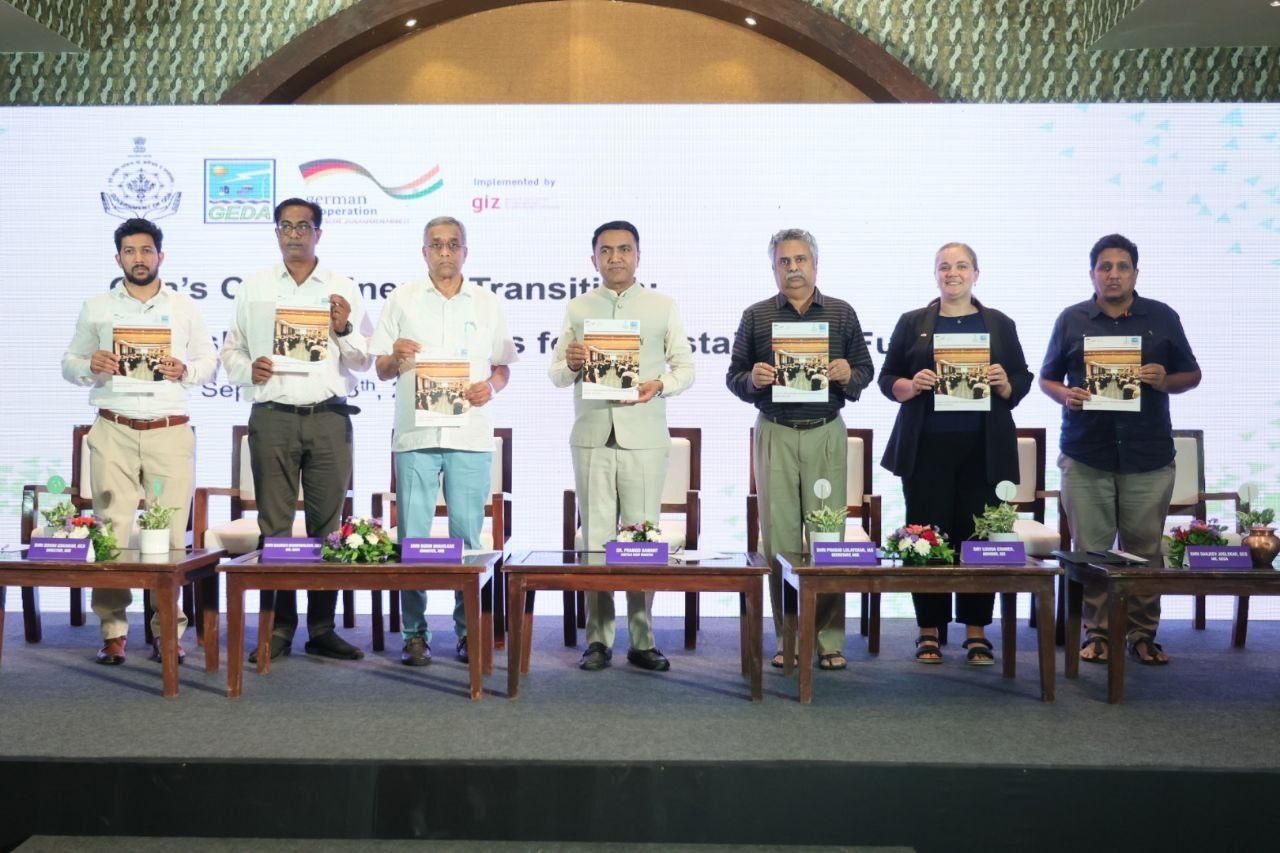
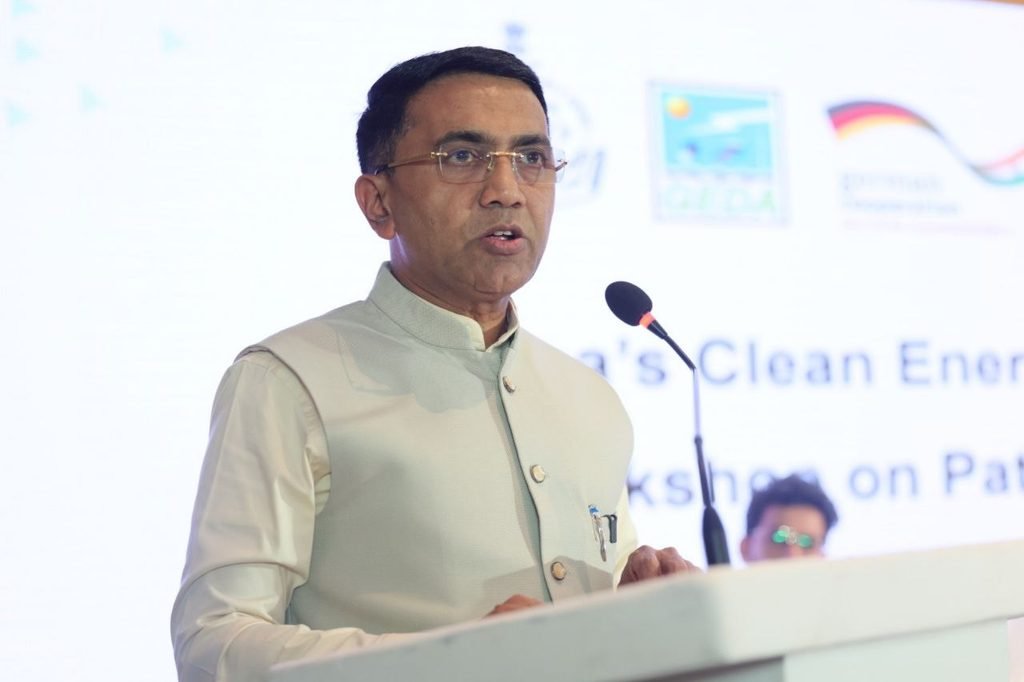
Goa is stepping up its clean energy transition with an ambitious target of 21,200 rooftop solar systems by 2027, aiming to generate 65 MW of clean energy across the state. Chief Minister Dr. Pramod Sawant outlined the target at a workshop on “Goa’s Clean Energy Transition: Pathways for a Sustainable Future” held at Gaspar Dias Hall, Miramar, Panaji.
The workshop also witnessed the signing of an MoU between the Government of Goa and GIZ, with support from the Embassy of Germany in India, strengthening cooperation in renewable energy, capacity building, and sustainable development.
At a Glance
- 21,200 rooftop solar systems targeted by 2027
- 65 MW clean energy generation planned
- Goa-GIZ partnership to strengthen renewable energy
- Model Solar Villages and Net Positive Panchayats
- Agri-PV and Green Cooking pilots planned
Read Also: Goa Net Positive Panchayat: A New Model for Goa Panchayat Governance
Goa Sets Its Sights on Rooftop Solar Expansion
Chief Minister Dr. Pramod Sawant said Goa’s clean energy journey is focused on integrating renewable energy across homes, villages, agriculture, public institutions and transport while protecting the state’s natural environment.
He said Goa’s development must create economic opportunities while safeguarding its natural heritage and securing a sustainable future for its people.
The government’s target of 21,200 rooftop solar systems by 2027 is expected to significantly expand household-level renewable energy generation. The long-term vision is to eventually bring rooftop solar to 50% of homes in Goa.
Registration camps are also being organised at the panchayat level to encourage greater participation from households.
Goa-GIZ Partnership to Drive Clean Energy Initiatives
The MoU signed between the Government of Goa and Deutsche Gesellschaft für Internationale Zusammenarbeit (GIZ) will strengthen technical cooperation, knowledge exchange and capacity building in renewable energy and sustainable development.
A dedicated capacity-development programme for government officials, supported by GIZ, was also launched. The programme will equip officials with knowledge of emerging renewable technologies and help develop projects suited to Goa’s local requirements.
CM Sawant emphasised that strengthening institutional capacity is essential for successfully implementing Goa’s clean energy transition.
The partnership will support several initiatives, including Net Positive Panchayats, Model Solar Villages, Green Cooking, Agri-PV, Net Zero Campuses and the Goa E-Boat Pilot Programme.
Read Also: ₹1,347 Crore Green Push: Goa Government Plans 197.23 MW Floating Solar Projects
Clean Energy Beyond Solar Panels
Goa’s renewable energy strategy is being expanded beyond conventional rooftop solar.
Under the Net Positive Panchayat initiative, local bodies will be encouraged to measure energy consumption and carbon footprints and develop sustainable models that can be replicated across the state.
The Model Solar Village programme will demonstrate how villages can adopt renewable energy solutions at the community level.
The government is also exploring floating solar, canal-top solar and building-integrated photovoltaic projects, opening up additional avenues for clean-energy generation without placing additional pressure on land resources.
Green Cooking and Agri-PV Pilots
A Green Cooking pilot, integrated with the PM Surya Ghar programme, will explore the use of rooftop solar power for cooking and water heating in addition to household electricity requirements.
The initiative could help reduce household energy costs while improving indoor air quality and creating new livelihood opportunities.
Another major initiative is the Agri-PV pilot at Goa Agriculture College, which will examine the possibility of combining agricultural production and solar power generation on the same land.
The approach aims to demonstrate that farmers can contribute to renewable energy generation without having to sacrifice agricultural productivity.
Clean Energy for Campuses and Waterways
The government is also promoting sustainability in educational institutions through the Mission Net Zero Campus competition, encouraging campuses to adopt energy-efficient and low-carbon practices.
Meanwhile, the Goa E-Boat Pilot Programme will promote electric propulsion for boats, supporting cleaner and more sustainable transport on Goa’s waterways.
A Climate Dome tool will also help visualise and track climate-related data at the local level, supporting better awareness and decision-making.
Goa Expands Solar Support for Households
The state’s clean energy push is being supported by existing solar subsidy initiatives.
Under the Mukhyamantri Muft Bijli Yojana, residential solar plants of up to 5 kW are provided free of installation costs to eligible households consuming up to 400 units of electricity per month.
Goa is also providing additional state assistance under PM Surya Ghar: Muft Bijli Yojana and has introduced a separate rooftop solar subsidy scheme applicable from April 2026 to March 2028.
As of February 2026, more than 3,100 Goans had registered for solar units under PM Surya Ghar, while 289 homes had already been powered through rooftop solar systems. More than 4,700 feasibility approvals had been issued, with ₹4.28 crore released as subsidies.
Building a Sustainable and Inclusive Goa
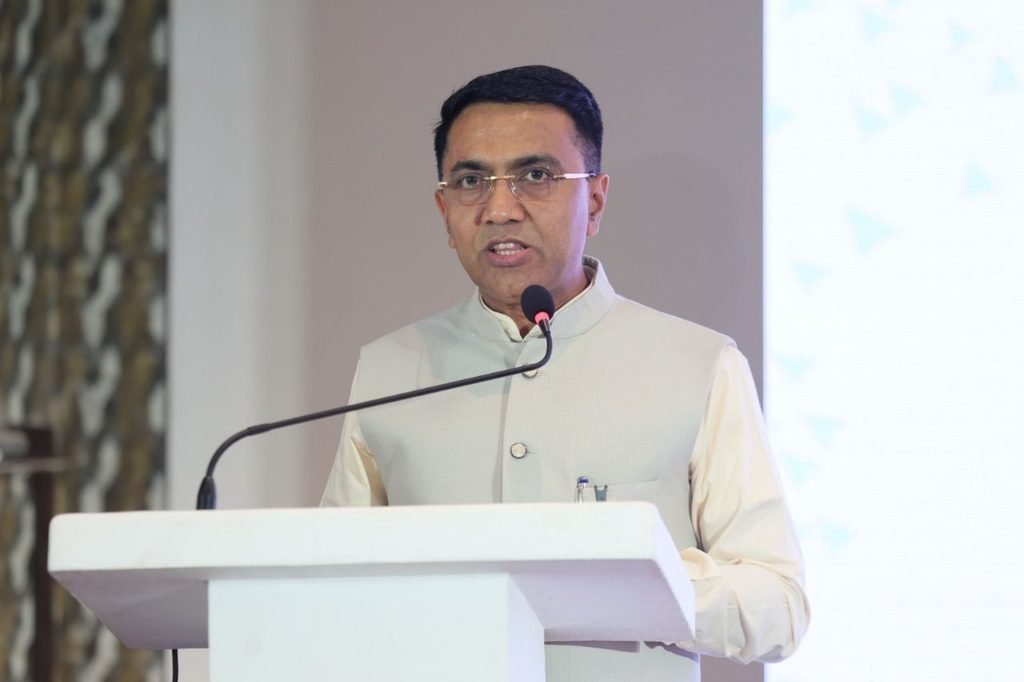
CM Sawant stressed that Goa’s clean energy transition must benefit all sections of society, including farmers, women, youth, self-help groups, entrepreneurs and local communities.
The government’s approach aims to link renewable energy with livelihoods, empowerment and economic opportunities rather than treating it only as an environmental objective.
The Chief Minister called for greater participation from local governments, communities, farmers, private-sector players, academic institutions and development organisations.
With a target of 21,200 rooftop solar systems and 65 MW of clean energy by 2027, Goa is positioning renewable energy as a key pillar of its development strategy.
The focus, Dr. Sawant said, must now be on implementation and creating successful clean-energy models that can be replicated across Goa.
Read Also: Goa’s Solar Energy Revolution: Here’s How the Govt Is Making It Cheaper