


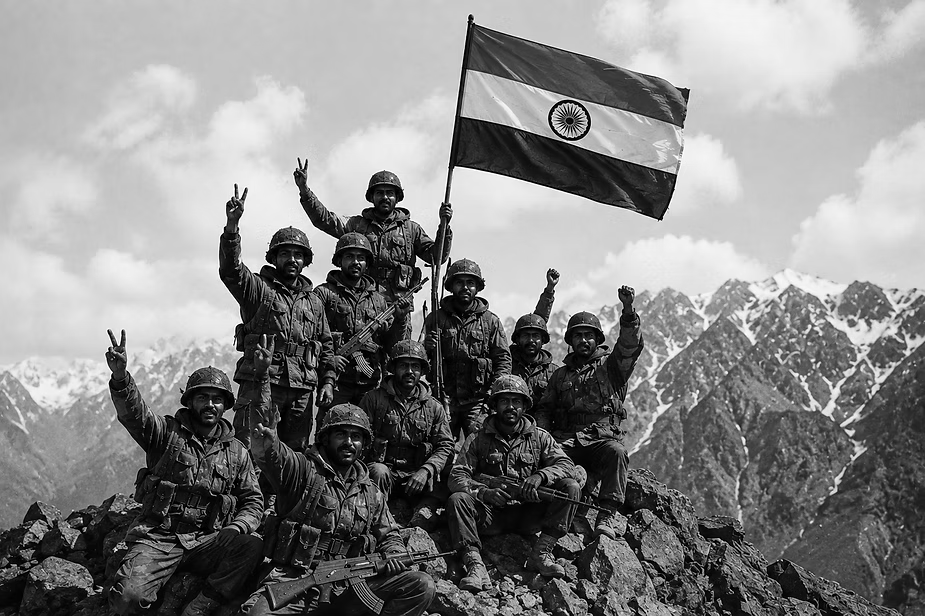
While India celebrated Independence on 15 August 1947, Goa’s freedom struggle continued for another 14 years, marked by political awakening, resistance, satyagraha and sacrifice before liberation finally came on 19 December 1961.
The story of Goa’s liberation is therefore not simply the story of what happened on 19 December 1961.
It is a story of decades of political awakening, resistance, satyagraha, imprisonment and sacrifice. It is also a story that raises an important question: If India became independent in 1947, why did Goa have to wait until 1961?
451 Years Under Portuguese Rule
The Portuguese captured Goa in 1510, beginning a period of colonial rule that lasted approximately 451 years.
Unlike the British, who eventually accepted the transfer of power in most of India, Portugal refused to consider Goa a conventional colony that could be handed over.
The Portuguese government maintained that Goa was an integral part of Portugal and therefore rejected India’s demand for its withdrawal.
Read Also: Porvorim’s Elevated Corridor set for Inauguration on 10 September, Boosting North Goa’s Connectivity
Goa’s colonial history also included periods of severe religious and cultural repression, most notably associated with the Goa Inquisition, which lasted for more than two centuries.
The colonial experience deeply affected Goan society and contributed to the emergence of movements demanding greater civil liberties, political rights and an end to Portuguese rule.
Therefore, when the British left India in 1947, Portuguese rule in Goa did not automatically end. For Goans, the struggle for freedom continued.
The Freedom Struggle Had Already Begun
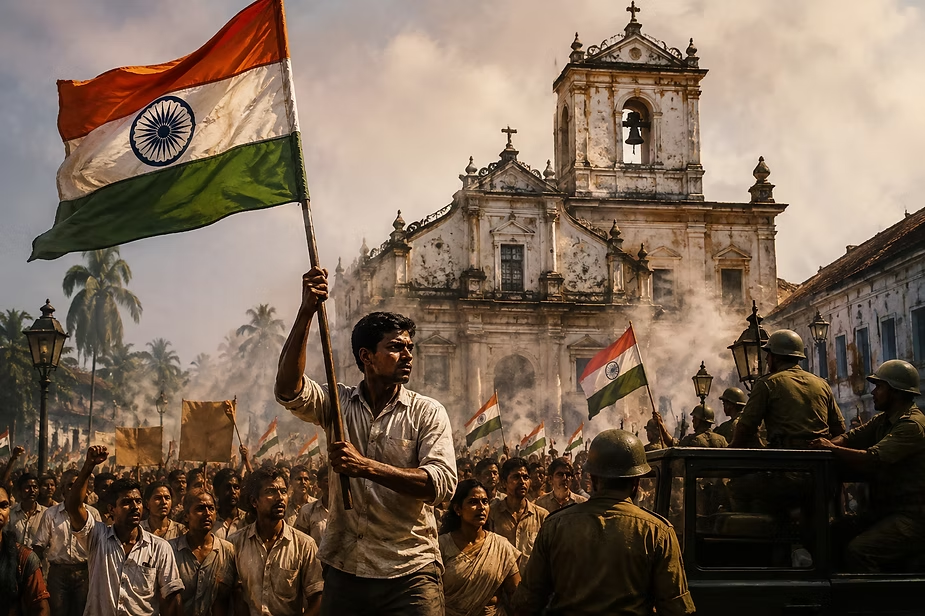
The movement for Goa’s liberation did not suddenly start in 1961.
Political resistance had been developing for decades. One of its most important early figures was Tristão de Bragança Cunha, who is widely remembered as the Father of Goan Nationalism.
In 1928, he established the Goa Congress Committee, connecting Goan nationalism with India’s wider freedom movement.
A major turning point came on 18 June 1946, when socialist leader Dr. Ram Manohar Lohia, along with Goan nationalist Julião Menezes, defied Portuguese restrictions on public meetings in Margao.
Lohia addressed a gathering and openly challenged Portuguese rule before being arrested. The event became a landmark in Goa’s political awakening and is remembered today as Goa Revolution Day.
The significance of 18 June was that it demonstrated that Goans were prepared to openly challenge Portuguese authority.
The demand for freedom was no longer confined to a small group of political activists. A broader movement was beginning to take shape.
Read Also: Goa’s Tourism Story Gets a New Chapter
Dadra and Nagar Haveli Strengthened the Resistance
The struggle received another major boost in 1954, when Portuguese control over Dadra and Nagar Haveli was overthrown.
Several groups participated in the movement, including the Azad Gomantak Dal, United Front of Goans, National Movement Liberation Organisation and RSS volunteers.
The liberation of Dadra and Nagar Haveli demonstrated that Portuguese authority in India could be challenged directly.
It also gave confidence to those fighting for Goa’s liberation. The Portuguese presence was no longer seen as something that could not be removed.
The developments in Dadra and Nagar Haveli therefore became an important part of the wider pressure surrounding Portuguese rule in Goa.
Satyagraha Movement of 1955
The pressure intensified in 1955.
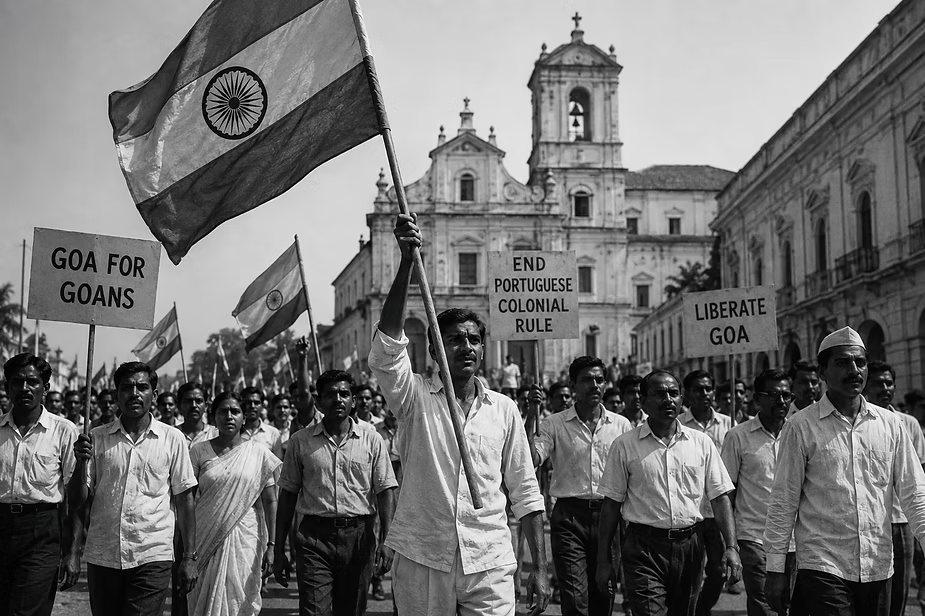
The Bharatiya Jana Sangh took a strong position that Portuguese rule in Goa had to end. On 13 June 1955, Jana Sangh leader Jagannath Rao Joshi led a major satyagraha towards Goa.
Thousands of satyagrahis participated in the wider movement.
Portuguese authorities responded with arrests, baton charges and firing. The repression became particularly severe during the movement in August.
Among those who suffered was Amir Chand Gupta, a satyagrahi who was severely beaten and later died from his injuries.
The then Prime Minister, Jawaharlal Nehru, himself referred to Gupta’s case while discussing the situation in Goa.
The most dramatic confrontation came on 15 August 1955, when large groups of satyagrahis attempted to enter Portuguese territory.
Portuguese forces opened fire, resulting in deaths and hundreds of injuries according to contemporary and later accounts. The violence shocked India and intensified public pressure on the government to take stronger action against Portugal.
Read Also: From Skills to Jobs: How Goa Is Building an Inclusive Future for All
Why Was Goa’s Liberation Delayed?
Despite the violence, the Indian government under Jawaharlal Nehru continued to favour diplomacy and restraint.
PM Nehru believed that Goa would eventually become part of India and that there was no need to rush into military action.
In 1955, he expressed the view that Goa was ‘bound to come to India’ and questioned why people were in such a hurry. His approach was influenced partly by concerns over India’s international position and the wider Cold War environment.
Portugal was a member of NATO, and India was wary that military intervention could create an international confrontation.
Delhi also did not want large numbers of Indians from outside Goa entering the territory in a way that could allow Portugal to portray the movement as an Indian invasion rather than a struggle for Goa.
For the people fighting on the ground, however, this patience came at a cost.
Goan activists and satyagrahis continued to face arrests, imprisonment, violence and repression while Portuguese rule remained in place.
A Struggle Involving Many Forces
Goa’s liberation cannot be attributed to a single organisation or political group.
The movement involved Goan nationalists, socialists and activists, Jana Sangh workers, RSS volunteers, satyagrahis and underground revolutionary groups.
Groups such as the Azad Gomantak Dal and other underground organisations also carried out resistance against Portuguese rule.
Their methods were different. Some relied on peaceful protest and satyagraha, while others supported underground and armed resistance.
Despite these differences, they were united by one central objective, the end of Portuguese rule in Goa.
Read Also: 40 Years Later, Selaulim Dam Families Finally Get Their Land Back
The Final Push in 1961
By 1961, the situation had reached a breaking point.
Years of political pressure, diplomatic efforts and resistance had failed to persuade Portugal to withdraw from Goa.
The Portuguese government continued to reject India’s demands.
The Indian government eventually decided that military action was necessary.
On 17 December 1961, India launched Operation Vijay.
The Indian Army advanced into Goa while the Navy and Air Force supported the operation. Portuguese forces were unable to mount prolonged resistance, and the campaign moved rapidly.
After approximately 36 hours of military operations, Portuguese resistance collapsed.
On 19 December 1961, the Portuguese forces surrendered, and Goa was liberated.