


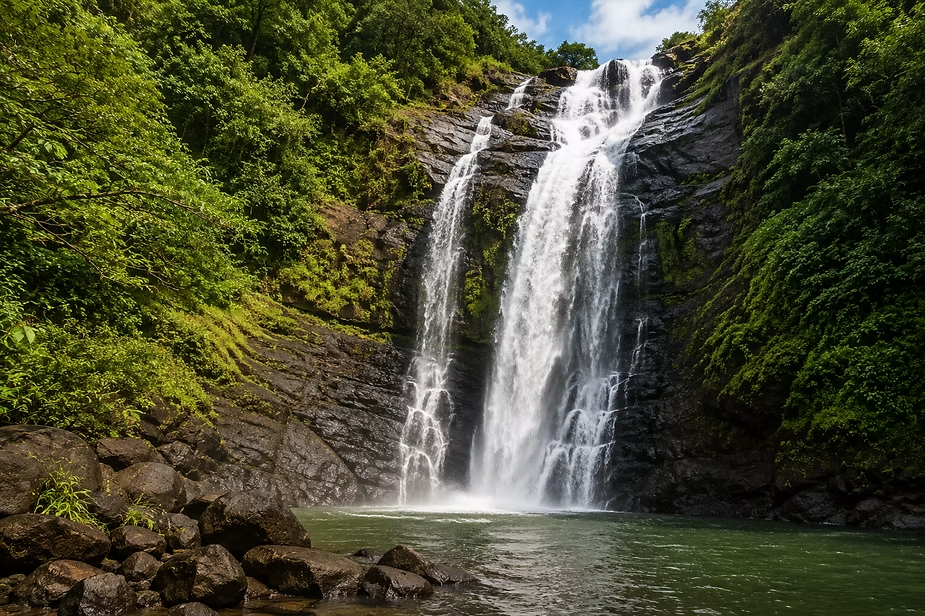
Government-backed tourism development across the state is steadily pushing Goa’s identity beyond sand and surf, into its heritage quarters, its spice-scented villages, its waterfalls, its churches and temples, and its forests.
Goa is everything but beaches, shacks and sundowners.
And the Goa Government has got that right with its initiatives.
Read Also: From Skills to Jobs: How Goa Is Building an Inclusive Future for All
New tourism circuits, waterfront redevelopment, better-connected public spaces, and stronger links to cultural and heritage sites are opening up parts of the state that tourists have historically skipped past on their way to the beach.
This isn’t just about giving visitors more photo stops.
A more spread-out tourism map means the benefits spread out too, homestays in Assagao or Chandor, transport operators, local guides, small restaurants and family-run businesses across the state get a shot at the tourism economy that, for years, concentrated heavily along the coastal belt.
It’s also a hedge against Goa’s biggest seasonal vulnerability, being a one-season economy.
A state that depends almost entirely on a few peak winter months is a state whose local businesses feel every dip, a bad flight season, a weak year, a slow December, very personally.
Diversifying what Goa offers, and when, is part of building a tourism economy that doesn’t live and die by December bookings alone.
Read Also: How Goa Is Protecting Its Mangroves
And here’s the part that might genuinely surprise one, Goa’s rains are becoming a selling point, not a shutdown period.
As per the NDTV report, domestic searches for monsoon trips to Goa are up nearly 40% year-on-year.
The reason?
“Micro-cations”, short, one-to-four-night breaks that travellers are increasingly choosing over long, planned-months-in-advance holidays.
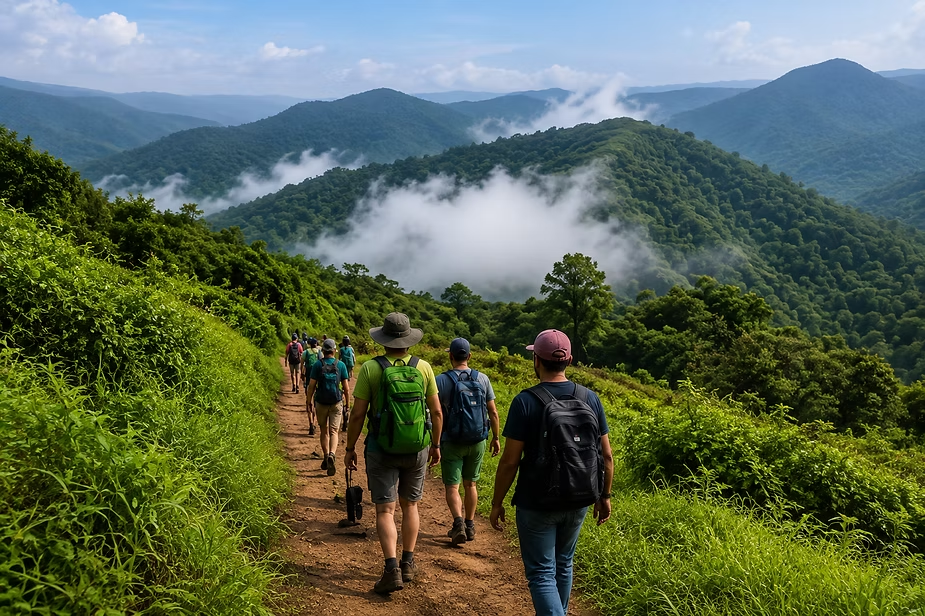
And monsoon Goa has a lot to offer once you look past the wet roads: waterfalls in full flow, forests turned impossibly green, heritage sites without the peak-season crowds, village festivals, and spiritual destinations that reveal a quieter, slower side of the state.
For a state so often reduced to one image, this shift matters.
It’s an invitation, to locals as much as visitors, to look at Goa a little differently.
The next traveller you meet might not be here for the beach at all. They might be here for a waterfall trek, a heritage walk through a Latin quarter, or a festival in a village most tourist maps don’t mention.
Because that’s what the Goa Government wants to change, a Goa worth talking about holistically, beyond just beaches.