


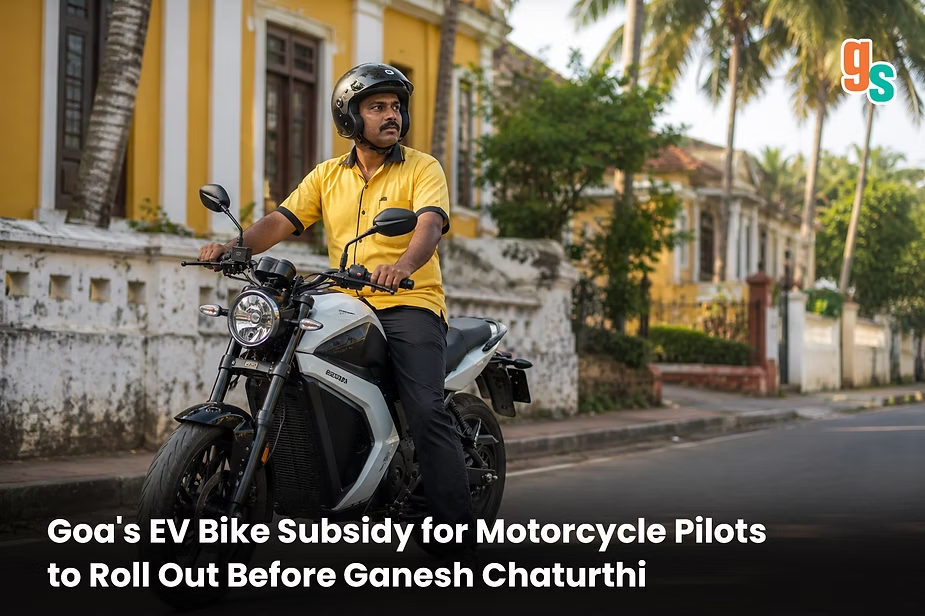
The state’s electric motorcycle taxi initiative has moved beyond announcements, with the government confirming a rollout timeline for subsidies aimed at helping licensed pilots switch to electric vehicles.
Goa’s Shift to Electric Mobility Has Entered Its Next Phase
Goa’s plan to electrify its traditional motorcycle taxi network now has a deadline.
After announcing a package of welfare measures for licensed motorcycle taxi pilots earlier this year, the Goa government has confirmed that its electric motorcycle subsidy scheme will be rolled out before Ganesh Chaturthi. The announcement marks the first clear implementation timeline for one of the state’s most ambitious transport reforms.
The initiative is designed to encourage licensed “pilots” to replace ageing petrol-powered motorcycles with electric alternatives, reducing operating costs while supporting the state’s broader transition towards cleaner transport.
Rather than introducing an entirely new transport model, the government is attempting to modernise one of Goa’s oldest and most recognisable forms of last-mile connectivity.
Read Also: Goa’s AI Traffic Cameras Are Live. Here’s What Every Motorist Needs to Know Before Your Next Drive
From Policy Announcement to Execution
The proposal first emerged in July when Chief Minister Pramod Sawant announced a package of benefits for traditional motorcycle taxi pilots.
Among the key measures were:
- Up to 50% subsidy on the purchase of electric motorcycles.
- Eligibility limited to registered, licensed traditional motorcycle taxi pilots.
- Selection of beneficiaries based on seniority.
- A financing mechanism allowing pilots to pay their share in instalments under consideration.
- Integration with the newly launched Majhe Driver App to digitally connect commuters with verified riders.
With the latest announcement, the government has indicated that the subsidy scheme is expected to begin before Ganesh Chaturthi, suggesting that administrative preparations are nearing completion.
Why Motorcycle Pilots Matter
Motorcycle taxis occupy a unique position in Goa’s transport ecosystem.
In many villages and semi-urban areas where buses are infrequent and larger taxis may be expensive or unavailable, motorcycle pilots provide affordable point-to-point transport.
For tourists, they offer a convenient way to navigate congested areas.
For residents, they often serve as an essential first-mile and last-mile transport option.
Replacing petrol motorcycles with electric vehicles could significantly reduce daily fuel expenditure, one of the largest recurring costs for riders. While the upfront cost of EVs remains higher than conventional motorcycles, the subsidy is intended to lower the financial barrier to adoption.
Part of a Larger Clean Mobility Strategy
The subsidy programme is not an isolated initiative.
It forms part of Goa’s wider sustainable mobility strategy, which includes:
- Installation of 70 new EV charging stations under the Centre’s PM E-Drive Scheme.
- Financial support for licensed autorickshaw operators to adopt electric vehicles.
- Expansion of charging infrastructure across the state.
- Retrofitting older Kadamba Transport Corporation buses with CNG engines.
- Policies encouraging cleaner energy use in industrial and commercial establishments.
Together, these measures aim to reduce dependence on petrol and diesel while improving public transport sustainability.
Digital Platform Complements the EV Push
Alongside vehicle electrification, the government has introduced the Majhe Driver App, a dedicated booking platform for traditional motorcycle taxi pilots.
The app allows commuters to book verified riders while enabling pilots to accept additional services such as parcel deliveries, grocery transport and food deliveries.
Officials have stated that participation remains voluntary, with pilots free to continue operating through traditional taxi stands if they choose. The government has also said that the platform will not charge commissions, allowing pilots to receive the full fare directly into their accounts.
The digital platform and EV subsidy are intended to work together, combining cleaner vehicles with technology-enabled service delivery.
What Happens Next?
If launched as scheduled before Ganesh Chaturthi, Goa’s electric motorcycle subsidy programme will represent one of the state’s first targeted EV transition initiatives focused on an existing transport workforce rather than private vehicle owners.
Its long-term success will depend on several factors:
- Speed of subsidy disbursal.
- Availability of charging infrastructure.
- Reliability and affordability of electric motorcycles.
- Willingness of traditional pilots to adopt new technology.
- Integration between the Majhe Driver App and the wider transport ecosystem.
For now, the biggest development is certainty. After weeks of announcements and planning, Goa’s electric pilot project has moved one step closer to implementation, signalling that the state’s clean mobility ambitions are beginning to translate into action.