


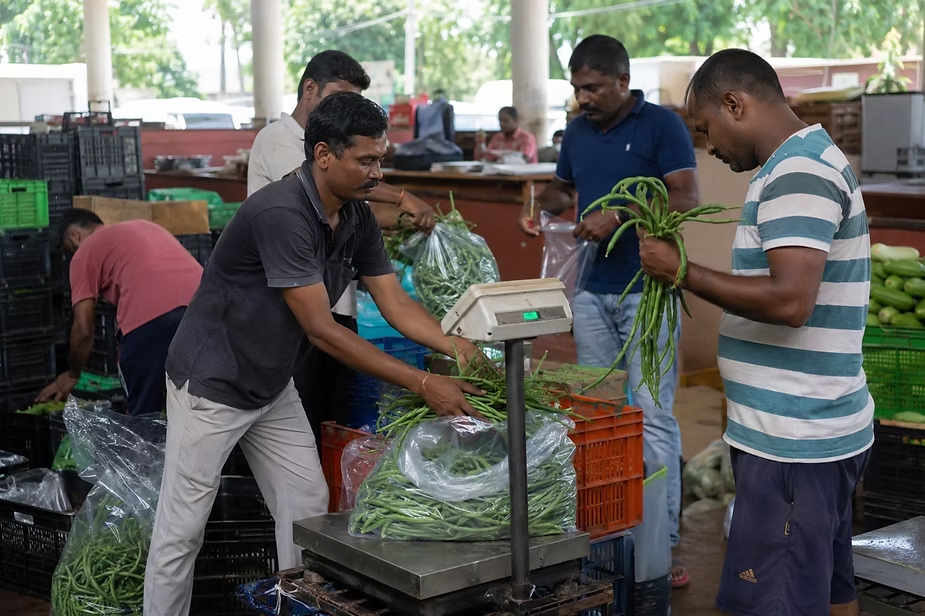
With the Goa State Horticulture Corporation crossing record procurement levels, the state’s assured market programme is encouraging farmers to grow more vegetables, strengthening local agriculture while reducing dependence on imports from neighbouring states.
At a Glance
- Goa State Horticulture Corporation (GSHCL) procured 11.3 lakh kilograms of vegetables by January 2024, surpassing the 10.8 lakh kilograms procured during the entire 2022-23 financial year.
- The procurement is carried out under the Promotion of Vegetables with Assured Market scheme.
- Farmers receive assured procurement rates regardless of fluctuations in wholesale market prices.
- GSHCL now operates 15 procurement centres, with additional centres opened at Davorlim, Cotigao and Aldona to improve accessibility.
- The initiative seeks to improve farmer income, increase vegetable cultivation and move Goa closer to greater self-reliance in fresh produce.
When Farmers Stop Worrying About Buyers, Agriculture Begins to Grow
Every farming season begins with hope. It also begins with uncertainty.
A farmer may prepare the soil, invest in seeds, fertilisers, irrigation and labour, only to discover weeks later that the market price has crashed or that buyers are unwilling to pay enough to recover the cost of cultivation. For decades, this uncertainty has discouraged many Goan farmers from expanding vegetable cultivation despite steady demand across the state.
That equation is beginning to change.
Rather than asking farmers to first produce and then search for buyers, Goa has attempted to reverse the process by creating an assured market before the crop is harvested. The result is now becoming visible in procurement figures.
According to the Goa State Horticulture Corporation Limited, vegetable procurement reached 11.3 lakh kilograms by January 2024, already exceeding the 10.8 lakh kilograms procured during the previous financial year. While procurement alone does not automatically translate into agricultural transformation, it provides one of the clearest indicators that more farmers are willing to cultivate vegetables when they know their produce will be purchased at assured prices.
For a state that still imports a substantial share of its vegetables from neighbouring states, this is more than an administrative achievement. It is an attempt to rebuild confidence in farming itself.
What Changed on the Ground? Goa’s Procurement Network Is Expanding
The record procurement figures are the outcome of a policy that focuses less on subsidies alone and more on reducing market uncertainty.
Under the Promotion of Vegetables with Assured Market scheme, farmers registered with the Goa State Horticulture Corporation deliver freshly harvested vegetables to designated procurement centres located across the state. At these centres, produce is weighed, quality checked and accepted for procurement, with payments made directly to farmers.
Unlike conventional wholesale markets where prices fluctuate daily depending on supply, farmers under the scheme receive predetermined procurement rates. This removes one of the biggest risks associated with vegetable farming, particularly for small and marginal cultivators.
Recognising the growing participation, the Corporation has expanded its infrastructure by opening additional procurement centres at Davorlim, Cotigao and Aldona, improving access for farmers located farther from existing collection points.
Officials say easier access reduces transportation costs and post-harvest losses while allowing vegetables to reach consumers more quickly.
The expansion is also intended to encourage more farmers from previously under-served regions to participate in organised vegetable marketing.
Why an Assured Market Could Be More Valuable Than a Higher Price
Agricultural policy often focuses on increasing yields through better seeds, irrigation or mechanisation. Equally important, however, is solving the marketing problem.
For vegetable farmers, production risk is only one part of the challenge. Market risk can be even greater.
Unlike grains that can often be stored for months, vegetables are highly perishable. If they remain unsold even for a short period, quality deteriorates rapidly, reducing both value and profitability.
An assured procurement system changes that equation.
Knowing that a government agency will purchase produce at predetermined rates allows farmers to plan cultivation more confidently. It reduces distress sales, encourages investment in better farming practices and makes vegetable cultivation financially more predictable.
According to GSHCL Managing Director Chandrahas Desai, the rise in procurement itself indicates increasing vegetable production across Goa. He has stated that assured prices provide financial stability while encouraging farmers to invest more in cultivation, contributing to overall agricultural growth in the state.
For policymakers, the objective extends beyond supporting existing farmers. The larger goal is to encourage additional cultivation so that Goa gradually produces a larger share of the vegetables consumed within the state.
Goa’s Long Journey Towards Agricultural Self-Reliance
The challenge facing Goa’s agriculture is not new.
Despite fertile land and favourable climatic conditions, Goa has historically depended heavily on neighbouring states for fresh vegetables. Rapid urbanisation, shrinking agricultural land, labour shortages and changing occupational patterns have steadily reduced local production over several decades.
Earlier studies of Goa’s agricultural sector estimated that the state imports a significant proportion of its vegetable requirements from outside, largely because local production falls short of demand generated by residents as well as millions of annual tourists. The same studies also identified weak market linkages as one of the principal reasons farmers remained reluctant to increase cultivation.
Many farmers traditionally sold produce directly along roadsides or through informal local markets, requiring them to spend considerable time marketing their harvest instead of focusing on cultivation. Limited organised procurement often meant uncertain prices and inconsistent income.
Over the years, the Government of Goa introduced multiple interventions through the Directorate of Agriculture and the Goa State Horticulture Corporation, including seed distribution, irrigation support, protected cultivation, mechanisation assistance and market development initiatives.
The assured procurement programme represents an evolution of these efforts by addressing one of agriculture’s most persistent bottlenecks: finding reliable buyers.
Rather than relying solely on production incentives, the policy attempts to build confidence that every additional kilogram produced will have an organised pathway to the market.
That confidence, more than any individual subsidy, may ultimately determine whether younger farmers choose to remain in agriculture and whether fallow land gradually returns to cultivation.
What This Means for Every Goan Household
For many Goans, the success of an agricultural procurement programme may seem like a story that concerns only farmers. In reality, its effects extend far beyond the fields.
Every day, thousands of households, restaurants, hotels, canteens and food businesses depend on a steady supply of fresh vegetables. When local production falls short, Goa relies heavily on produce transported from neighbouring states, primarily Karnataka and Maharashtra. While interstate trade is an essential part of India’s agricultural economy, dependence on external supplies also exposes consumers to transportation costs, weather disruptions, fuel price fluctuations and supply chain interruptions.
Increasing local production creates greater resilience.
Vegetables harvested within Goa reach markets faster, reducing travel time and helping preserve freshness. Shorter supply chains can also reduce post-harvest losses, one of the biggest challenges in the vegetable sector. According to the Ministry of Food Processing Industries, fruits and vegetables account for a significant share of India’s post-harvest losses because of their perishable nature.
For farmers, the benefits are more direct. The assurance of procurement removes the constant uncertainty surrounding sales. Instead of spending hours searching for buyers or transporting produce across multiple markets, cultivators can focus on improving productivity and crop quality.
The programme may also encourage cultivation of land that has remained fallow. Across several villages in Goa, agricultural land has gradually gone out of production due to labour shortages, ageing farming communities and limited commercial viability. If assured procurement improves confidence, even partial revival of such land could increase local vegetable output over time.
The benefits extend to younger farmers as well. Agriculture often struggles to attract the next generation because income is viewed as uncertain. A predictable marketing system makes farming more financially viable and may encourage more families to continue cultivation rather than abandoning it altogether.
Consumers also stand to benefit from greater availability of locally grown produce. While procurement itself does not guarantee lower retail prices, stronger local production can improve market stability and reduce excessive dependence on external supply during periods of disruption.
Building Confidence Before Expanding Cultivation
The Goa Government has consistently argued that improving agricultural production requires solving the marketing challenge rather than focusing only on cultivation.
Officials say farmers are often willing to grow more vegetables when they know there will be an assured buyer at the end of the season. This philosophy forms the basis of the Promotion of Vegetables with Assured Market scheme implemented through the Goa State Horticulture Corporation Limited.
According to GSHCL Managing Director Chandrahas Desai, the corporation’s record procurement reflects increasing participation from farmers and rising vegetable production. He has stated that assured procurement rates encourage cultivators to invest more confidently in vegetable farming because they are protected from sudden price crashes in wholesale markets.
The government has also expanded procurement infrastructure by increasing the number of collection centres to fifteen, adding new facilities at Davorlim, Cotigao and Aldona to make participation easier for farmers living farther away from existing centres.
Agriculture Minister Ravi Naik has repeatedly appealed to farmers across Goa to increase vegetable cultivation, assuring them that the state government is prepared to purchase their produce through the corporation. His message has been straightforward: farmers should focus on growing vegetables while the government takes responsibility for creating a reliable market.
Officials believe that increasing domestic production is essential not only for strengthening farmer incomes but also for improving Goa’s food security and reducing dependence on vegetables sourced from outside the state.
Support for Farmers, Questions on Scale and Long-Term Sustainability
Unlike several other policy issues that generate sharp political divisions, the objective of supporting farmers through better market access has received broad acceptance.
However, opposition parties and agricultural observers have argued that procurement alone cannot solve all of Goa’s farming challenges.
Several public representatives have previously pointed to issues such as shrinking agricultural land, labour shortages, irrigation constraints, rising input costs and declining interest among younger generations in agriculture. They argue that procurement should be accompanied by stronger investments in irrigation infrastructure, mechanisation, soil health improvement and farmer training.
There have also been broader political discussions around ensuring that procurement rates remain remunerative as cultivation costs increase. Some stakeholders have suggested regular reviews of procurement prices to reflect changing input costs and inflation.
Agricultural organisations have also emphasised the need for continued expansion of cold storage facilities, logistics and processing infrastructure to reduce wastage and improve value addition.
Overall, while the procurement programme has generally been viewed as a positive intervention, many believe its long-term success will depend on whether it becomes part of a larger agricultural development strategy rather than remaining a standalone marketing initiative.
Why Market Assurance Often Determines Whether Farmers Grow More
Agricultural economists frequently describe market access as one of the strongest determinants of production decisions.
A farmer does not simply decide what to grow based on soil or rainfall. Equally important is the confidence that the harvest will generate a reasonable and predictable income.
Across India, several successful agricultural models have demonstrated the importance of assured procurement. Dairy cooperatives, contract farming arrangements and organised horticulture supply chains all share one common feature: reducing uncertainty for producers.
The Goa model follows a similar principle.
Instead of intervening only after prices collapse, the government seeks to reduce uncertainty before cultivation begins.
This approach creates behavioural change. Farmers become more willing to invest in better seeds, improved irrigation, protected cultivation and modern farming techniques because the risk of being left without buyers is significantly reduced.
Experts also note that market assurance becomes increasingly important in horticulture because vegetables cannot be stored for long periods. Delayed sales often translate directly into financial losses.
Another important aspect is rural confidence. When farmers begin to see neighbouring cultivators consistently selling produce through organised procurement channels, participation tends to increase organically through word of mouth rather than through government campaigns alone.
The recent procurement figures therefore represent more than administrative statistics. They may indicate growing trust between farmers and the procurement system.
Whether this momentum continues will depend on maintaining timely payments, expanding procurement capacity and ensuring that farmers continue receiving competitive prices.
The Numbers Behind Goa’s Vegetable Procurement Drive
The available data illustrates the pace at which the procurement programme has expanded.
The Goa State Horticulture Corporation procured 11.3 lakh kilograms of vegetables by January 2024, exceeding the 10.8 lakh kilograms procured during the entire 2022-23 financial year.
The corporation currently operates 15 procurement centres across Goa, including recently established facilities at Davorlim, Cotigao and Aldona, bringing procurement services closer to farming communities.
The procurement programme functions under the Promotion of Vegetables with Assured Market scheme, which guarantees procurement at predetermined rates instead of exposing farmers entirely to daily market fluctuations.
The Directorate of Agriculture continues implementing complementary schemes involving irrigation support, mechanisation, protected cultivation, quality planting material and farmer assistance, all intended to strengthen agricultural productivity alongside market development.
Together, these measures represent an integrated effort to improve both production and marketing rather than addressing only one side of the agricultural value chain.
From Procurement to Long-Term Agricultural Growth
The immediate priority for the government is expected to be sustaining the momentum created by record procurement levels.
As more farmers join the programme, procurement infrastructure will need to keep pace. This could include additional collection centres in underserved regions, improved logistics for transporting vegetables and investments in cold chain facilities to reduce post-harvest losses.
The Directorate of Agriculture is also likely to continue encouraging farmers to diversify into vegetable cultivation through existing support schemes covering irrigation, protected cultivation, farm mechanisation and quality planting material.
Another area that may receive greater attention is technology. Digital registration systems, real-time procurement information and improved payment mechanisms could make participation easier for farmers while increasing transparency.
There is also potential for stronger integration with Goa’s tourism economy. Hotels, restaurants, resorts and institutional kitchens consume large quantities of vegetables throughout the year. Greater linkages between local farmers and these buyers could create a stable demand base while strengthening the state’s local food ecosystem.
In the longer term, success will not be measured solely by procurement volumes. It will depend on whether more farmers remain in agriculture, whether abandoned fields return to cultivation and whether Goa gradually produces a larger share of the vegetables consumed within the state.
If these outcomes are achieved, the procurement programme could become one of the state’s most significant agricultural policy interventions in recent years.
A Broader Push Towards Strengthening Goa’s Rural Economy
The vegetable procurement programme is part of a wider effort by the Government of Goa to modernise agriculture and improve rural livelihoods.
Recent initiatives have focused on expanding irrigation facilities, promoting mechanisation, encouraging protected cultivation, improving access to quality seeds and strengthening horticulture across the state.
The government has also been promoting natural farming, encouraging cultivation of indigenous crop varieties and supporting farmers through various subsidy schemes aimed at reducing production costs.
Alongside these measures, Goa has continued investing in infrastructure for agriculture, including improvements in market access, storage facilities and farmer outreach programmes.
Together, these initiatives reflect a broader policy direction that seeks to make agriculture more commercially viable while preserving Goa’s rural landscape and food security.
Although each programme addresses a different challenge, they share a common objective: making farming a sustainable livelihood for present and future generations.
Confidence May Be Goa’s Most Valuable Agricultural Crop
Agriculture has always depended on more than fertile soil and favourable weather.
It depends on confidence.
Confidence that the crop will survive. Confidence that prices will remain stable. Confidence that buyers will be waiting when the harvest is ready.
For many years, that confidence had weakened among sections of Goa’s farming community. Rising costs, uncertain markets and shrinking profitability made vegetable cultivation an increasingly difficult choice.
The recent record procurement by the Goa State Horticulture Corporation does not solve every challenge facing agriculture. Labour shortages, land utilisation, irrigation and productivity will continue to require sustained attention. Yet the programme addresses one of the most immediate concerns confronting farmers: whether their produce will find a market.
That assurance changes the economics of farming.
When cultivators know there is a reliable buyer, they are more willing to invest in their fields, expand production and plan for future seasons. As participation grows, the benefits extend beyond individual farmers to consumers, local businesses and the state’s food system as a whole.
Goa’s agricultural future will ultimately be shaped by many factors, but one lesson is already becoming clear. Policies that reduce uncertainty can sometimes achieve as much as policies that increase subsidies.
The record procurement figures are therefore more than an administrative milestone. They represent growing trust in a system designed to make farming a more predictable and sustainable livelihood.
Whether that trust continues to grow may determine how much of Goa’s future food is cultivated within Goa itself.
Sources and References
- Times of India. Horticulture Corporation Marks Record Procurement of Vegetables https://timesofindia.indiatimes.com/city/goa/horticulture-corp-marks-record-procurement-of-veggies/articleshow/108473192.cms
- Lokmat Goa. Grow Vegetables and the State Government Will Sell Them, Agriculture Department Appeals to Farmers https://www.lokmat.com/goa/grow-vegetables-and-state-government-is-responsible-for-selling-goa-agriculture-department-appeal-to-farmers-a-a719/
- Directorate of Agriculture, Government of Goa https://www.agri.goa.gov.in
- Goa State Horticulture Corporation Limited
- Ministry of Food Processing Industries, Government of India
- Small Farmers’ Agribusiness Consortium (SFAC), Detailed Project Report on Goa Agriculture and Market Linkages