


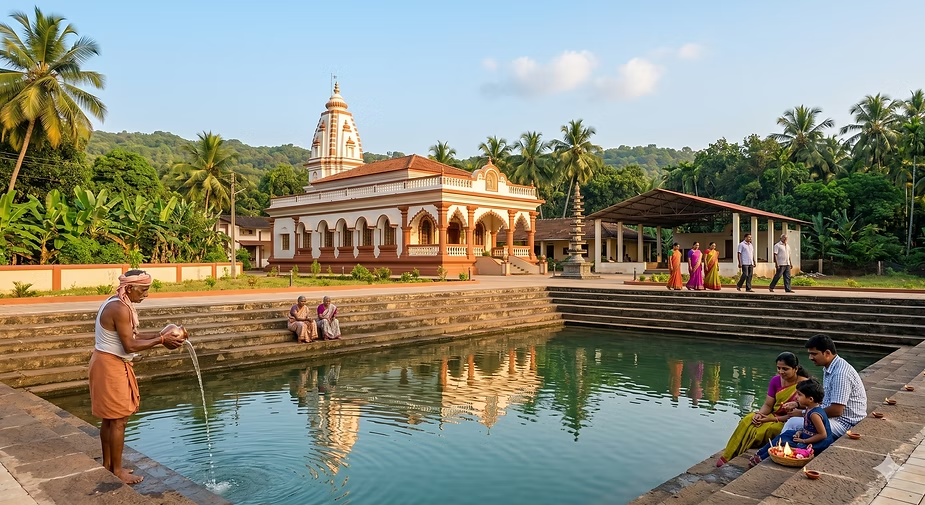
In the quiet village of Kudne in Bicholim taluka, far from the crowded beaches and bustling tourist districts that often define Goa in the public imagination, a different story of the state is unfolding. It is a story rooted in faith, community, culture, and identity. At the center of this story stands the historic Mauli Temple, a sacred space that has long served as more than just a place of worship.
For generations, it has functioned as the cultural and social heart of the village, bringing together families, preserving traditions, and strengthening community bonds. Today, through a series of development initiatives undertaken under the leadership of Chief Minister Pramod Sawant, the temple is entering a new chapter—one that combines heritage preservation with modern infrastructure.
The recent inauguration of development works at the Mauli Temple reflects a broader vision for Goa’s future. Rather than viewing development and cultural preservation as competing priorities, the state government is pursuing a model where both move forward together. The initiatives undertaken at the temple are designed not only to improve facilities for devotees but also to strengthen the role of the temple as a living cultural institution within village life.
One of the most significant projects currently underway is the construction of a new temple pond through the Water Resources Department. Temple ponds have historically played an important role in Goan religious and social life. Beyond their ritual significance, these water bodies served as traditional systems of rainwater harvesting and groundwater recharge. Over time, many such ponds across the state fell into neglect. The new pond at Mauli Temple represents an effort to revive this traditional wisdom while incorporating modern engineering standards. It will provide a reliable water source, enhance the temple’s surroundings, and contribute to environmental sustainability within the village ecosystem.
Alongside the pond, efforts are also being made to improve the Ganpati immersion facilities near the temple. Ganesh Chaturthi remains one of Goa’s most cherished festivals, bringing families together in celebration and devotion. The beautification and strengthening of the immersion site will help ensure that these annual celebrations can be conducted in a safer, more organized, and environmentally responsible manner. The upgraded infrastructure will improve accessibility for devotees while reducing the environmental impact often associated with large-scale immersion activities.
Another important addition to the temple complex is the construction of a spacious devotee shed. During major festivals, religious ceremonies, and community gatherings, hundreds of villagers and visitors assemble at the temple premises. The new structure will provide shelter during Goa’s intense monsoon season and hot summer months, ensuring greater comfort and convenience for devotees throughout the year. More importantly, it will create a dedicated space for community interaction, reinforcing the temple’s role as a center of social and cultural life.
The significance of these developments extends well beyond physical infrastructure. In Goa’s villages, temples have traditionally functioned as institutions that strengthen social cohesion. They are places where generations come together, where local customs are preserved, and where collective decisions affecting village life are often discussed. Investment in temple infrastructure therefore translates into investment in community life itself. By improving facilities at the Mauli Temple, the government is helping to preserve an institution that continues to play a vital role in maintaining social harmony and cultural continuity.
The timing of the inauguration carried special meaning for the local community as it coincided with the celebrations marking the eleventh anniversary of Goddess Mauli’s consecration in Falwada Ward No. 3. Religious ceremonies, purification rituals, and cultural programs brought villagers together in a celebration of faith and tradition. The occasion highlighted the enduring importance of the temple in everyday life and demonstrated how cultural heritage remains deeply intertwined with community identity in rural Goa.
The development of the Mauli Temple also reflects a larger cultural vision that has increasingly shaped governance priorities in Goa. Over recent years, there has been growing emphasis on preserving and revitalizing the state’s indigenous cultural heritage. This approach recognizes that Goa’s identity is not defined solely by tourism or urban development but also by its temples, festivals, traditions, and village institutions. Protecting these cultural assets is viewed as an essential component of sustainable development.
This philosophy carries particular significance in the Goan context. The state’s history includes periods during which indigenous religious and cultural institutions faced immense challenges. The preservation and development of temples today therefore represent more than infrastructure projects; they symbolize a commitment to safeguarding the cultural foundations upon which generations of Goans have built their communities. Through investments in temple restoration and development, the government is seeking to ensure that these traditions remain vibrant and accessible for future generations.
The transformation taking place in Kudne must also be understood within the wider development of the Sanquelim constituency. Over the past several years, the region has witnessed significant investments in public infrastructure, community facilities, cultural institutions, and environmental projects. From riverfront development initiatives and public buildings to sports infrastructure and cultural centers, the focus has been on creating balanced growth that improves quality of life while respecting local identity. The developments at the Mauli Temple form an important part of this larger vision.
Equally noteworthy is the environmental dimension of the project. The restoration and construction of traditional water bodies demonstrate how heritage conservation can contribute to ecological sustainability. Temple ponds historically played a critical role in water management systems across Goa. By reviving such structures, the state is not only preserving cultural heritage but also strengthening local environmental resilience. The new pond is expected to support groundwater recharge, improve water availability, and enhance biodiversity in the surrounding area.
The benefits of the project are also likely to extend into the local economy. Construction activities create employment opportunities for local workers and suppliers, while improved temple infrastructure can attract greater participation during religious festivals and community events. Increased footfall generates demand for local businesses, including vendors, transport providers, and small retailers. Over time, well-maintained cultural and religious sites may also contribute to the growth of heritage and spiritual tourism in Goa’s hinterland regions.
Yet the long-term success of these initiatives will depend not only on government investment but also on community stewardship. The responsibility of maintaining the temple complex, preserving cleanliness, managing facilities, and passing traditions to future generations rests with local residents, temple committees, and community leaders. Development creates opportunities, but it is active community participation that ensures these opportunities are fully realized.
The story of the Mauli Temple in Kudne ultimately represents a broader lesson about Goa’s development journey. Modernization does not have to come at the cost of heritage. Infrastructure projects do not need to erase cultural identity. Instead, when approached thoughtfully, development can strengthen the institutions and traditions that give communities their unique character.
As the new pond takes shape, the immersion facilities are upgraded, and the devotee shed rises within the temple premises, Kudne is witnessing more than a series of construction projects. It is witnessing an investment in its cultural future. The Mauli Temple stands today as an example of how Goa can continue to progress while remaining firmly rooted in its civilizational heritage. In preserving spaces that nurture faith, community, and tradition, Goa is ensuring that development serves not only economic growth but also the preservation of the values and identities that define the state itself.