


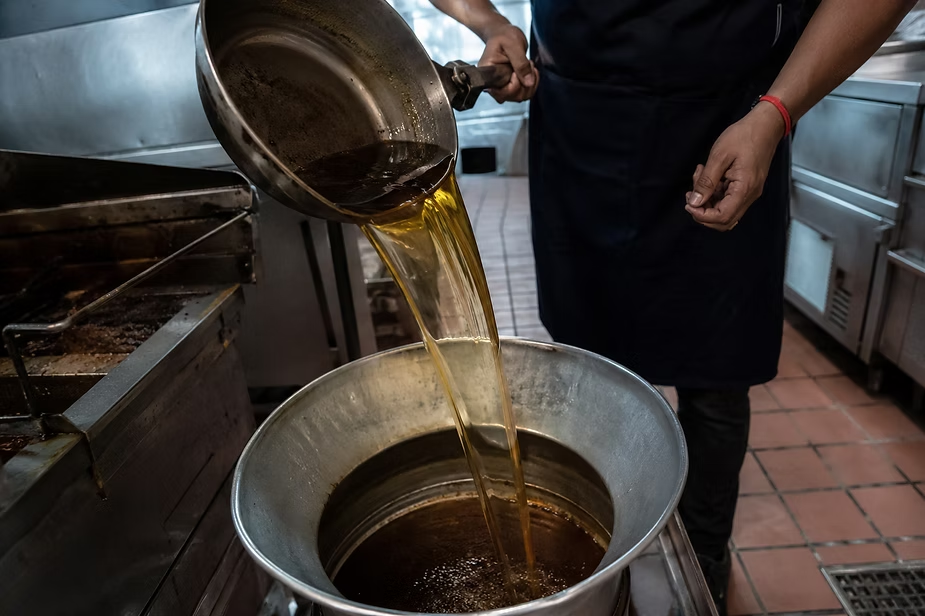
A proposed digital tracking system for used cooking oil could reshape how Goa tackles food safety, environmental protection and renewable energy. By making every litre traceable, the state hopes to transform an overlooked waste stream into a resource for the circular economy.
At a Glance
- Goa plans to introduce mandatory digital tracking of used cooking oil generated by commercial food establishments.
- The initiative will be implemented through a digital platform developed by the Goa Energy Development Agency (GEDA).
- Over 9 lakh kilograms of used cooking oil have been generated in Goa over the past 4.5 years.
- The objective is to ensure authorised collection and conversion of used cooking oil into biodiesel instead of illegal reuse or improper disposal.
- The proposal aligns with the Food Safety and Standards Authority of India’s RUCO (Repurpose Used Cooking Oil) initiative and India’s broader biofuel policy.
When Waste Becomes a Resource
Every evening, thousands of restaurants, beach shacks, hotels and roadside eateries across Goa finish serving the day’s final meals. Fryers are switched off, kitchens are cleaned, and containers of darkened cooking oil are pushed aside for disposal.
For decades, what happened next received little public attention.
Some used cooking oil entered authorised recycling channels. Some was discarded improperly. In some instances across India, authorities have found used oil re-entering the food chain through illegal resale, posing significant food safety concerns.
Goa now wants to change that story.
Instead of treating used cooking oil as a waste product, the state is preparing to recognise it as an economic resource capable of supporting cleaner fuel production while simultaneously protecting public health and the environment.
The proposed digital tracking system represents more than a new regulatory requirement. It signals a shift in governance philosophy. Waste is no longer viewed simply as something to be discarded. It becomes a measurable asset whose movement can be monitored, verified and redirected towards productive use.
For a state whose economy depends heavily on tourism, hospitality and environmental quality, that distinction matters.
Goa Wants Every Litre of Used Cooking Oil to Be Digitally Accounted For
The Goa State Pollution Control Board (GSPCB) has proposed a mandatory digital tracking framework for the collection and disposal of used cooking oil generated by commercial food establishments.
The system is expected to operate through a digital platform developed by the Goa Energy Development Agency (GEDA), allowing restaurants, hotels, caterers and other food businesses to record the quantity of waste oil they generate. Authorised collection agencies would then collect the oil, with each transaction digitally documented before the material is transported for processing into biodiesel.
The proposal comes after authorities estimated that nearly 9 lakh kilograms of used cooking oil have been generated across Goa during the past four and a half years. Much of this material has already been collected by authorised agencies and transported outside the state for biodiesel production, demonstrating that a functioning collection network already exists. The digital platform aims to strengthen transparency, accountability and compliance by ensuring every stage of the process is traceable.
Officials believe digital monitoring can address several longstanding challenges simultaneously.
First, it reduces opportunities for illegally recycled cooking oil to return to commercial kitchens.
Second, it provides regulators with reliable data on waste generation, collection efficiency and compliance levels.
Third, it creates a dependable supply chain for biodiesel manufacturers who rely on used cooking oil as a feedstock.
The proposal also complements national efforts under the Food Safety and Standards Authority of India’s Repurpose Used Cooking Oil (RUCO) programme, which encourages safe disposal and productive reuse of used cooking oil across the country.
Rather than introducing an entirely new concept, Goa is attempting to digitise and standardise an existing practice, making compliance easier for businesses while giving regulators better oversight.
In doing so, the state is attempting to solve three different public policy challenges with a single intervention: food safety, environmental protection and renewable energy generation.
A Digital Trail Could Protect Food, Rivers and Fuel Security
For most citizens, used cooking oil disappears the moment it leaves a restaurant kitchen. Few consider where it goes or what happens after it is collected. Yet that journey has important implications for food safety, environmental protection and India’s renewable energy ambitions.
The biggest concern is the illegal reuse of degraded cooking oil. Scientific studies have shown that repeatedly heating edible oil changes its chemical composition, producing harmful compounds linked to long-term health risks. Recognising this danger, the Food Safety and Standards Authority of India (FSSAI) mandates that cooking oil should not be used once its Total Polar Compounds (TPC) exceed 25 percent. Through its Repurpose Used Cooking Oil (RUCO) initiative, the regulator encourages restaurants and food businesses to hand over used oil only to authorised aggregators for conversion into biodiesel rather than allowing it to re-enter the food chain.
Environmental concerns are equally significant. Used cooking oil discharged into drains can clog sewage networks, contaminate water bodies and increase the burden on wastewater treatment systems. For a coastal state like Goa, where rivers, estuaries and beaches underpin tourism, fisheries and biodiversity, reducing this source of pollution carries wider economic and ecological value.
The proposal also supports India’s National Policy on Biofuels, which promotes waste-based feedstocks for cleaner transportation fuels. Biodiesel produced from used cooking oil reduces dependence on virgin vegetable oils and gives value to a waste product that would otherwise require disposal. Instead of treating waste cooking oil as an environmental liability, the policy seeks to integrate it into a circular economy where waste becomes an input for another industry.
Digital traceability is what differentiates this initiative from earlier collection systems. By recording every transaction, regulators gain visibility into how much oil is generated, who collects it and where it ultimately reaches. Such data can improve compliance, identify leakages in the system and strengthen confidence among businesses participating in the programme.
Goa Is Building on an Existing Foundation
The idea of recycling used cooking oil is not new. FSSAI launched the RUCO programme in 2018 to create a nationwide ecosystem for safe collection and conversion of waste cooking oil into biodiesel. Since then, authorised collection agencies have operated in several Indian states, partnering with restaurants, hotels and institutional kitchens.
Goa has already participated in this ecosystem. According to estimates cited by state authorities, nearly 9 lakh kilograms of used cooking oil have been generated in the state over the past four and a half years. Much of this oil has been collected through authorised channels and transported for biodiesel production outside Goa, demonstrating that the state already possesses a functioning recovery network.
The new proposal therefore represents an evolution rather than a fresh beginning.
Instead of relying primarily on paper records or voluntary reporting, the government intends to introduce a digital platform managed through the Goa Energy Development Agency (GEDA). Every participating commercial establishment would record waste generation digitally, authorised collectors would update pickups electronically and regulators would have access to a real-time database.
This shift mirrors a broader trend in governance where digital platforms are increasingly being used to improve compliance, reduce leakages and generate policy data. Similar approaches have already transformed tax administration, public distribution systems and waste management in different parts of India.
For Goa, the digital tracking of used cooking oil fits into a larger vision of technology-enabled environmental governance. It seeks not only to improve enforcement but also to create measurable outcomes that can inform future sustainability policies.
A Cleaner Plate, Cleaner Rivers and Cleaner Energy
Although the regulation directly targets commercial food establishments, its benefits extend well beyond restaurants.
Consumers gain greater confidence that degraded cooking oil is less likely to find its way back into the food chain through illegal resale. While enforcement remains essential, digital traceability makes diversion more difficult by documenting the movement of waste oil from generation to authorised disposal.
Residents also benefit from improved environmental management. Preventing used cooking oil from entering drainage systems can reduce blockages, improve wastewater quality and lessen pollution reaching Goa’s rivers and coastal waters.
The hospitality industry stands to gain from greater standardisation as well. Restaurants complying with environmental and food safety regulations increasingly find themselves meeting the expectations of both regulators and environmentally conscious tourists.
There is also an economic dimension. Waste cooking oil, once regarded as a disposal challenge, acquires measurable value when channelled into biodiesel production. That shift strengthens the circular economy by ensuring resources remain in productive use for longer instead of becoming waste.
Ultimately, the proposal is less about regulating restaurants than about improving the efficiency of an entire environmental value chain.
Technology Is the Backbone of Goa’s Circular Economy Plan
The Goa government has positioned the proposed digital tracking system as an environmental governance reform rather than simply another compliance requirement for businesses.
According to the Goa State Pollution Control Board (GSPCB), the objective is to create a transparent and traceable ecosystem for the collection, sale and processing of used cooking oil. The digital marketplace, developed by the Goa Energy Development Agency (GEDA) and operated through its authorised partner BiofuelCircle, is expected to connect food business operators, authorised collectors and biodiesel processors on a single platform.
Officials say the system will deliver four key outcomes.
First, it will ensure waste cooking oil is channelled only through authorised collection agencies.
Second, it will improve monitoring and environmental compliance through digital records rather than manual verification.
Third, it will provide fair and transparent pricing for hotels, restaurants and food businesses selling their used cooking oil.
Finally, it will strengthen Goa’s contribution to renewable fuel production by ensuring a steady supply of feedstock for biodiesel manufacturing.
The proposal also reflects a broader shift in governance, where digital platforms are increasingly being used to improve transparency, generate policy data and simplify regulatory oversight.
Unlike large infrastructure or land policy decisions, the proposed waste cooking oil tracking framework has not triggered significant political opposition.
As of now, no major opposition party has publicly opposed the objective of converting used cooking oil into biodiesel or introducing digital monitoring for commercial establishments. Instead, public discussion has centred on implementation.
Industry observers and stakeholders have raised practical questions.
Will every restaurant, beach shack and small eatery have access to the digital platform?
Will authorised collectors be available across all talukas?
Will compliance increase operational costs for small businesses?
How frequently will inspections take place?
These are operational questions rather than ideological disagreements. The broad objective of preventing unsafe reuse of cooking oil and promoting cleaner fuel enjoys widespread acceptance because it aligns with food safety regulations and environmental goals already established by the Government of India.
A Small Policy With Large Climate and Public Health Benefits
Environmental experts increasingly describe used cooking oil as one of the most underutilised resources in India’s waste economy.
Unlike first-generation biofuels, biodiesel produced from used cooking oil does not compete with food crops. It makes productive use of an existing waste stream while reducing the environmental burden associated with disposal.
Food safety specialists point to another important benefit.
Repeated heating changes the chemical composition of edible oil, producing trans fats, aldehydes and free radicals that have been associated with hypertension, cardiovascular disease and certain cancers. This is why FSSAI prohibits the continued use of cooking oil once Total Polar Compounds exceed 25 percent. Preventing degraded oil from re-entering the food chain is therefore as much a public health measure as an environmental one.
Experts also note that digital traceability can improve policymaking. Reliable data on waste generation, collection volumes and recovery rates enables governments to identify gaps, improve compliance and design more effective environmental programmes over time.
The Success of the Policy Will Depend on More Than Technology
The policy establishes a strong framework, but several implementation questions remain before it can achieve its intended impact.
Will the government mandate registration for every commercial kitchen, including small eateries and seasonal beach shacks?
How will compliance be monitored in remote parts of the state?
Will incentives encourage businesses to participate voluntarily before penalties are introduced?
Can Goa eventually establish its own biodiesel processing capacity instead of transporting collected oil outside the state for conversion?
Perhaps the biggest question concerns behavioural change. Digital platforms can improve transparency, but long-term success will depend on consistent participation by food businesses, efficient collection networks and sustained regulatory enforcement.
If these elements come together, Goa could become one of India’s leading examples of how digital governance can transform an everyday waste product into an environmental and economic asset.
A Small Change With the Potential for Lasting Impact
Not every government reform is measured in kilometres of highways or crores of investment. Some begin quietly, inside restaurant kitchens, with something as ordinary as used cooking oil.
Goa’s proposed digital tracking system may appear to be a niche environmental regulation, but its implications extend much further. It addresses food safety by reducing the risk of degraded oil returning to consumers. It protects rivers and drainage systems by promoting responsible disposal. It supports India’s renewable energy ambitions by supplying feedstock for biodiesel production. Most importantly, it demonstrates how technology can strengthen governance without creating unnecessary complexity.
The initiative also reflects a broader evolution in public policy. Waste is no longer viewed as the end of a product’s lifecycle. Instead, it is recognised as the beginning of another. Through digital traceability, accountability and resource recovery, Goa is attempting to transform an overlooked waste stream into measurable environmental and economic value.
Whether the programme ultimately succeeds will depend on implementation, industry participation and sustained enforcement. Yet the direction is clear. By treating waste as a resource rather than a liability, Goa is laying the foundation for a cleaner, more circular and more resilient future.
Sources & References
- The Times of India – Goa plans to recycle used cooking oil into biodiesel (18 May 2026).
- The Navhind Times – Digital disposal of used oil now must for eateries.
- Food Safety and Standards Authority of India (FSSAI) – RUCO (Repurpose Used Cooking Oil) Initiative and Standard Operating Procedure on Used Cooking Oil.
- Goa State Pollution Control Board (GSPCB) – Policy proposal and public statements on digital tracking of used cooking oil.
- Goa Energy Development Agency (GEDA) – Digital marketplace initiative for used cooking oil collection.
- National Policy on Biofuels, Government of India – Ministry of Petroleum and Natural Gas.