


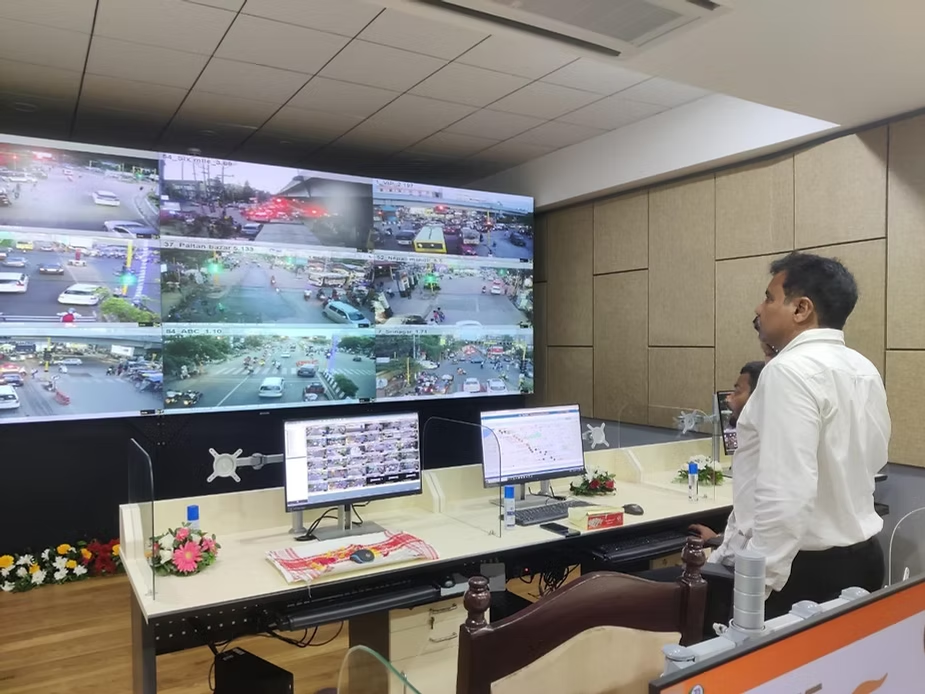
Goa has activated AI-enabled traffic enforcement cameras at 26 locations across the state under its Intelligent Traffic Management System (ITMS). The system automatically detects specified traffic violations, captures photographic and video evidence, and generates electronic challans after verification.
Goa’s Roads Have a New Pair of Eyes
For years, traffic enforcement in Goa largely depended on police personnel positioned at busy junctions, periodic enforcement drives and public vigilance. That model has now begun to change.
Drivers travelling through several of Goa’s busiest intersections may not immediately notice it, but the state’s latest traffic police presence neither carries a whistle nor waves motorists to the roadside.
Instead, it watches continuously.
After multiple postponements for testing, certification and public awareness, the Transport Department has activated AI-powered traffic enforcement cameras across 26 locations. The rollout marks one of Goa’s most significant technology upgrades in road policing in recent years.
From CCTV to Automated Enforcement
Unlike conventional surveillance cameras that merely record footage, the new system forms part of an Intelligent Traffic Management System (ITMS).
According to the Goa Transport Department, the cameras automatically detect notified traffic violations, record photographic and video evidence and initiate the electronic challan process through digital integration. Enforcement is intended to reduce manual intervention while creating uniform application of traffic rules.
Authorities have said motorists receiving e-challans will be able to view supporting evidence before making payments through official channels.
Read Also: https://www.goaspeaks.in/post/goa-at-the-top-state-records-india-s-highest-share-of-women-teachers
Why This Matters Beyond Traffic Fines
The immediate headline is about e-challans.
The larger story is about enforcement certainty.
Road safety experts have long argued that consistent enforcement changes driving behaviour more effectively than occasional policing. Automated systems reduce dependence on where officers are physically deployed and extend monitoring beyond traditional checkpoints.
Goa is joining a growing list of Indian states introducing AI-assisted traffic management to improve compliance and modernise road enforcement.
A Project That Took Longer Than Planned
The rollout did not happen overnight.
The AI enforcement programme was originally expected earlier in the year but underwent several rounds of testing, certification and awareness campaigns before authorities authorised live enforcement.
Government officials repeatedly cited technical validation and public awareness as reasons for delaying implementation, indicating an effort to ensure the system met operational and legal requirements before issuing enforceable challans.
What It Means for Everyday Goans
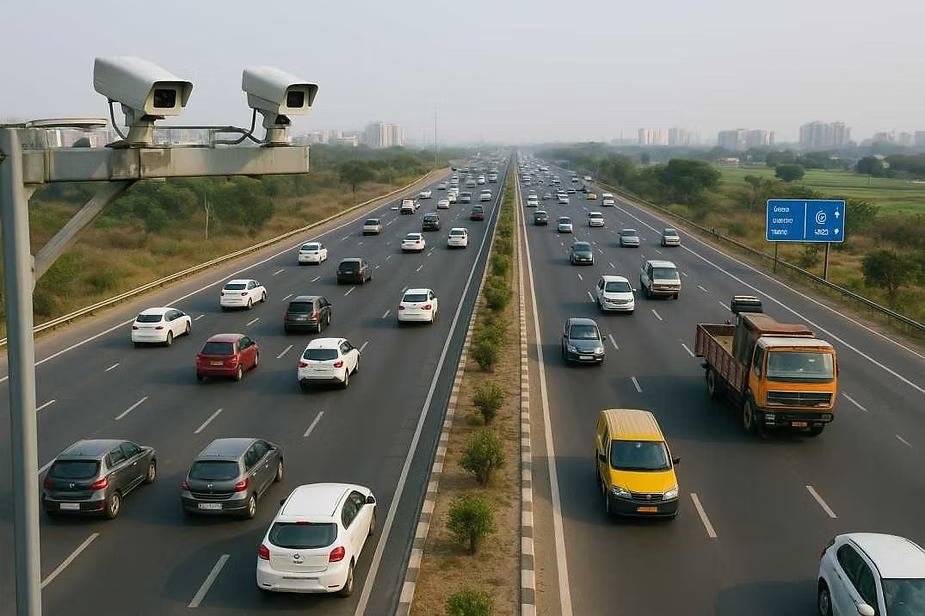
For commuters, commercial drivers and tourists alike, the practical implication is straightforward.
Traffic violations that may previously have escaped notice at unmanned junctions are now more likely to be digitally recorded.
The system is expected to strengthen compliance with road safety regulations while reducing discretionary enforcement. At the same time, motorists retain the right to verify challans through official channels if they believe an error has occurred.
As with any automated enforcement technology, the effectiveness of the programme will depend not only on detection accuracy but also on transparent verification, grievance redressal and timely correction of any disputed notices.
The Goa Transport Department describes the initiative as part of its broader effort to modernise transport governance through technology and improve road safety using intelligent enforcement systems. The department has formally announced implementation of AI-based challan generation at 26 locations across the state.