


Goa’s folk traditions, Kunbi textiles, patoleo, azulejo art, and the centuries-old khazan system will be featured at the Independence Day reception at Rashtrapati Bhavan, presenting the state through culture, food, craft, and environmental knowledge.
At a Glance
- Goa will feature at the Independence Day reception at Rashtrapati Bhavan on August 15, 2026.
- Samai and Ghode Modni will represent Goa’s folk traditions.
- Ghumot, Shamel and Kasale will represent its musical heritage.
- Kunbi textiles will feature as table runners.
- Patoleo will represent Goan cuisine.
- Azulejo art appears on the official Independence Day invitation.
- Khazan lands are highlighted as a nature-based coastal defence system.
The Goa India Usually Sees Is Not the Whole Goa
For decades, Goa’s national image has been built around beaches, nightlife and tourism. On August 15, the country will see a different Goa.
At Rashtrapati Bhavan, the state will be represented through dances, instruments, textiles, food, traditional art and an agricultural landscape shaped by generations of coastal engineering.
That distinction matters.
The selection reaches beyond a cultural performance. It presents Goa as a place where social traditions, livelihoods and environmental knowledge developed alongside one another.
What Happened at Rashtrapati Bhavan?
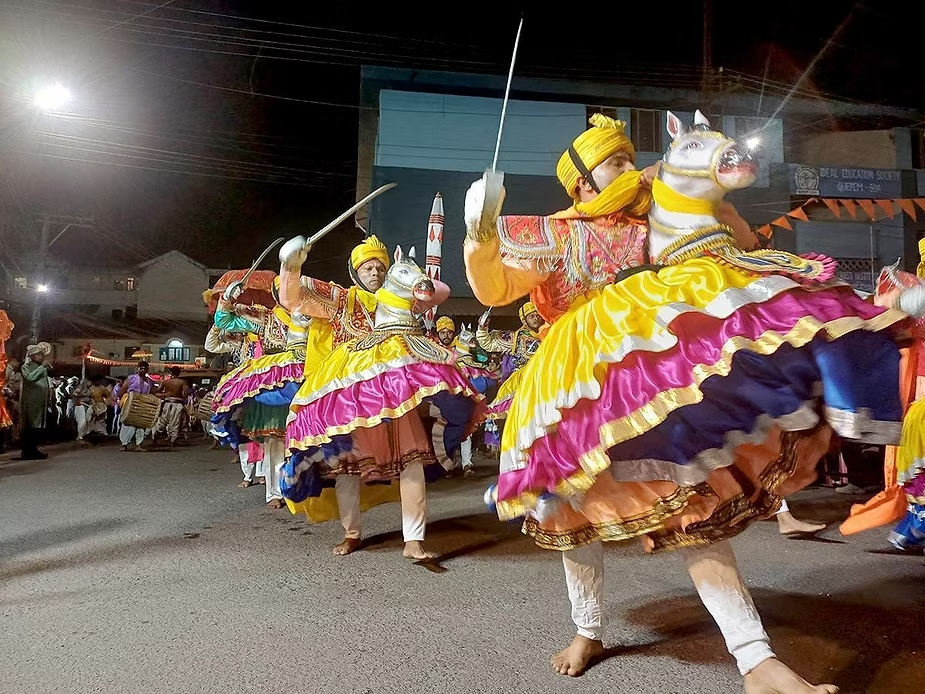
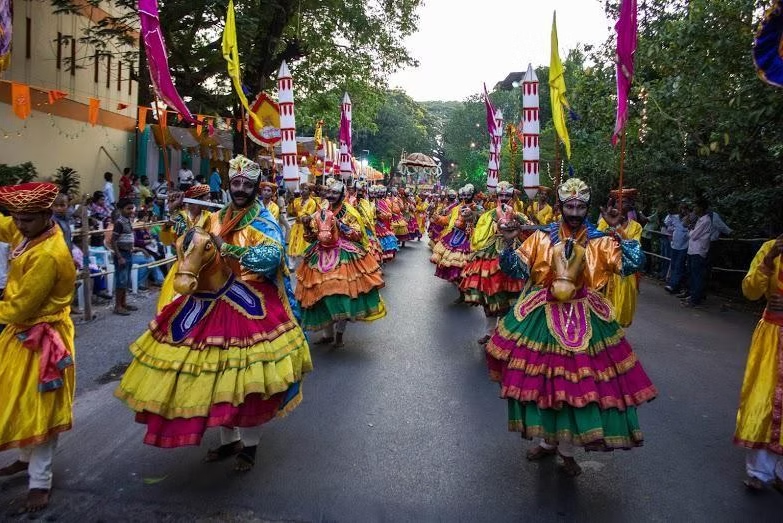
The Independence Day reception will feature Samai and Ghode Modni, two distinctive Goan performance traditions. Samai involves dancers balancing traditional brass lamps while moving to folk music. Ghode Modni combines horse effigies, choreographed movements and swords, accompanied by percussion. Goa’s folk music will be represented by the Ghumot, Shamel and Kasale.
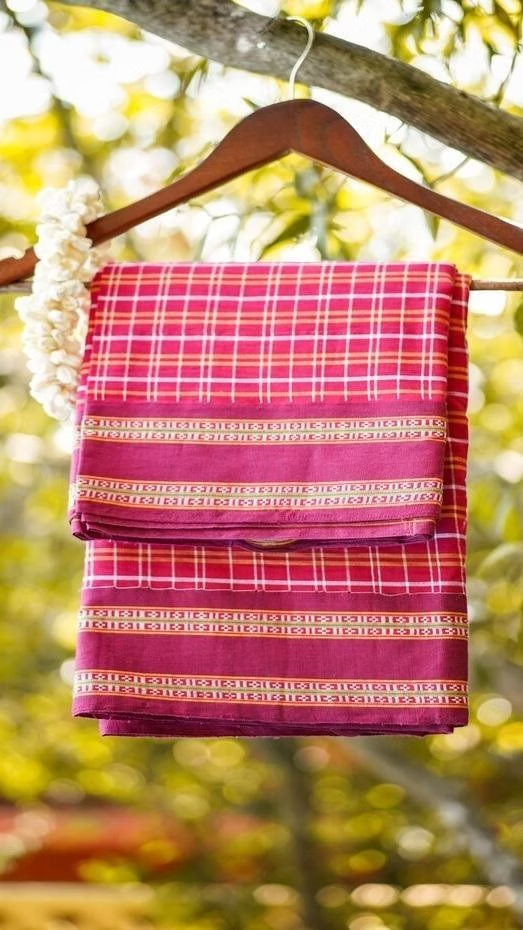
Kunbi textiles will appear on table runners, while patoleo, a rice and coconut preparation steamed in turmeric leaves, will represent Goa’s culinary heritage. The official invitation also incorporates azulejo tile art.
Read Also: Record Vegetable Procurement Signals a New Chapter for Goa’s Farmers and Local Food Security
The Detail That Makes This Bigger
The most consequential inclusion may not be a dance or a dish.
It is the khazan.
The official invitation highlights Goa’s khazan lands as a nature-based coastal defence system. These low-lying saline ecosystems use embankments and sluice gates to regulate water, helping protect agricultural areas while supporting paddy cultivation, fishing and salt production.
That gives the presentation another dimension. Goa is not only displaying what its communities celebrate. It is displaying knowledge that communities developed to live with a difficult coastal environment.
The government has announced plans to revive approximately 18,000 hectares of khazan land, while agriculture schemes notified this year provide support for salt-tolerant paddy seeds, mechanisation and improved cultivation.
The Chief Minister also told the Assembly in January that a khazan board would be constituted to address protection and management issues.
That makes his administration’s khazan agenda relevant to the story, but it should not be confused with authorship of the Rashtrapati Bhavan showcase.
Goa Farmers Get a Deadline, Not Just a Promise: CM Says Subsidies Will Reach Accounts Within 60 Days
Why This Matters Beyond August 15
Goa has approximately 18,000 hectares of khazan lands, according to ICAR-CCARI, which describes them as integrated agro-aqua-forestry systems involving paddy fields, salt pans and aquaculture.
Yet these systems face salinity, declining productivity, abandonment and changing land use. ICAR research in Merces has demonstrated that scientifically managed aquaculture could offer another livelihood pathway for saline-affected khazan areas.
The national showcase therefore arrives at an interesting moment. Goa is simultaneously presenting the khazan system as heritage while trying to make it economically viable again.
A National Stage, With a Local Test
For Goans, the real question is not whether these traditions look impressive in Delhi.
It is whether the attention translates into stronger preservation, better livelihoods for artisans and farmers, and greater recognition for the communities that keep these traditions alive.
The Goa government already operates training programmes for handicrafts, textiles and traditional skills, while Goa Tourism continues to document folk forms such as Ghode Modni.
The national spotlight can amplify that work. It cannot replace it.