


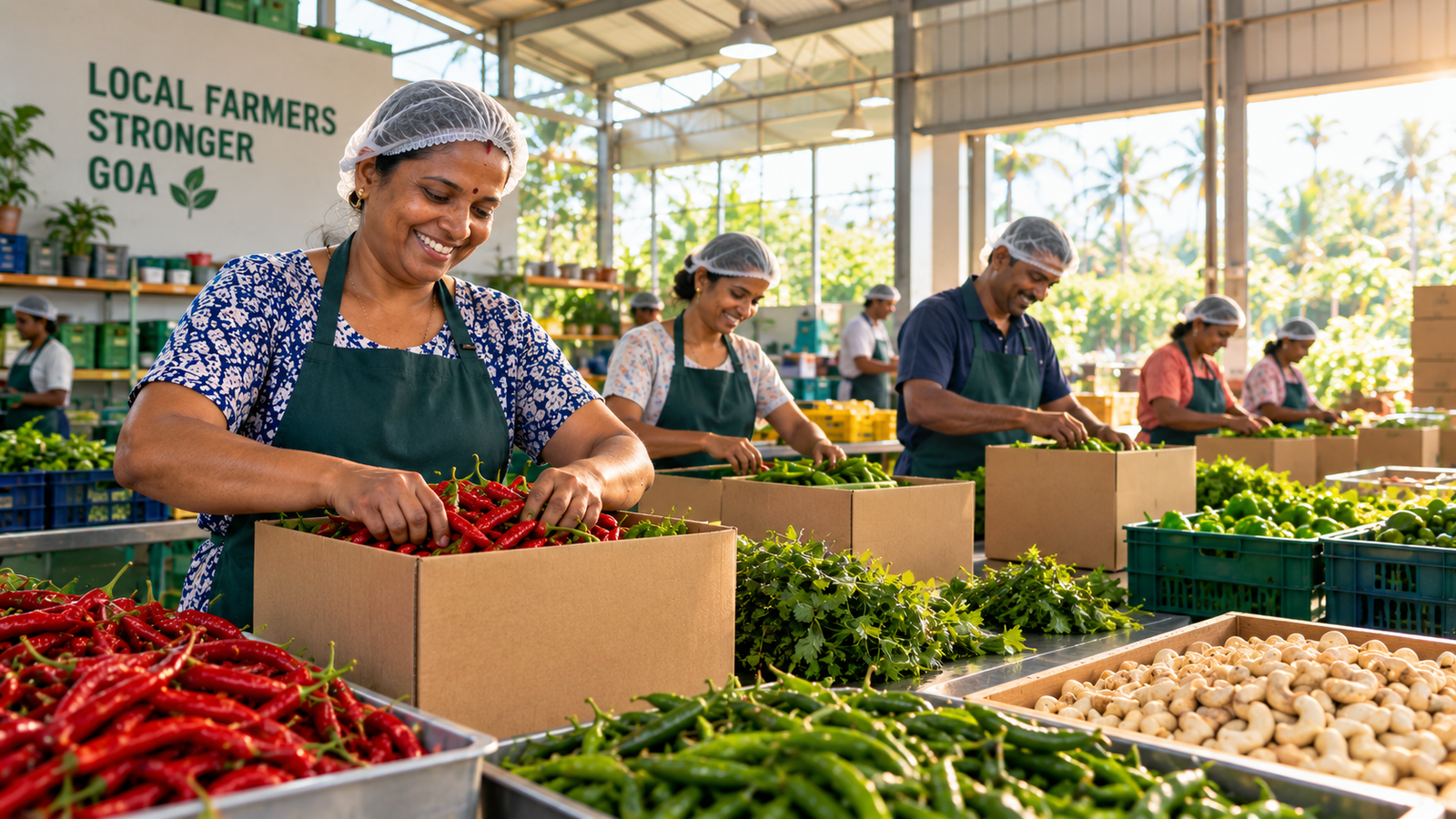
Ponda: Goan farmers are poised to reclaim their rightful profits as the state government systematically dismantles the network of exploitative middlemen. By introducing a landmark Goa Farmer Producer Organisation (FPO) Policy and launching the dedicated ‘Goa Fresh’ retail brand, the state is shifting economic power directly back to local fields.
For generations, long supply chains and aggressive middlemen have eroded agricultural margins, leaving smallholders with a fraction of the market value. This new two-pronged strategy establishes institutional bypasses and a unified market identity, ensuring that what consumers pay goes directly into the farmers’ pockets.
The Two Pillars of Transformation
1. The Goa FPO Policy: Strength in Collective Governance
Approved by the Goa Cabinet, the landmark Goa Farmers Producer Organisation (FPO) Policy provides small and marginal farmers with a formal framework to pool resources.
- Collective Bargaining & Infrastructure: The policy actively funds modern processing, packaging, and branding facilities managed directly by the FPOs. This transitions farmers from raw commodity sellers to value-added producers.
- Direct Institutional Procurement: FPOs are empowered to establish direct commercial links with large-scale buyers like retail markets, the state’s extensive hotel industry, and government agencies. By skipping traditional mandi agents, unfair middleman fees are eliminated completely.
- Preserving Indigenous Wealth: The policy places a high priority on protecting and commercialising high-value local crops, including Khola chillies, local cashew varieties, and traditional rice varieties, ensuring their premium value stays within the local community.
2. The ‘Goa Fresh’ Brand: A Unified Identity
Launched as part of the state’s Swayampurna Goa and Vocal for Local initiatives, the ‘Goa Fresh’ label gives local produce a distinct premium identity.
- From Fields to Premium Markets: Produce brought in by Goan farmers is standardized, packaged cleanly, and sold under a trusted state label. The launch—officiated by Union Agriculture Minister Shivraj Singh Chouhan—showcases modern prototype packaging designed to compete with commercial corporate brands.
- Digital and E-Commerce Expansion: The brand is slated to move onto major online platforms. This allows consumers to purchase authenticated local vegetables and fruits digitally, keeping the logistics loop tight and transparent.
Direct Impact on the Agricultural Economy
The new FPO and ‘Goa Fresh’ model is reshaping Goa’s agricultural economy by changing how farmers access markets and earn from their produce. Under the old middleman setup, prices were largely dictated by brokers, with high commissions cutting into farmers’ earnings. Market access was often limited to local markets or dependent on aggressive wholesale buyers, while raw produce was sold at low prices, increasing the risk of wastage. The new model places greater control with Farmer Producer Organisations (FPOs), allowing higher profits to flow back to the collective. Farmers can also gain direct access to upscale hotels, government-backed networks and digital platforms, while improved packaging and modern processing add value to their produce. Instead of focusing primarily on volume, the model gives greater emphasis to high-value, GI-tagged and indigenous Goan varieties, helping local agricultural products reach wider markets at better value.
Moving Towards a Self-Sufficient Goa
This economic shift arrives at a crucial time. Supported by the Goa State Horticulture Corporation Limited, local vegetable procurement has surged significantly over the last six years, drastically cutting the state’s reliance on vegetable imports.
By combining the structural leverage of FPOs with the commercial visibility of the ‘Goa Fresh’ brand, Goa is setting a benchmark for sustainable agriculture. The policy successfully transforms farming from a system of survival into a highly profitable, self-directed commercial enterprise.