


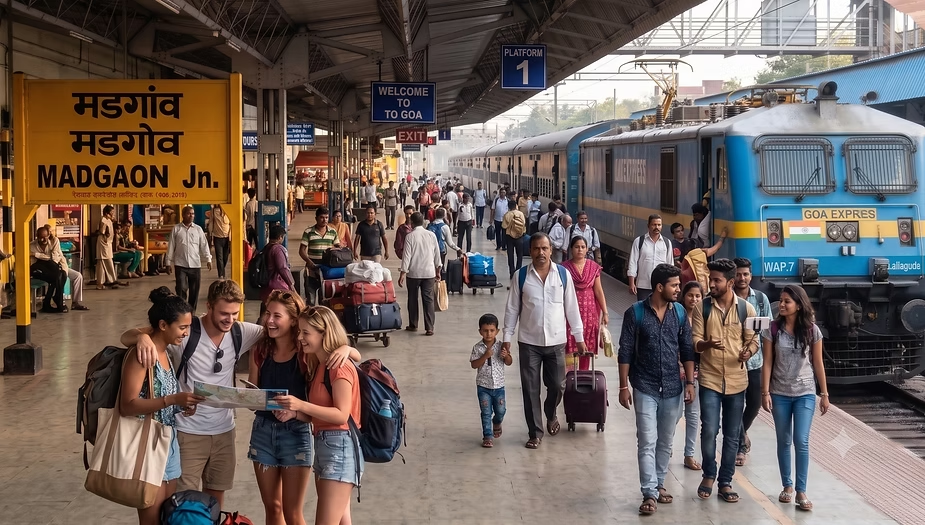
Goa tourism growth continues in 2026, with railway tourist arrivals rising 6.8% in the first five months, highlighting the growing role of domestic travel and rail connectivity in driving visitor numbers.
At a Glance
- 6.8% growth in railway arrivals (Jan–May 2026)
- 19.87 lakh tourists vs 18.60 lakh in 2025
- Domestic tourism remains the primary growth driver
- Rail connectivity improving accessibility
Every Train Into Goa Carries More Than Passengers. It Carries Confidence.
Long before the first beach shack opens for breakfast and before the evening crowds gather along the coastline, another story begins hundreds of kilometres away.
It starts on railway platforms across Mumbai, Bengaluru, Hyderabad, Pune, Ahmedabad and Delhi.
Families carrying holiday luggage. Students planning their first coastal trip. Retired couples looking for an affordable vacation. Groups of friends chasing the monsoon. Professionals escaping for a long weekend.
For many of them, the journey to Goa does not begin in an airport terminal.
It begins aboard a train.
That seemingly ordinary choice is becoming increasingly significant for Goa’s economy.
New data released by the Tourism Department shows that nearly 20 lakh tourists travelled to Goa by rail between January and May 2026, representing a 6.8 percent increase over the same period last year. The numbers may appear modest at first glance, but behind them lies a larger story about changing travel behaviour, improving connectivity and the resilience of Goa’s tourism sector.
At a time when destinations across the country are competing aggressively for domestic travellers, Goa continues to strengthen one of its oldest advantages. It remains among India’s most accessible holiday destinations by rail.
Unlike air travel, which is influenced by fluctuating fares and seasonal capacity, railways continue to offer affordability, predictability and extensive connectivity. That combination is increasingly drawing travellers who are willing to spend more time on the journey in exchange for greater value.
For Goa, this matters far beyond railway stations.
Every arriving train supports hotels, taxis, restaurants, beach shacks, tour operators, local markets, homestays and thousands of small businesses that collectively form the backbone of the state’s visitor economy.
The latest figures suggest that this ecosystem continues to grow.
Nearly 20 Lakh Tourists Chose the Rail Route, Giving Goa Another Tourism Boost
Between January and May 2026, Goa welcomed 19,87,862 railway tourists, compared to 18,60,568 during the corresponding five-month period in 2025. The increase of 6.8 percent represents an additional over 1.27 lakh visitors arriving through the state’s railway network.
The numbers underline a consistent trend that tourism officials have been observing over the past few years. Domestic travellers are increasingly choosing trains for leisure travel, particularly for destinations that offer good rail connectivity and value for money.
Goa benefits from both.
The state is served primarily through the Konkan Railway corridor, one of India’s most strategically important railway routes. Stretching along India’s western coastline, the network connects Goa directly with Maharashtra, Karnataka, Gujarat and onward links to northern and central India.
Stations such as Madgaon, Thivim, Karmali, Canacona and Vasco da Gama collectively handle millions of passengers annually, providing visitors with convenient access to both North and South Goa.
Officials have attributed the increase to a combination of factors that include better connectivity, sustained domestic demand, year-round tourism promotion and Goa’s continued popularity among Indian travellers. Tourism authorities have also pointed to the state’s efforts to diversify beyond seasonal beach tourism by promoting hinterland experiences, culture, wellness, adventure tourism and eco-tourism.
The latest railway numbers complement a broader trend already visible across Goa’s tourism sector, where domestic travel has remained resilient even during periods of volatility in international arrivals.
Rail Tourism Is Quietly Becoming One of Goa’s Strongest Economic Engines
Tourism discussions often revolve around airport arrivals, international charter flights or hotel occupancy.
Yet railway tourism tells an equally important story.
Rail travellers represent a broad cross-section of India’s middle class. They include families travelling during school vacations, budget-conscious tourists, senior citizens, student groups and working professionals seeking affordable holidays.
Collectively, they generate enormous economic activity.
Unlike short-haul air travellers who may spend fewer days in a destination, railway tourists often plan longer vacations, travel in larger groups and distribute spending across accommodation, food, transport, sightseeing and local shopping.
For thousands of small businesses across Goa, these visitors are critical.
Taxi operators receive bookings from railway stations.
Local guesthouses and homestays see higher occupancy.
Restaurants experience increased footfall.
Tour operators organise excursions to waterfalls, spice plantations, heritage sites and wildlife sanctuaries.
Artisans, street vendors and local markets all benefit from greater visitor movement.
Rail connectivity also spreads tourism beyond the state’s traditional coastal belt.
Visitors arriving through stations such as Madgaon or Canacona often explore South Goa’s quieter beaches, villages and nature-based attractions. Others entering through Thivim gain easier access to North Goa’s popular tourism circuit.
This wider geographical distribution helps reduce pressure on overcrowded destinations while creating new opportunities for local communities.
From a policy perspective, the increase also reinforces an important reality.
Domestic tourism has become the backbone of India’s travel economy.
Goa’s ability to continue attracting Indian travellers provides stability during periods when international travel patterns fluctuate because of global economic conditions, geopolitical developments or airline capacity constraints.
In that sense, every additional train arriving in Goa represents more than another transport service.
It represents confidence in the destination itself.
From Seasonal Beach Destination to Year-Round Tourism Hub
For decades, Goa’s tourism identity was closely tied to beaches, international charter flights and the winter holiday season. While these remain central to the state’s appeal, tourism has undergone a noticeable transformation over the last decade.
Domestic travellers now account for the overwhelming majority of Goa’s visitors. Improved road networks, expanded railway services, better digital booking platforms and changing travel habits have made weekend trips and short holidays more accessible than ever before.
The Konkan Railway has played a crucial role in this shift. Since its commissioning, it has dramatically reduced travel time along India’s western coast and connected Goa directly with major cities including Mumbai, Pune, Bengaluru, Mangaluru, Ahmedabad, Delhi and several others through long-distance services.
Unlike air travel, railways offer affordability across multiple income groups. Families travelling together, students, senior citizens and large tour groups often find trains to be the most practical option. This broad accessibility has helped Goa maintain a steady flow of visitors throughout the year rather than relying only on peak tourism seasons.
The state government has also worked to diversify tourism offerings. Campaigns promoting hinterland villages, heritage walks, spice plantations, waterfalls, adventure sports, wellness retreats, festivals and ecotourism have encouraged visitors to explore beyond the beaches.
This broader tourism strategy aligns with national efforts to promote domestic travel as a driver of regional economic development.
When More Tourists Arrive, More Local Businesses Benefit
Tourism statistics are often discussed in percentages, but their real significance lies in how they affect people’s livelihoods.
Every additional visitor creates economic activity across multiple sectors.
Hotels and homestays welcome more guests. Taxi operators receive additional bookings. Restaurants, cafés and beach shacks serve more customers. Tour guides organise more sightseeing trips. Local artisans, handicraft sellers, market vendors and small retailers benefit from increased footfall.
Many of these businesses are micro or small enterprises that depend heavily on tourism revenue.
Rail travellers also tend to explore destinations differently. Compared to short weekend air travellers, many railway tourists stay longer, travel in family groups and visit multiple locations across the state. This wider movement spreads tourism spending into smaller towns and villages, supporting businesses that may not directly benefit from premium tourism.
For local youth, sustained tourism growth also translates into employment opportunities in hospitality, transport, retail, event management, travel services and tourism-related entrepreneurship.
The broader impact extends beyond the tourism industry itself. Increased visitor spending generates demand for local agriculture, fisheries, food processing, cultural performances and transport services, creating a multiplier effect throughout Goa’s economy.
Officials See Rail Connectivity as a Pillar of Tourism Growth
The Goa Tourism Department has welcomed the increase in railway arrivals as another positive indicator for the state’s tourism sector.
Tourism Minister Rohan A. Khaunte has repeatedly emphasised that Goa’s tourism strategy is shifting towards high-value, year-round and sustainable tourism while continuing to strengthen domestic visitor numbers. According to the department, railway connectivity remains one of Goa’s greatest competitive advantages in attracting travellers from across India.
Officials have highlighted that improved infrastructure, destination diversification and targeted promotional campaigns have contributed to sustained domestic tourism growth.
The government has also been promoting experiences beyond traditional beach tourism, including cultural circuits, heritage tourism, nature-based experiences, hinterland tourism, wellness tourism and adventure activities.
The objective is not merely to increase visitor numbers but to encourage tourists to stay longer, explore more destinations and contribute more widely to the local economy.
Questions Continue Around Tourism Quality and Infrastructure
While the latest figures have been welcomed across the tourism sector, opposition leaders and sections of the industry continue to argue that visitor numbers alone do not provide a complete picture.
Some have raised concerns regarding infrastructure pressure during peak periods, including traffic congestion, waste management, parking availability and public amenities.
Others argue that the state’s long-term focus should remain on improving visitor experience and increasing average tourist spending rather than relying solely on arrival figures.
Industry stakeholders have also called for continued investment in railway stations, last-mile connectivity, public transport integration and destination management to ensure that increasing visitor numbers translate into sustainable tourism growth.
These debates are part of a broader discussion about balancing economic growth with environmental conservation and quality of life for residents.
Rail Tourism Reflects a Larger Shift in India’s Travel Economy
Tourism experts increasingly view railway arrivals as an important indicator of domestic travel demand.
Across India, rising disposable incomes, flexible work arrangements and growing interest in short leisure trips have expanded the domestic tourism market significantly.
Railways remain central to this trend because they offer extensive connectivity at affordable prices.
For Goa, the 6.8 percent increase suggests continued resilience in domestic demand despite changing economic conditions and evolving travel preferences.
Experts also note that dependence on a single mode of transport creates vulnerability. A healthy tourism sector benefits from balanced growth across air, rail and road connectivity.
In this context, stronger railway arrivals provide diversification and resilience.
Another important takeaway is that rail connectivity often supports inclusive tourism by making destinations accessible to travellers across different income groups.
This broadens the tourism base and helps distribute economic benefits more widely throughout the local economy.
Key Data
The Numbers Behind Goa’s Railway Tourism Growth
- Railway tourist arrivals (Jan-May 2026): 19,87,862
- Railway tourist arrivals (Jan-May 2025): 18,60,568
- Growth: 6.8%
- Additional visitors: More than 1.27 lakh
- Primary railway corridor: Konkan Railway
- Major stations serving tourists: Madgaon, Thivim, Karmali, Vasco da Gama and Canacona.
- Domestic tourists continue to account for the overwhelming majority of Goa’s annual visitor arrivals.
Can Growth Be Sustained Without Compromising Visitor Experience?
The latest figures are encouraging, but they also raise important questions.
Can railway infrastructure continue to handle rising passenger volumes during peak seasons?
Will improved last-mile connectivity encourage tourists to explore lesser-known destinations?
How can Goa ensure that tourism growth remains environmentally sustainable?
Can visitor spending increase alongside arrival numbers?
Will future tourism policies further integrate rail travel with public transport, digital ticketing and destination management?
These questions will shape the next phase of Goa’s tourism strategy.
The Next Test Will Be the Peak Tourism Season
The coming festive and winter months will provide a clearer indication of whether the current growth trend continues through the rest of 2026.
The Tourism Department is expected to continue promotional campaigns targeting domestic travellers while expanding niche tourism segments such as wellness, ecotourism, adventure tourism, spiritual tourism and cultural experiences.
Rail connectivity is also expected to remain a central pillar of Goa’s accessibility strategy, particularly as demand for affordable domestic travel continues to rise across India.
If current trends continue, railway tourism could become one of the strongest contributors to Goa’s long-term tourism growth.
A Broader Tourism Story Is Taking Shape
The increase in railway arrivals complements several broader developments in Goa’s tourism sector.
The state has been promoting regenerative tourism, improving digital visitor services, encouraging responsible tourism practices and investing in infrastructure that supports year-round travel rather than seasonal spikes.
Together, these initiatives point towards a tourism model that seeks to balance economic opportunity with sustainability and improved visitor experiences.
The latest railway data adds another piece to that larger story.
Goa’s 6.8 percent increase in railway tourist arrivals is more than a transportation statistic. It reflects changing travel patterns, the resilience of domestic tourism and the continued appeal of Goa as one of India’s most accessible holiday destinations.
Nearly 20 lakh visitors choosing to arrive by train within just five months demonstrates that affordability, connectivity and convenience remain powerful drivers of tourism.
For citizens, the benefits extend beyond visitor numbers. Every arriving train supports livelihoods across hospitality, transport, retail, food services and countless small businesses that depend on a healthy tourism economy.
At the same time, sustained growth brings new responsibilities. Investments in infrastructure, sustainable destination management and improved visitor experiences will be essential to ensure that tourism continues to benefit both travellers and residents alike.
As Goa prepares for another busy tourism season, the latest figures suggest that the state’s strongest journey may not simply be measured by how many people arrive, but by how effectively tourism growth is translated into long-term economic opportunity and sustainable development.