


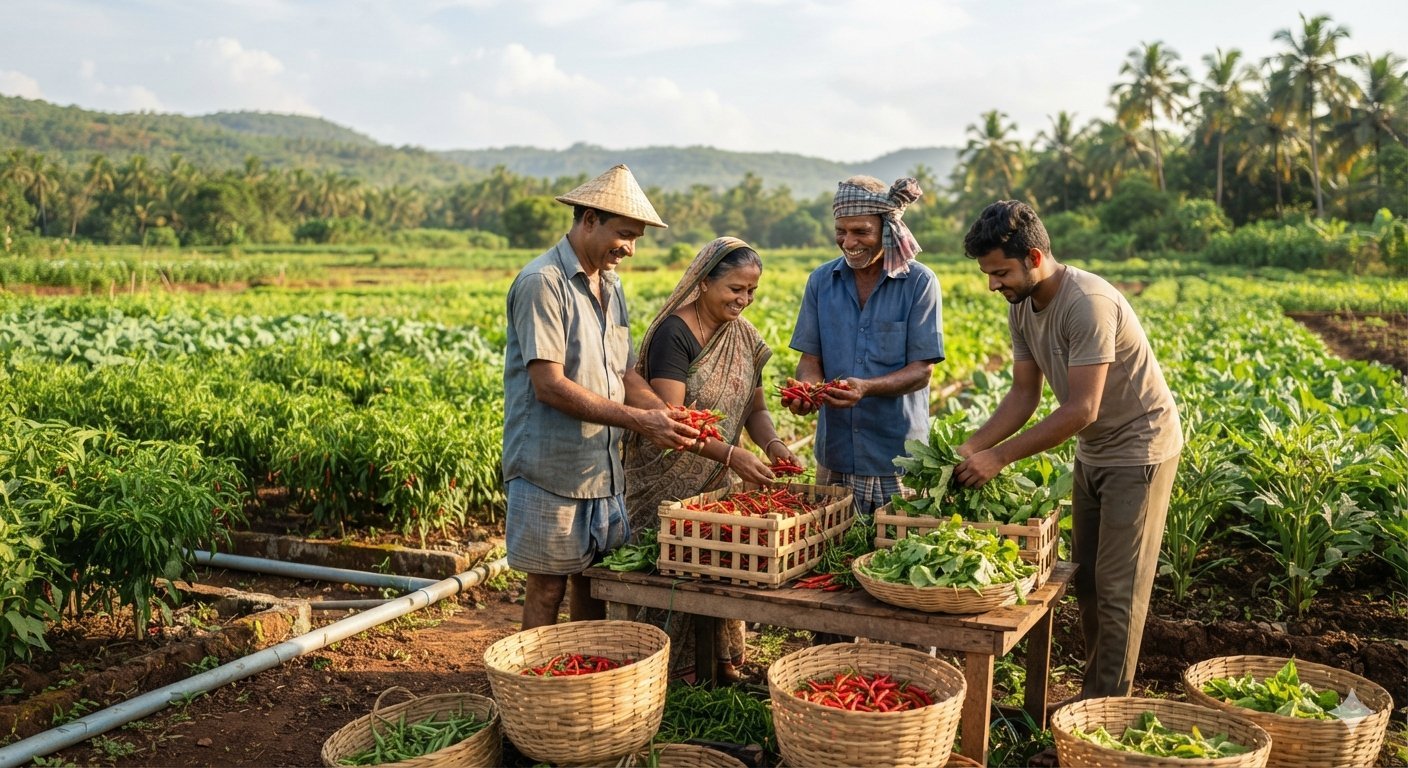
The Goan agricultural sector is stepping into a new era of modernisation. Consequently, small-scale farming will soon transform into a highly profitable business model. The state Cabinet has officially approved the Goa Farmer Producer Organisations (FPO) Policy, 2026. This comprehensive framework was drafted by the Directorate of Agriculture to empower local cultivators.
Specifically, the policy acts as a direct extension of the Goa State Amritkal Agriculture Policy, 2025. It replaces older, fragmented department initiatives entirely. Therefore, the state can now use a single system to scale the regional agricultural economy.
Ultimately, this article explores what the new policy offers. We will also break down exactly what it means for the future of farming in Goa.
Timeline and Institutional Framework
The newly approved policy goes into effect immediately. Furthermore, it will remain in force until March 31, 2031. This five-year window gives the state ample time to roll out infrastructure. Meanwhile, authorities will closely monitor progress to make necessary adjustments.
To ensure success, the government is setting up a multi-layered support system.
- The Nodal Agency: The Directorate of Agriculture will serve as the primary authority. Therefore, they will handle all implementation duties.
- Goa State FPO Mission Cell: This dedicated task force will drive institutional coordination. Additionally, they will offer professional management assistance across different government departments.
- The FPO Fund: The state is establishing an autonomous fund to keep operations running smoothly. Specifically, this pool will start with an initial proposed corpus of Rs 3 crore per year.
- Digital Repositories: The state will launch a centralized digital portal. Consequently, this system will streamline registration and maintain complete transparency.
Four Core Pillars of the Goa FPO Policy
The policy focuses heavily on eliminating the traditional bottlenecks that small farmers face daily. To achieve this goal, the framework targets four distinct areas.
1. Better Credit and Financial Access
Small farmers often struggle to secure loans from formal banks. Therefore, this policy deliberately streamlines credit pipelines. As a result, farmer collectives can easily access bank loans. They will also qualify for state subsidies and central government monetary schemes without excessive red tape.
2. Shared Community Infrastructure
Setting up cold storage is too expensive for an individual farmer. Similarly, buying heavy machinery requires too much upfront capital. Because of this, the policy actively promotes shared community infrastructure. For instance, FPOs will receive backing to set up local crop aggregation units. They will also build reliable cold chains and “mechanization-as-a-service” centers where farmers can rent advanced equipment.
3. Technology Adoption and Value Addition
To boost profits, Goan agriculture must move beyond selling raw produce. Therefore, the framework actively promotes modern processing facilities. This change allows FPOs to package, process, and brand their goods. Additionally, there will be a heavy focus on protecting indigenous Goan crops. For example, the policy will heavily support local cashew varieties, Khola chillies, and traditional rice.
4. Direct Market Governance
Middlemen frequently eat into a farmer’s profit margin. To solve this issue, the policy introduces direct institutional procurement networks. Consequently, FPOs will connect directly to retail markets, hotels, and state agencies. As a result, the government aims to eliminate unfair middleman fees entirely.
What This Means for Goa’s Future
| Policy Focus | Expected Outcome |
|---|---|
| Financial Security | Lower interest rates and steady cash flow for farmer collectives. |
| Reduced Waste | Cold storage facilities will prevent fresh produce from spoiling. |
| Higher Income | Processing raw items into finished goods will double profit margins. |
| Fair Pricing | Direct market access ensures consumers pay fair prices and farmers earn more. |
Ultimately, the Goa FPO Policy 2026 is a massive win for rural communities. By grouping individual farmers into organized collectives, the state is giving them essential bargaining power. Therefore, local cultivators can finally thrive in a highly competitive market.
Over the next few months, the Directorate of Agriculture will release specific eligibility criteria. Local farmers should look out for these updates to maximize their benefits.