


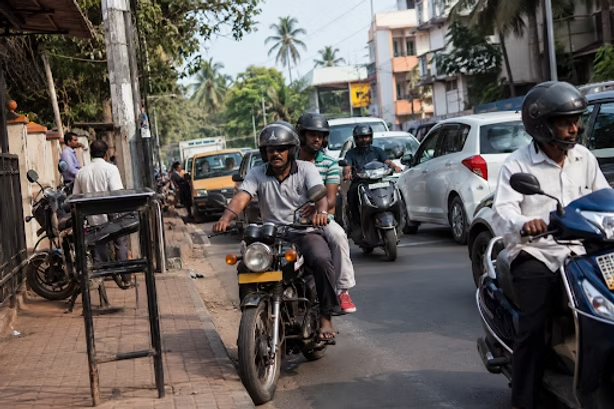
For decades, Goa’s motorcycle pilots have operated through roadside stands, personal networks and phone calls. The launch of the Majhe Driver app marks the state’s biggest attempt yet to modernise this unique transport service, while promising new opportunities for licensed pilots and a more convenient experience for commuters.
At a Glance
- Goa has launched the Majhe Driver app for licensed motorcycle pilots.
- 100% voluntary onboarding for all licensed pilots
- The government has announced a proposed 50 percent subsidy for licensed pilots purchasing electric motorcycles.
- Officials have also promised stricter action against illegal bike taxi operators.
- The app allows digital ride bookings while enabling pilots to receive payments directly without platform commissions.
- Authorities have indicated the platform may eventually support additional services such as parcel and food deliveries to create more income opportunities for pilots.
From Roadside Stands to Smartphone Screens: Goa’s Most Familiar Ride Is About to Change
For generations, Goa’s black-and-yellow motorcycle pilots have been an essential transport service, operating through personal contacts and roadside stands. The launch of the Majhe Driver app marks a new chapter, bringing this traditional system into the digital economy while preserving its local identity.
A Digital Shift for Goa’s Most Recognisable Transport Service
The newly launched Majhe Driver platform is designed as an official digital booking service exclusively for licensed motorcycle pilots across Goa.
Unlike private ride-hailing platforms that operate on commission-based models, the state-backed application aims to connect passengers directly with registered pilots. According to the government, payments made through the platform will go directly to the rider without intermediary commission charges.
Chief Minister Pramod Sawant has clarified that joining the platform will remain entirely voluntary. Pilots who prefer to continue operating through traditional methods will not be compelled to register.
The government has also announced several incentives aimed at encouraging adoption.
Among the most significant is a proposed 50 percent subsidy for licensed motorcycle pilots who switch to electric motorcycles, a move intended to reduce operating costs while supporting Goa’s broader clean mobility goals.
Recognising that digital access remains a challenge for some riders, the Chief Minister also indicated that motorcycle pilots without smartphones could receive assistance so they are not excluded from the new ecosystem.
Beyond passenger transport, officials have suggested that the platform may gradually expand into delivery services, potentially allowing pilots to earn additional income through parcel and food deliveries during periods of lower passenger demand.
Simultaneously, the government has reiterated its intention to intensify enforcement against illegal bike taxi operators who function outside the licensed motorcycle pilot system.
Together, these announcements represent one of the most comprehensive policy packages for Goa’s motorcycle pilot community in recent years.
Why This Isn’t Just Another App Launch
Unlike Ola/Uber-style platforms, this is a zero-commission, government-backed model.
This is not just an app launch – it is a structural reform of Goa’s last offline transport network.
How Goa’s Motorcycle Pilot System Became an Institution
Long before ride-hailing apps became part of everyday vocabulary, motorcycle pilots had already solved one of Goa’s biggest mobility challenges.
The state’s geography makes two-wheelers uniquely practical. Narrow village roads, dispersed settlements and short-distance travel created conditions where motorcycles often proved faster and more economical than conventional taxis.
Over the decades, licensed motorcycle pilots evolved into an essential part of Goa’s transport network.
Recognisable by their distinctive yellow number plates and regulated through state permits, they became especially important in areas where public transport connectivity remained limited or where passengers needed quick point-to-point travel.
For many families, motorcycle piloting also became a dependable source of livelihood requiring relatively modest capital investment compared to operating a taxi.
However, the transport landscape has changed dramatically over the past decade.
Digital mobility platforms have altered passenger expectations across India. Consumers increasingly value instant booking, digital payments, GPS navigation and transparent service records.
Meanwhile, Goa has witnessed recurring debates surrounding taxi regulation, app-based mobility services and the rise of unauthorised bike taxi operations.
Against this backdrop, the Majhe Driver platform represents more than a technological upgrade.
It is an attempt to ensure that one of Goa’s oldest transport traditions remains relevant in an increasingly digital future.
For Commuters and Pilots, the Real Change Begins After the Download
- For Passengers: Greater convenience, digital payments, and access to verified licensed riders.
- For Pilots: Increased visibility, zero-commission earnings, and potential for diversified delivery income.
Technology alone does not change public transport. Adoption does.
The real test of the Majhe Driver app will not be the number of downloads on launch day, but whether it genuinely makes commuting easier for passengers while improving livelihoods for licensed motorcycle pilots.
For commuters, the most immediate benefit is expected to be convenience.
Instead of searching for a nearby pilot stand or relying on personal contacts, passengers will be able to connect with registered riders through a single digital platform. This is particularly relevant for younger users who already book cabs, food deliveries and other services through mobile apps.
The platform also introduces an added layer of confidence by focusing on licensed motorcycle pilots. For passengers, this means greater assurance that the rider is part of the state’s authorised transport system rather than an unregistered operator.
For motorcycle pilots, the implications could be even more significant.
Many pilots depend on daily earnings, where every additional ride directly affects household income. Digital visibility could help them reach customers beyond traditional pilot stands, especially during lean hours or in areas where footfall is lower.
The government’s proposal to eventually integrate parcel deliveries and food delivery services into the platform could further diversify income sources. Instead of waiting for passengers during off-peak hours, pilots may have opportunities to accept delivery assignments, making better use of their time and vehicles.
The proposed 50 percent subsidy for electric motorcycles also carries long-term financial implications.
Although electric vehicles require an initial investment, lower fuel and maintenance costs could reduce operating expenses over time. For riders who travel hundreds of kilometres each week, these savings may become increasingly meaningful if the transition is supported by adequate charging infrastructure.
In essence, the initiative attempts to solve two challenges simultaneously: improving commuter convenience while strengthening the economic sustainability of licensed motorcycle pilots.
Whether those goals are achieved will depend on how effectively the platform is implemented and adopted across Goa.
The Government’s Vision Goes Beyond Digital Bookings
The government’s messaging around the Majhe Driver app has consistently framed it as part of a broader effort to modernise Goa’s transport ecosystem rather than merely introducing another mobile application.
The app is released, and will be communicated to the pilots, so that more and more pilots start using Mhaje App. The entire onboarding process of all voluntarily interested pilots will take up to two months. Chief Minister Pramod Sawant has emphasised that participation in the platform will remain voluntary, addressing concerns that traditional motorcycle pilots could be compelled to adopt digital technology before they are ready.
At the same time, the government has sought to reassure pilots that the platform is designed to benefit them financially rather than replace existing systems.
One of the most notable features announced is the absence of commission charges typically associated with private ride-hailing platforms. According to the government, payments made through the app will go directly to the rider, allowing pilots to retain their full earnings.
Recognising that digital inclusion remains a practical challenge, the government has also indicated that pilots without smartphones will receive assistance so they can participate in the platform if they choose to.
The proposed subsidy for electric motorcycles aligns with Goa’s wider push towards sustainable mobility. Encouraging motorcycle pilots to shift to electric vehicles supports environmental objectives while potentially reducing fuel costs for riders over the long term.
The government has also linked the launch of the app with stricter enforcement against illegal bike taxi operators, arguing that strengthening the licensed pilot ecosystem must go hand in hand with ensuring compliance on the roads.
Together, these measures suggest that the Majhe Driver initiative is intended as both a technology platform and a policy intervention aimed at reshaping Goa’s motorcycle transport sector.
Political Reactions Reflect a Familiar Debate on Transport Reform
Transport reforms in Goa have rarely been free from political debate, and the launch of the Majhe Driver app is unlikely to be an exception.
The issue of app-based mobility has long been politically sensitive in the state, particularly in relation to taxi services and concerns over the impact of digital platforms on traditional livelihoods.
Supporters of the new initiative argue that the government is empowering licensed motorcycle pilots by providing them with technology without introducing private intermediaries that charge commissions.
They also view the proposed electric vehicle subsidy and additional earning opportunities as practical measures to improve income stability for riders.
Critics, however, are likely to scrutinise the implementation rather than the announcement itself.
Questions are expected around the app’s usability, the pace of adoption, technical reliability, digital literacy among pilots, and whether promised incentives such as EV subsidies and smartphone support will be delivered efficiently.
There may also be calls for greater clarity on how illegal bike taxi operations will be identified and regulated without affecting legitimate licensed riders.
As with many technology-led governance initiatives, public perception will ultimately depend less on the launch and more on the everyday experience of both passengers and pilots.
Digital Platforms Alone Don’t Create Better Transport. Execution Does.
The success of the Majhe Driver platform depends on three critical conditions:
- Network Balance: Maintaining a critical mass of both available pilots and active commuters to ensure reliability.
- Digital Inclusion: Providing the necessary training and technical assistance to ensure all licensed pilots can navigate the app.
- Infrastructure Readiness: Developing accessible charging stations and reliable support to facilitate the transition to electric motorcycles.
The Biggest Questions Will Be Answered Only After Goans Start Using It
The launch of the Majhe Driver app marks an important milestone, but it also opens a new set of questions that will determine whether this initiative becomes a genuine transport transformation or simply another government app with limited public adoption.
Will motorcycle pilots embrace the platform?
Since enrolment is voluntary, the app’s success depends entirely on whether licensed riders see enough value in joining. If only a small percentage register, passengers may struggle to find available rides, reducing confidence in the platform.
Will user behavior shift toward digital booking?
Goans have relied on familiar pilot stands, phone calls and local contacts for decades. Changing these habits will take time. Convenience, reliability and consistent availability will matter far more than the launch itself.
How effective will enforcement against illegal operators be?
The government has announced stricter action against illegal bike taxi operators, but the effectiveness of that promise will depend on consistent implementation. Licensed motorcycle pilots have long argued that unauthorised operators create unfair competition by offering similar services without following the same regulatory framework.
Is the infrastructure ready for electric motorcycles?
The proposed 50 percent subsidy for electric motorcycles has generated optimism, but widespread adoption will require reliable charging infrastructure, accessible financing and confidence that electric vehicles can comfortably meet the demands of daily commercial operations.
Ultimately, technology can provide the platform, but trust will determine whether people continue using it.
The Next Few Months Could Decide Whether This Becomes a Model for India
The success of this initiative will be measured by specific performance indicators: adoption rates among licensed pilots, daily ride volumes through the app, and the rate of EV uptake supported by the government subsidy. These metrics will determine if Goa can successfully modernise a decades-old profession within the digital economy.
A Bigger Story Is Emerging Across Goa’s Transport Sector
The Majhe Driver initiative does not exist in isolation.
It forms part of a broader shift in how Goa is approaching mobility, technology and public services.
In recent years, the state has increasingly embraced digital governance across multiple sectors. Citizen services, transport management and public service delivery are gradually moving towards app-based platforms designed to simplify access and improve transparency.
The motorcycle pilot initiative reflects the same philosophy.
Rather than replacing an established local transport system, the government is attempting to strengthen it through technology while preserving the livelihoods built around it.
At the same time, the proposed transition towards electric motorcycles aligns with Goa’s larger sustainability agenda, where cleaner transport is increasingly becoming part of future infrastructure planning.
The coming years are therefore likely to witness a transport ecosystem where digital services, electric mobility and locally rooted transport models coexist more closely than ever before.
Goa Isn’t Replacing Its Motorcycle Pilots. It’s Reinventing Them.
For decades, motorcycle pilots have been one of Goa’s quiet success stories.
They have navigated narrow village roads, helped students reach colleges, carried office-goers through traffic, connected neighbourhoods where larger vehicles struggled and become an unmistakable part of Goa’s everyday identity.
What makes the Majhe Driver app noteworthy is not simply that it introduces digital bookings.
It signals an acknowledgement that even traditional occupations must evolve alongside changing public expectations.
The challenge ahead is not technological.
It is human.
Will passengers choose convenience without abandoning familiarity?
Will motorcycle pilots see digital platforms as an opportunity rather than a disruption?
Will incentives translate into lasting change?
Those answers will emerge only over time.
But one thing is already clear.
Goa’s iconic motorcycle pilots are no longer standing at the edge of the digital revolution.
They have become part of it.
This is how Goa is modernising without erasing its identity.