


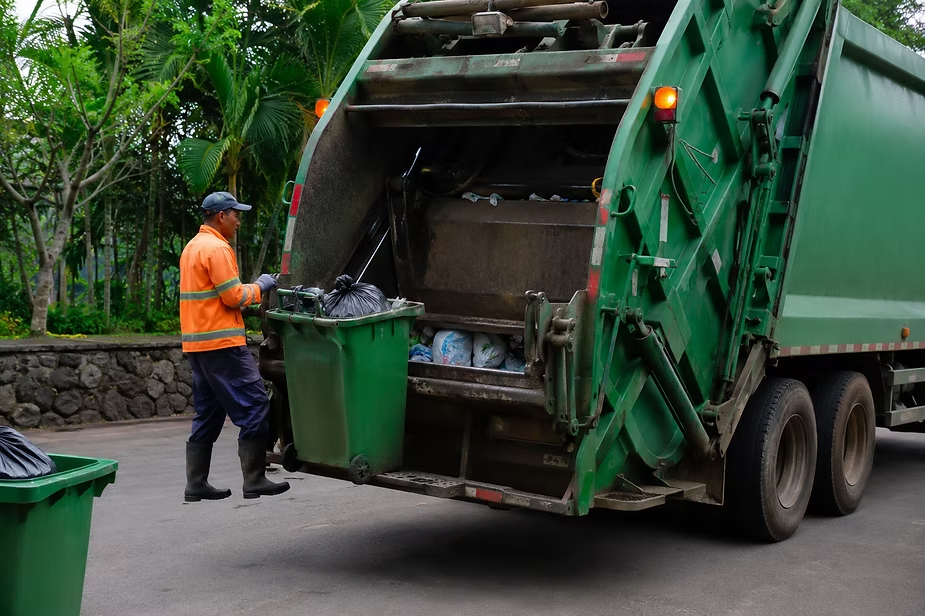
A new digital portal will monitor the transportation of non-biodegradable waste across Goa, strengthening enforcement, improving transparency, and supporting the state’s broader push towards technology-driven environmental governance.
At a Glance
- Goa has introduced a digital portal to monitor the transportation of non-biodegradable waste across the state.
- The system will digitally record the movement of authorised waste transport vehicles from the point of collection to approved recycling or disposal facilities.
- The initiative is being implemented by the Goa State Pollution Control Board as part of wider amendments to Goa’s waste management framework.
- The portal complements recent legislative reforms, including the establishment of the Goa Deposit Refund Scheme Authority and expanded responsibilities for bulk waste generators, recyclers and transporters.
Every Waste Truck Tells a Story. Goa Wants That Story Recorded.
Most citizens never think about what happens after a garbage truck leaves their neighbourhood.
Bins are emptied. Roads become cleaner. The vehicle disappears around a corner. What happens next remains invisible.
Did the waste reach an authorised recycling facility?
Was it transported legally?
Could it have been dumped somewhere it should never have been?
These questions have long challenged environmental regulators across India. Managing waste does not end with collection. In many ways, collection is only the beginning. The real challenge lies in ensuring that waste completes its journey responsibly.
Goa is now attempting to close that gap.
The Goa State Pollution Control Board has introduced a digital portal to monitor the transportation of non-biodegradable waste across the state. The objective is straightforward but significant. Every authorised movement of waste should leave behind a digital trail, creating greater transparency for regulators and stronger accountability for transporters and waste generators.
For a state that has consistently positioned environmental protection alongside tourism and quality of life, this marks another step towards making waste management smarter rather than merely larger.
Technology, in this case, is not replacing environmental regulation. It is strengthening it.
What Changed? Goa Is Taking Waste Monitoring Beyond Collection
Waste management has traditionally focused on collection, segregation and disposal.
Transportation, however, has often remained the least visible part of the chain.
The new portal seeks to change that.
According to the Goa State Pollution Control Board, the system enables online authorisation for transporting non-biodegradable waste while simultaneously allowing authorities to digitally monitor its movement until it reaches an approved destination.
Instead of relying solely on manual paperwork, physical inspections or disconnected records, the portal creates a centralised digital system capable of recording and verifying authorised waste transport.
The initiative aligns with the state’s broader effort to digitise environmental regulation. Goa has already adopted online consent management systems for industries and pollution control approvals. Extending similar digital oversight to waste transportation represents a logical next step in regulatory modernisation.
The timing is also notable.
Over the past two years, Goa has significantly strengthened its legal framework governing non-biodegradable waste.
Recent amendments have expanded responsibilities for producers, importers, brand owners, bulk waste generators, waste collectors, recyclers and co-processors. The legislation also establishes the Goa Deposit Refund Scheme Authority, designed to oversee reuse, recycling and environmentally responsible disposal of packaging materials.
The digital portal therefore is not an isolated technological initiative.
It is one operational component within a much broader transformation of Goa’s waste governance architecture.
Why Does Tracking Matter More Than Ever?
Modern waste management is increasingly measured not by how much waste is collected but by how effectively that waste can be traced.
Across India, environmental agencies continue to face challenges involving illegal dumping, unauthorised transportation and improper disposal of construction debris, plastics and other non-biodegradable materials.
Without visibility into transportation, even well-designed waste collection systems can develop weak points.
Digital traceability addresses precisely this challenge.
Every authorised movement recorded through a common platform improves the ability of regulators to verify compliance, investigate irregularities and ensure that waste reaches licensed processing facilities rather than environmentally sensitive locations.
For Goa, where forests, rivers, wetlands, beaches and tourism destinations coexist within relatively short distances, preventing illegal disposal carries both environmental and economic significance.
Tourism remains one of Goa’s largest economic drivers. Clean public spaces, healthy ecosystems and responsible environmental management directly influence visitor experience and the state’s global image.
The new portal also reflects a broader governance trend.
Across multiple sectors, governments are increasingly using digital platforms not merely to digitise paperwork but to create real-time accountability.
From transport services and land records to public welfare delivery and environmental compliance, digital governance succeeds when it reduces uncertainty rather than simply increasing documentation.
Waste transportation is now becoming part of that larger shift.
For citizens, the change may not be immediately visible.
Garbage trucks will continue to travel the same roads.
Collection schedules may remain unchanged.
But behind the scenes, each authorised journey will increasingly become measurable, verifiable and accountable.
That evolution may ultimately prove more important than the technology itself.
Goa’s Waste Governance Has Been Evolving for Years. This Portal Is the Next Step.
Goa’s latest digital waste transport portal did not emerge in isolation. It is the product of several years of policy reform aimed at strengthening the state’s approach to solid waste management, particularly the handling of non-biodegradable materials.
Despite being India’s smallest state by area, Goa generates a disproportionately high volume of municipal solid waste due to its dense urban pockets, thriving tourism sector and seasonal influx of visitors. Managing this waste has always required a system that goes beyond collection and disposal. It demands regulation at every stage of the waste lifecycle.
Over the past decade, Goa has invested significantly in waste segregation at source, decentralised treatment facilities, door-to-door collection systems and scientific landfills. Local bodies across the state have increasingly adopted material recovery facilities, composting initiatives and plastic waste collection drives.
Yet one stage of the process remained comparatively difficult to monitor: transportation.
Once waste left a collection point, regulators often depended on physical documentation, manual inspections and periodic checks to ensure it reached authorised recycling units or disposal sites. While these mechanisms served their purpose, they left room for delays, administrative inefficiencies and potential violations.
Recognising these gaps, the Goa government amended the Goa Non-Biodegradable Garbage (Control) Act to strengthen accountability across the waste management ecosystem. The amendments expanded the responsibilities of waste generators, transporters, recyclers, producers and brand owners while introducing provisions for digital registration and monitoring. They also paved the way for the establishment of the Goa Deposit Refund Scheme Authority, which will oversee collection and recycling systems for eligible packaging materials. Together, these reforms aim to make waste management more transparent, traceable and environmentally responsible.
The newly introduced portal is therefore best understood not as a standalone technology platform but as the operational backbone of a broader regulatory framework.
A Cleaner Future Depends on Knowing Where Waste Ends Up
Waste management is often judged by what citizens can see. Clean streets, regular garbage collection and well-maintained public spaces are the most visible signs of an efficient system. But the real measure of success lies beyond the collection vehicle.
Every tonne of non-biodegradable waste has a journey. Whether it reaches an authorised recycling unit, a scientific disposal facility or an illegal dumping site determines its environmental impact far more than the act of collection itself.
Goa’s decision to introduce a digital portal for monitoring waste transportation reflects a broader shift in governance. The focus is moving from managing waste after problems arise to preventing those problems through greater visibility and accountability.
The portal will not eliminate illegal dumping overnight, nor will technology alone solve every challenge facing waste management. Effective enforcement, responsible participation by waste generators and transporters, and continuous oversight by regulators will remain essential.
However, digital traceability gives authorities a stronger foundation to act. It creates records where there were once paper trails, improves oversight where monitoring was limited, and strengthens confidence that environmental regulations are being followed.
For citizens, the immediate change may not be obvious. Garbage collection schedules will remain the same, and the trucks on the road will look no different. But behind the scenes, every authorised journey will increasingly leave a verifiable digital footprint.
As Goa continues investing in sustainable tourism, cleaner cities, plastic waste reduction and circular economy initiatives, systems like these will become just as important as roads, treatment plants and recycling facilities. Data-driven environmental governance is steadily becoming a defining feature of modern public administration.
The success of this initiative will ultimately depend on how consistently it is implemented and enforced. If supported by robust compliance, public participation and regular technological upgrades, the portal could become a model for strengthening waste transport accountability not only in Goa but for other states seeking smarter and more transparent environmental governance.
In the end, cleaner communities are not created only by collecting waste. They are created by ensuring that every load reaches the right destination.