


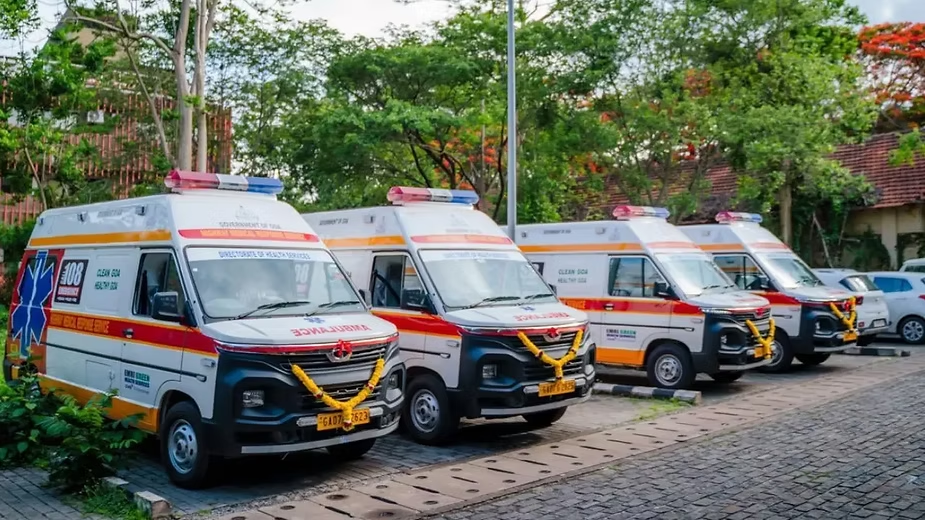
New Advanced Life Support fleet aims to improve trauma care, reduce emergency response time, and strengthen Goa’s disaster preparedness on major highways
At a Glance
- Goa has inducted 4 Advanced Life Support (ALS) ambulances exclusively for highway medical response.
- The fleet has been procured under the state’s Disaster Management Initiative at a cost of ₹1.43 crore.
- The ambulances will be operated by the Directorate of Health Services (DHS).
- The objective is to provide faster emergency care during road accidents, disasters, and other life-threatening situations on Goa’s highways.
- The initiative forms part of Goa’s broader effort to strengthen emergency healthcare infrastructure.
When Every Minute Matters, Preparedness Becomes Public Policy
Most people never notice an ambulance until they need one.
It is one of those public services that quietly waits in the background, invisible during ordinary days but indispensable during extraordinary moments. On a busy highway, where traffic moves quickly and help can often be several kilometres away, the difference between life and death is frequently measured not in hours but in minutes.
That reality is shaping how governments across India are beginning to think about emergency healthcare. Rather than simply expanding hospital infrastructure, there is increasing recognition that medical intervention must begin long before a patient reaches an emergency ward.
Goa has now taken another step in that direction.
The state government has inducted four Advanced Life Support ambulances dedicated exclusively to highway medical response. While the announcement may appear modest compared to large infrastructure projects, it represents an important shift in emergency healthcare planning. Instead of adding vehicles to an existing fleet, Goa is creating specialised emergency assets focused on one of the state’s most time-sensitive public health challenges.
For residents, daily commuters and the millions of tourists who travel across Goa every year, the investment reflects an effort to improve preparedness where speed matters most.
More Than Four Ambulances. A Dedicated Emergency Response Network.
Chief Minister Dr. Pramod Sawant recently flagged off four Advanced Life Support ambulances for the Directorate of Health Services under the state’s Disaster Management Initiative.
The specialised vehicles have been procured at a total cost of ₹1.43 crore and will not be used for routine patient transport. Instead, they will remain dedicated exclusively to responding to medical emergencies occurring along Goa’s highway network.
Unlike conventional ambulances, Advanced Life Support units are equipped to provide critical emergency care while a patient is being transported. They typically carry advanced monitoring equipment, cardiac support systems, oxygen delivery systems, defibrillators, airway management devices and medicines required to stabilise critically injured patients before they reach a hospital.
According to the government, the objective is straightforward: reduce response time and ensure that emergency medical care reaches patients as quickly as possible during road accidents and disaster situations.
The Directorate of Health Services will oversee deployment and operations, allowing the vehicles to be positioned strategically for rapid access to major highway corridors across the state.
Why Goa’s Highways Need Faster Medical Response
Road infrastructure across Goa has undergone significant transformation over the past decade.
National highways have been widened, new bypasses have improved connectivity, freight movement has increased and tourism continues to bring millions of visitors to the state each year. While these developments have improved mobility and economic activity, they have also increased the importance of maintaining a robust emergency response system capable of serving fast-moving highway traffic.
Emergency medicine specialists often describe the first sixty minutes after a serious injury as the “golden hour.” During this period, rapid assessment, airway management, bleeding control and immediate transport to definitive care can dramatically improve survival rates.
Every minute saved before advanced treatment begins increases the possibility of better clinical outcomes.
This is why modern emergency healthcare increasingly focuses on taking treatment to the patient rather than waiting for the patient to reach treatment.
The addition of Advanced Life Support ambulances reflects this philosophy.
Instead of functioning only as transport vehicles, they become mobile emergency care units capable of beginning life-saving intervention immediately after reaching the patient.
For Goa, where long tourist corridors, inter-district travel and seasonal traffic congestion are common, reducing emergency response time has the potential to improve outcomes across a wide range of medical emergencies, not only road crashes but also cardiac events, medical collapses and disaster situations requiring rapid evacuation.
A Shift from Infrastructure to Preparedness
Governments are often evaluated through projects that people can easily see:
bridges, roads, airports and buildings.
Emergency preparedness is different.
Its success is measured by what does not happen.
A patient survives because treatment arrived sooner.
A family reaches hospital in time.
A critical condition is stabilised before complications develop.
These outcomes rarely generate headlines, yet they represent some of the most important indicators of healthcare capacity.
The induction of four specialised ambulances therefore reflects more than the purchase of medical vehicles. It signals an attempt to strengthen an entire chain of emergency response beginning at the roadside and extending through hospital care.
Preparedness is becoming infrastructure in its own right.
As Goa continues investing in healthcare systems, disaster management and public safety, initiatives like these demonstrate that resilience is not built only inside hospitals. It also depends on how efficiently help reaches people when they need it most.
That philosophy is likely to shape future investments in emergency medicine across the state as healthcare planning increasingly moves beyond hospital walls and into communities, highways and public spaces where emergencies actually begin.
Building Capacity Before Emergencies Strike
Chief Minister Dr. Pramod Sawant has described the initiative as part of Goa’s commitment to strengthening emergency healthcare infrastructure and disaster response systems.
According to the government, the four Advanced Life Support ambulances will remain dedicated exclusively to highway medical response. The objective is to ensure that emergency healthcare reaches people requiring urgent medical attention in the shortest possible time, particularly during road accidents and disaster situations.
The ambulances have been procured under the Disaster Management Initiative at a total cost of ₹1.43 crore and will be operated by the Directorate of Health Services.
The initiative also aligns with a broader pattern of investment in healthcare infrastructure, emergency preparedness and public service delivery that the Goa government has highlighted over recent years.
Emergency physicians consistently emphasise that trauma care begins long before a patient enters an operating theatre.
International research shows that reducing pre-hospital response time improves the chances of survival in severe trauma cases. Advanced Life Support ambulances equipped with cardiac monitors, oxygen systems, airway management equipment, defibrillators and trained medical personnel enable life-saving interventions to begin immediately after reaching the patient rather than after hospital admission.
For Goa, where tourist traffic fluctuates significantly across seasons and highway travel remains essential for connectivity, specialised emergency response capability is increasingly viewed as an important component of healthcare resilience.
Over the coming months, the Directorate of Health Services is expected to position the ambulances strategically along major highway corridors and integrate them into Goa’s emergency response framework.
The true success of the initiative will ultimately be measured not by the number of vehicles added to the fleet but by reduced response times, improved patient outcomes and stronger public confidence in emergency medical services.
If these objectives are achieved, the project could serve as a model for future investments in specialised emergency healthcare across Goa.