


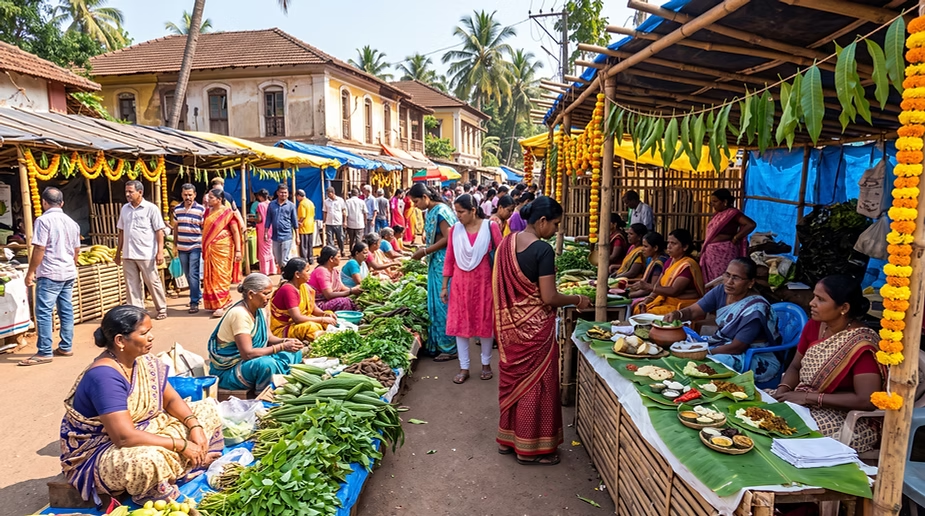
Long before supermarket shelves and imported greens, Goa’s kitchens ran on what the forest gave – bamboo shoots, wild tubers, leafy creepers gathered from paddy edges and monsoon-soaked hillsides. That way of eating faded as younger Goans turned toward familiar, store-bought vegetables. The Ran-Bhaji Festival exists to pull it back.
On August 9, 2026, Ravindra Bhavan in Margao filled with dishes built entirely from Goa’s forest and wild vegetables – collectively known as Ran Bhaji. School students, self-help groups and home cooks plated cutlets, curries and chutneys, explaining where each ingredient came from and how their families had always cooked it. The Balraam Charitable Trust organised the festival alongside support from the CM Pramod Sawant-led Goa government, especially the State Biodiversity Board, the Department of Tribal Welfare, and the Department of Agriculture.
PWD Minister Digambar Kamat urged families to eat “at least two to three Ran-Bhaji varieties” daily and suggested turning it into an actual brand, alongside cashew feni and Goan sausage. Tribal Welfare Minister Ramesh Tawadkar said the government is planning a dedicated Ran-Bhaji retail outlet and will carry the festival format across the state, citing inventive plates like forest-vegetable ice cream and momos as proof of its reach. MLA Deviya Rane and BJP state president Damodar Naik both pushed the idea further, urging that Ran-Bhaji move from festival stalls into everyday kitchen gardens.
The initiative carries the Chief Minister’s own imprint. Dr. Pramod Sawant has previously inaugurated a Ran-Bhaji Mahotsav at Lata in Sattari, and in January 2026 he inaugurated the state’s first Goa Forest Diversity Festival in Panaji, whose centrepiece – the Forest Kitchen – showcased tribal and forest-community cuisine. Commending the effort, Sawant said it would help visitors “experience Goa’s forests, waterfalls and forest biodiversity,” calling it part of a push to promote Goa “beyond beaches.”
Read Also: Goa’s Kunbi Weaving Legacy Continues on National Handloom Day
The Margao festival’s three-department backing – Biodiversity Board, Tribal Welfare, Agriculture – runs through the same Sawant administration, part of a wider conservation push the Chief Minister has framed around protecting Goa’s jal, jungle, jameen: water, forest and land.
The model traces back to September 2023, when Adarsh Yuva Sangh held the first Raanbhaji Utsav in Chaudi, Canacona, with the same Biodiversity Board and Tribal Welfare Department support. That debut drew 225 dishes from 42 forest-vegetable varieties, with 39 self-help groups and students from 17 schools and colleges taking part.
The plate itself is an education: bamboo shoots (kille), leafy teniya bhaji, tuber-based chaie bhaji, and kayriyo – boiled Entada scandens seeds – served with sanna, wheet and nachni bhakri. Younger cooks have pushed further, with vegetable momos, vataloo cutlets and herpule chutney.
Nearly 200 wild vegetable varieties are estimated to grow across Goa’s forests, most rich in fibre, protein and micronutrients – exactly the low-input food security state policy wants to encourage. With a retail outlet in the works and the festival spreading to new talukas, Ran-Bhaji looks less like an annual curiosity than the start of a genuine comeback for Goa’s forgotten forest flavours.
Read Also: Goa’s Heritage Gets a New Tourism Push