


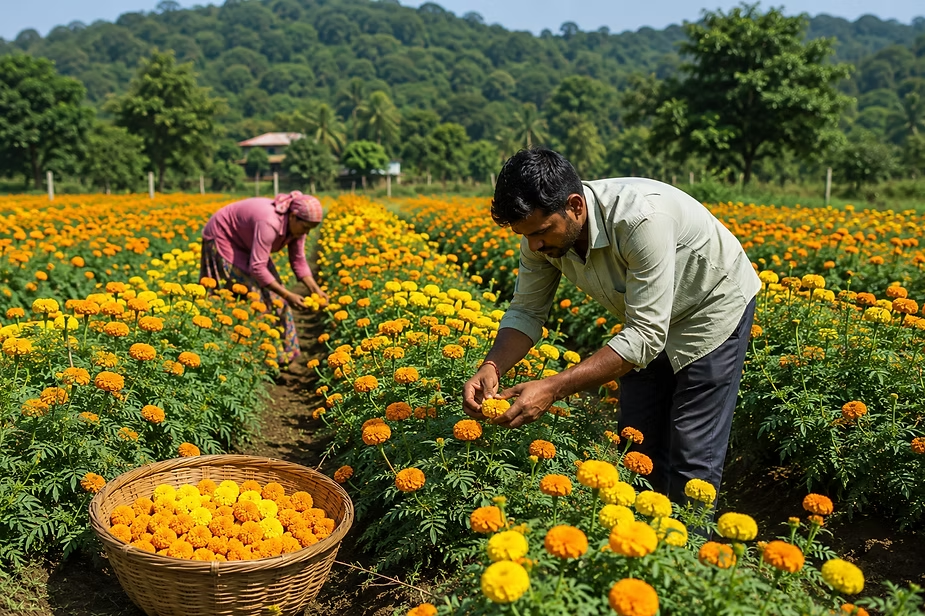
Supported by government schemes, farmers across Sattari are expanding commercial marigold cultivation, signalling a revival of local floriculture and reducing Goa’s dependence on flowers sourced from neighbouring states.
The bright orange and yellow marigolds adorning Goa’s temples, homes and public celebrations have symbolised the arrival of the festive season. Yet, despite the state’s agricultural heritage, a significant share of these flowers has traditionally arrived from neighbouring Karnataka and Maharashtra to meet seasonal demand.
This year, that familiar supply chain is beginning to shift.
Across villages in Sattari taluka, farmers have expanded commercial marigold cultivation ahead of Ganesh Chaturthi, Navratri and Diwali, encouraged by state agricultural support schemes and the promise of a reliable festive market. The development reflects a broader effort by the Goa government under Chief Minister Pramod Sawant to strengthen horticulture, diversify farm incomes and encourage farmers to tap into high-value seasonal crops.
The initiative is modest in scale when compared with Goa’s larger agricultural programmes, but its implications extend well beyond flower fields. It represents an attempt to create stronger local supply chains, improve farm profitability and retain more of the festive economy within the state.
A Seasonal Crop with Economic Potential
Marigold cultivation has long been recognised as one of the more commercially viable short-duration crops for small and marginal farmers. The crop matures relatively quickly, requires comparatively lower investment than many horticultural crops, and experiences a predictable surge in demand during India’s festive calendar.
From household decorations and temple rituals to weddings, community festivals and religious ceremonies, marigolds remain among the most sought-after flowers in Goa during the second half of the year.
This seasonal demand creates a valuable opportunity for farmers to supplement their agricultural income within a few months of cultivation.
Recognising this potential, the Goa Department of Agriculture has been encouraging farmers to adopt commercial floriculture through financial assistance and technical support under various state agricultural schemes.
Why Sattari?
Sattari has emerged as one of Goa’s most suitable regions for expanding floriculture because of its favourable agro-climatic conditions, availability of cultivable land and long-standing farming tradition.
Many farmers in the taluka have traditionally cultivated paddy, vegetables and other seasonal crops. However, fluctuating market prices, changing rainfall patterns and increasing cultivation costs have prompted many to diversify into crops offering higher returns.
Marigolds have become an attractive option because they provide farmers with access to a guaranteed seasonal market while requiring a relatively short cultivation cycle.
According to local reports, farmers across the taluka have increased acreage under marigold cultivation this year specifically to cater to festive demand expected over the coming months.
Government Support Driving Expansion
The expansion has been supported through schemes implemented by the Goa Department of Agriculture, which provides financial assistance and technical guidance for commercial flower cultivation.
The broader policy direction aligns with the Pramod Sawant government’s continued emphasis on strengthening agriculture, improving farmer incomes and promoting crop diversification across rural Goa.
Rather than relying solely on traditional food crops, the government has increasingly encouraged farmers to explore horticulture, floriculture and other value-added agricultural activities that can generate higher returns from smaller landholdings.
For farmers, such support reduces the initial financial burden associated with commercial cultivation while improving access to quality planting material and scientific farming practices.
Read Also: Goa’s AI Traffic Cameras Are Live. Here’s What Every Motorist Needs to Know Before Your Next Drive
Reducing Dependence on Imported Flowers
Every festive season, Goa’s flower markets witness a large inflow of marigolds transported from neighbouring states.
While these supplies have consistently met consumer demand, they also mean that a considerable share of festival-related spending leaves Goa’s rural economy.
Greater local production offers multiple advantages.
Flowers harvested within the state reach markets faster, remain fresher for longer and reduce transportation costs. More importantly, consumer spending circulates within Goa’s farming communities instead of flowing to producers outside the state.
Although local cultivation is unlikely to replace external supplies entirely in the immediate future, increased production from Sattari represents a meaningful step towards improving the state’s self-reliance in seasonal floriculture.
More Than Just Flowers
The significance of marigold cultivation extends beyond the festive economy.
For many farming families, floriculture provides an additional source of income that complements traditional agricultural activities. It also encourages younger farmers to view agriculture as a commercially viable enterprise rather than solely a subsistence occupation.
As Goa continues to promote diversification within its agricultural sector, successful floriculture initiatives could inspire similar expansion into other high-value crops suited to local conditions.
The revival of marigold cultivation in Sattari therefore represents more than colourful fields ahead of the festive season. It reflects an evolving rural economy where government support, market demand and farmer entrepreneurship are beginning to work together.
Whether this momentum continues beyond the festive months will depend on sustained market access, continued institutional support and the willingness of more farmers to adopt commercial floriculture.
For now, however, the blooming marigold fields of Sattari offer a visible reminder that even small agricultural shifts can contribute to stronger rural livelihoods while helping Goa celebrate its festivals with flowers grown closer to home.