


The Goa government has rolled out new schemes to restore traditional khazan farming and promote crops such as dragon fruit, marking one of the first major implementations of the Goa State Amritkal Agriculture Policy 2025.
At a Glance
- Goa has announced new schemes to revive abandoned khazan lands.
- Farmers can receive fully subsidised salt-tolerant paddy seeds, including the indigenous Korgut variety.
- The state is also encouraging cultivation of high-value crops such as dragon fruit.
- The initiatives align with commitments made under the Goa State Amritkal Agriculture Policy 2025.
- The larger objective is to improve farm incomes while preserving Goa’s unique agricultural heritage.
Goa’s Farming Story Is Entering a New Chapter
For decades, Goa’s agricultural debate has centred on decline.
Khazan lands remained uncultivated. Labour shortages increased. Younger generations increasingly viewed farming as an uncertain livelihood rather than a viable profession.
The government’s latest agriculture initiatives attempt to change that narrative.
Instead of treating agriculture purely as food production, the new approach focuses on economics. Traditional farming is being supported where it has ecological value, while new cash crops are being promoted where they can improve farmer incomes.
It represents one of the clearest policy shifts since the Goa State Amritkal Agriculture Policy was notified in 2025.
[READ ALSO: Goa’s Illegal Plant Nurseries Are Back Under Scanner. Why This Crackdown Could Protect Every Farmer and Gardener]
From Policy to Implementation
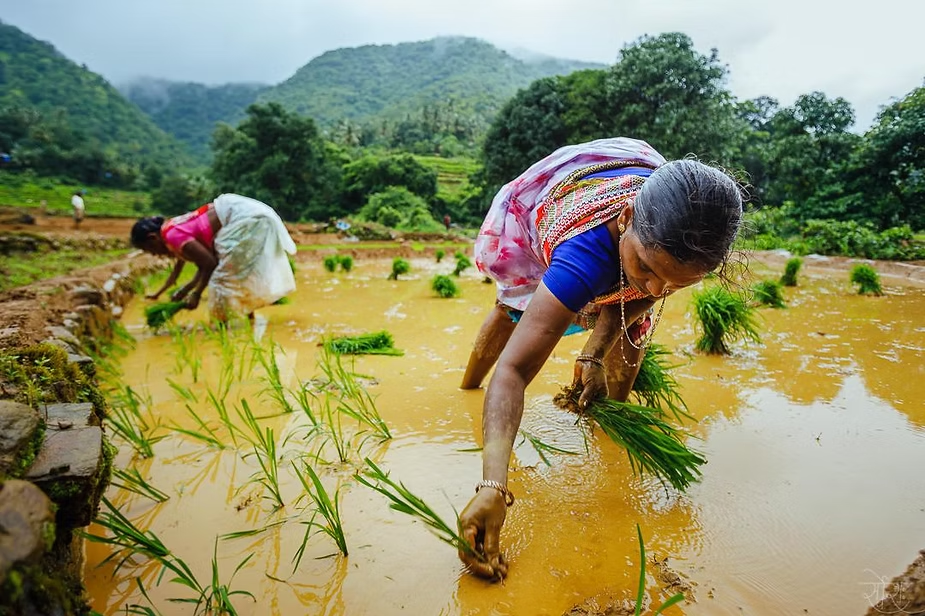
The Directorate of Agriculture has notified multiple schemes aimed at reviving cultivation across Goa’s khazan lands.
Eligible farmers cultivating saline lands can receive up to 100 kilograms of fully subsidised salt-tolerant paddy seeds, including Goa’s indigenous Korgut variety.
Additional measures include:
- 50 percent subsidy on certified paddy, pulse and oilseed seeds
- Free seed minikits
- Support for mechanised paddy transplanting
- Incentives of ₹20,000 per hectare under the System of Rice Intensification
- Demonstration plots showcasing improved cultivation practices
Collectively, these interventions seek to reduce cultivation costs while encouraging more land to return to production.
Why This Matters Beyond Paddy
The second half of the government’s strategy looks very different.
Rather than relying solely on traditional crops, agriculture officials are encouraging farmers to diversify into high-value horticulture.
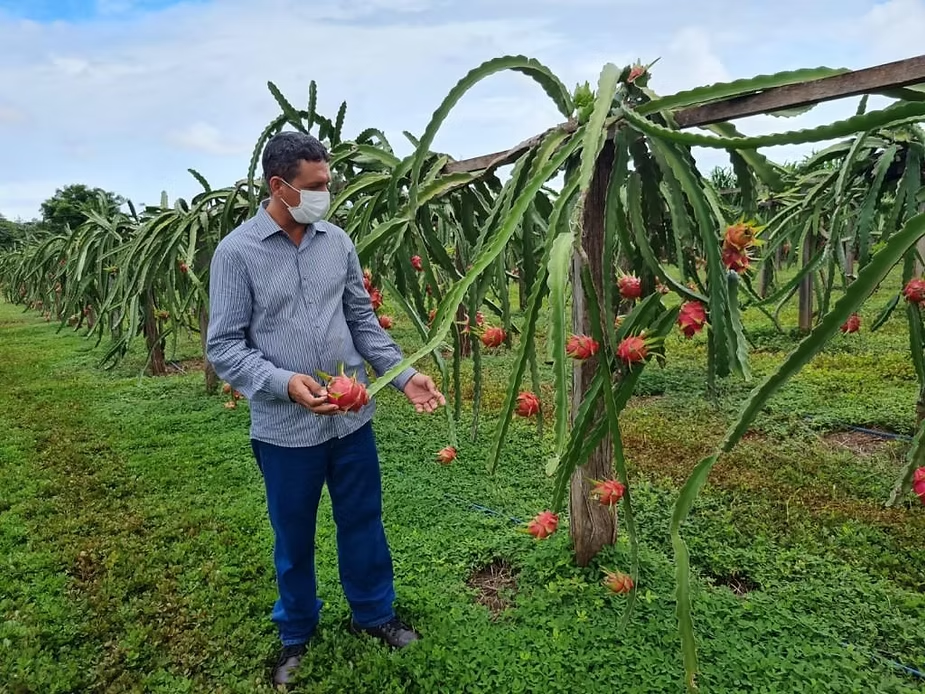
Dragon fruit has emerged as one of the strongest candidates.
According to ICAR Krishi Vigyan Kendra experts, the crop requires minimal irrigation, very limited pesticide use and comparatively low maintenance after establishment. A plantation can continue producing fruit for six to eight years, making it attractive for young entrepreneurs looking for predictable long-term returns. Market prices currently begin at around ₹150 per kilogram according to local experts quoted by The Times of India.
Read Also: How Goa Quietly Rebuilt Its Education System in Just Five Years
The Sawant Government’s Agriculture Strategy
Chief Minister Pramod Sawant has consistently argued that agriculture must become commercially viable if Goa wants younger generations to remain in farming.
The Goa State Amritkal Agriculture Policy 2025 committed to reviving fallow and khazan lands, supporting agri-enterprises and expanding budgetary support for agriculture. It also proposed dedicated investment for restoring abandoned agricultural landscapes and encouraging entrepreneurship across horticulture, processing and allied sectors.
Since then, the government has also promoted community farming, mechanisation, agri-drone demonstrations and scientific interventions through ICAR partnerships.
Why Khazan Lands Matter
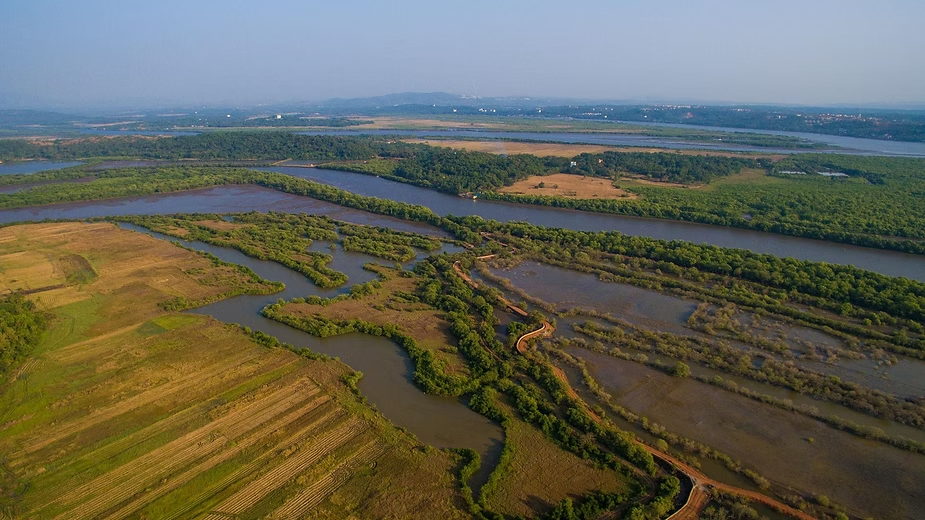
Khazan lands are among Goa’s oldest engineered agricultural systems.
Protected by bunds and sluice gates, these reclaimed coastal lands allow cultivation despite saline conditions. Besides producing food, they play an important role in flood management, groundwater regulation and biodiversity conservation.
Years of neglect, labour shortages and rising cultivation costs have left many khazan fields uncultivated.
Their restoration therefore has environmental as well as economic significance.
What It Means for Farmer
For farmers, the schemes reduce the initial cost of cultivation.
For consumers, bringing more farmland back into production could strengthen local food systems.
For rural Goa, higher-value agriculture may create new opportunities for entrepreneurship, especially among younger farmers who are willing to adopt modern cultivation techniques.
The government says these schemes are intended to increase cultivation, improve farm productivity and make agriculture financially sustainable through a combination of traditional crop revival and income diversification.