


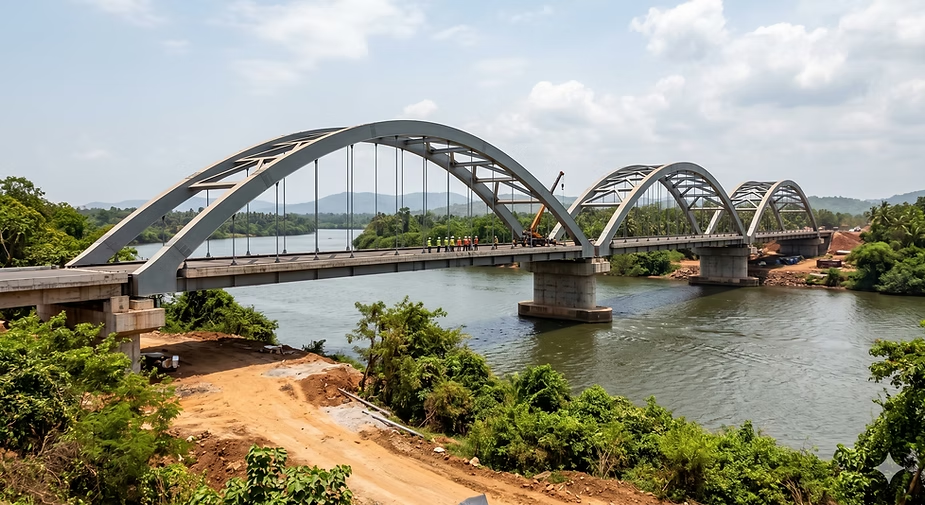
As the skies over Goa transition from the scorching, humid blue of late May to the ominous, heavy grey that heralds the arrival of the southwest monsoon, a palpable sense of anxiety is gripping the residents of Pernem taluka. In the rural heartlands of North Goa, the rhythmic change of seasons dictates the pace of life, agriculture, and commerce. However, this year, for the villagers of Chandel and Hasapur, the impending rains bring not just the promise of a bountiful harvest, but a deep-seated fear of complete geographic and economic isolation. At the center of this brewing storm is the highly anticipated, yet perilously delayed, Chandel-Hasapur Bridge spanning the Kalna River.
For decades, the rural communities of Pernem have relied on a narrow, dilapidated structure to cross the Kalna River. This older bridge, estimated to be over four decades old, had long outlived its structural integrity. It was a relic of a bygone era, built for a time when the traffic consisted mostly of pedestrians, bicycles, and the occasional bullock cart. Fast forward to the present day, and the landscape of Pernem has been irrevocably altered. The inauguration of the nearby Manohar International Airport at Mopa has transformed the region into a bustling hub of transit. The sleepy, single-lane roads now bear the heavy load of commercial taxis, construction trucks, and a daily surge of airport-bound commuters. The old bridge was simply not equipped to handle this modern vehicular onslaught, making crossing a harrowing, life-risking daily chore for locals.
Recognizing the urgent need for a massive infrastructure upgrade, the Public Works Department (PWD) initiated the process to replace the aging menace. In June 2025, an official tender was floated for the re-construction of a new three-span bridge over the Kalna River, situated in the Village Panchayat of Chandel-Hasapur. Valued at approximately ₹21.84 crore, the project was envisioned not just as a replacement, but as a modern engineering marvel designed to safeguard rural travel and support heavy traffic capacities for generations to come. The design chosen was a robust three-span steel structure—a rarity in Goa’s predominantly concrete-heavy rural infrastructure portfolio.
The decision to utilize a steel framework was strategic. Steel bridges offer superior tensile strength, flexibility to withstand shifting loads, and generally allow for faster assembly compared to traditional cast-in-place concrete structures. The blueprint promised a wide, all-weather arterial route that would permanently eliminate the bottlenecks and safety hazards that had plagued the Chandel-Hasapur stretch. When the official work order was finally issued and ground was broken in January 2026, there was a collective sigh of relief among the locals. The initial timeline was ambitious, with authorities and local representatives, including Pernem MLA Pravin Arlekar, projecting that the bridge would be fully operational by April 2026, well before the first monsoon showers.
However, the journey from blueprint to reality is rarely a straight line, especially in the realm of public infrastructure. Despite the optimistic start, the project soon found itself ensnared in the familiar web of bureaucratic delays and inter-departmental friction. According to local sources and civic activists, a crucial two-month delay in issuing specific official work orders, compounded by a month lost to coordination chaos within the Water Resources Department, severely derailed the construction timeline. What was meant to be a comfortable sprint to an April finish line suddenly turned into a frantic, high-stakes marathon against the approaching monsoon.
As of late May 2026, the construction site is a hive of relentless activity. Workers are laboring on a “war footing,” rushing to tie massive iron structures and pour concrete over the newly mounted main iron arches. The sheer scale of the structural progress achieved in barely four months is commendable, but the unforgiving laws of chemistry and meteorology wait for no one. The final surface layer of the bridge requires adequate time for the concrete to cure and set safely before it can bear the immense weight of commercial vehicles. With the monsoon expected to hit the Goan coast at any moment, authorities have had to swallow a bitter pill, privately admitting that officially opening the route to heavy vehicular traffic before the rains arrive is virtually impossible.
This delay has birthed a secondary, far more immediate crisis: the precarious state of the temporary diversion route. To facilitate the demolition of the old bridge and the construction of the new ₹21.84 crore structure, a makeshift bypass was created. This temporary lifeline is essentially a pipe bridge built upon a foundation of soil filling. For the past five months, commuters have gingerly navigated this frail structure. During the dry winter and summer months, the dirt bypass served its purpose. But under the relentless, torrential downpours typical of a Goan monsoon, an earthen embankment stands little chance.
The Kalna River, like many of Goa’s water bodies, is known to swell rapidly during heavy rains. Local activists, including prominent voice Uday Mahale, have raised urgent alarms regarding the structural integrity of this bypass. The fear is twofold. First, the soil filling is highly susceptible to severe erosion the moment water levels rise. Second, if the pipes become clogged with monsoon debris—branches, plastic, and silt—the water pressure will inevitably wash the entire temporary bridge away. If this nightmare scenario unfolds, Chandel and Hasapur will be effectively severed from the rest of Pernem taluka.
The socio-economic ramifications of such an isolation would be devastating. The Chandel-Hasapur route is a vital arterial link for the local economy. Hundreds of local youth and breadwinners have found employment as taxi operators servicing the new Mopa airport. A washed-out bypass means they would be forced to take massive, fuel-consuming detours, eating into their daily wages and jeopardizing their livelihoods. Furthermore, the route is critical for daily wagers, students, and, most importantly, medical emergencies. The prospect of an ambulance being unable to reach a hospital due to a flooded, collapsed dirt road is a terrifying reality that the villagers are grappling with as the skies darken.
The local administration is acutely aware of the ticking clock and the rising panic. Pernem MLA Pravin Arlekar, who recently conducted an extensive on-site inspection alongside Sarpanch Bala Shetkar and PWD officials, has been actively attempting to assuage the fears of his constituents. He has publicly acknowledged the immense patience shown by the locals over the last few months and highlighted the extraordinary speed at which the contractor has executed the primary steel and concrete works. Recognizing the very real threat posed by the temporary diversion, Arlekar has assured the public that the PWD has drafted comprehensive contingency plans to address sudden water surges and prevent total isolation.
Yet, assurances on paper offer little comfort against the raw power of nature. The community’s collective memory is scarred by previous instances across Goa where poorly planned diversions have crumbled under the weight of the monsoon, leaving villages stranded for days. The residents of Chandel and Hasapur are caught in an agonizing limbo. They can see the magnificent new steel arches of their future bridge rising proudly over the Kalna River—a symbol of progress, safety, and modern engineering. It is tantalizingly close to completion, representing a permanent end to decades of perilous commutes. But standing between them and that future is a fragile dirt mound and a rapidly closing window of dry weather.
The situation highlights a broader, systemic issue within India’s rural infrastructure development framework. While the intent to upgrade and modernize is clear and heavily funded, the execution often fails to account for the harsh realities of local micro-climates. In states like Goa, where the monsoon is a dominant, destructive force, construction timelines cannot afford the luxury of bureaucratic lethargy. Every day lost to paperwork or departmental miscommunication in January is a day stolen from the critical curing time needed in May. The Chandel-Hasapur bridge is a textbook example of how administrative oversights at the top can lead to genuine, on-the-ground panic for the common citizen.
As May draws to a close, all eyes in Pernem are on the sky and the construction site. The engineers and laborers are pushing themselves to the limit, pouring the final layers of concrete and securing the heavy steel trusses. They are not just building a bridge; they are fighting a desperate battle against time, hoping to secure at least a pedestrian and light-motor-vehicle pathway before the heavens open.
Ultimately, the new Chandel-Hasapur bridge will stand as a monumental achievement for the PWD and the local government. Once the concrete sets and the monsoon passes, the ₹22 crore investment will yield a transformative economic and social dividend for the region. It will seamlessly connect rural Goa to the booming Mopa airport corridor, drastically reduce travel time, and guarantee an all-weather, heavy-capacity route that will last for decades. But until that red ribbon is cut and the first tires roll across the finished asphalt, the people of Chandel and Hasapur must hold their breath, cross their fingers, and hope that their fragile dirt bypass can weather the impending storm.