


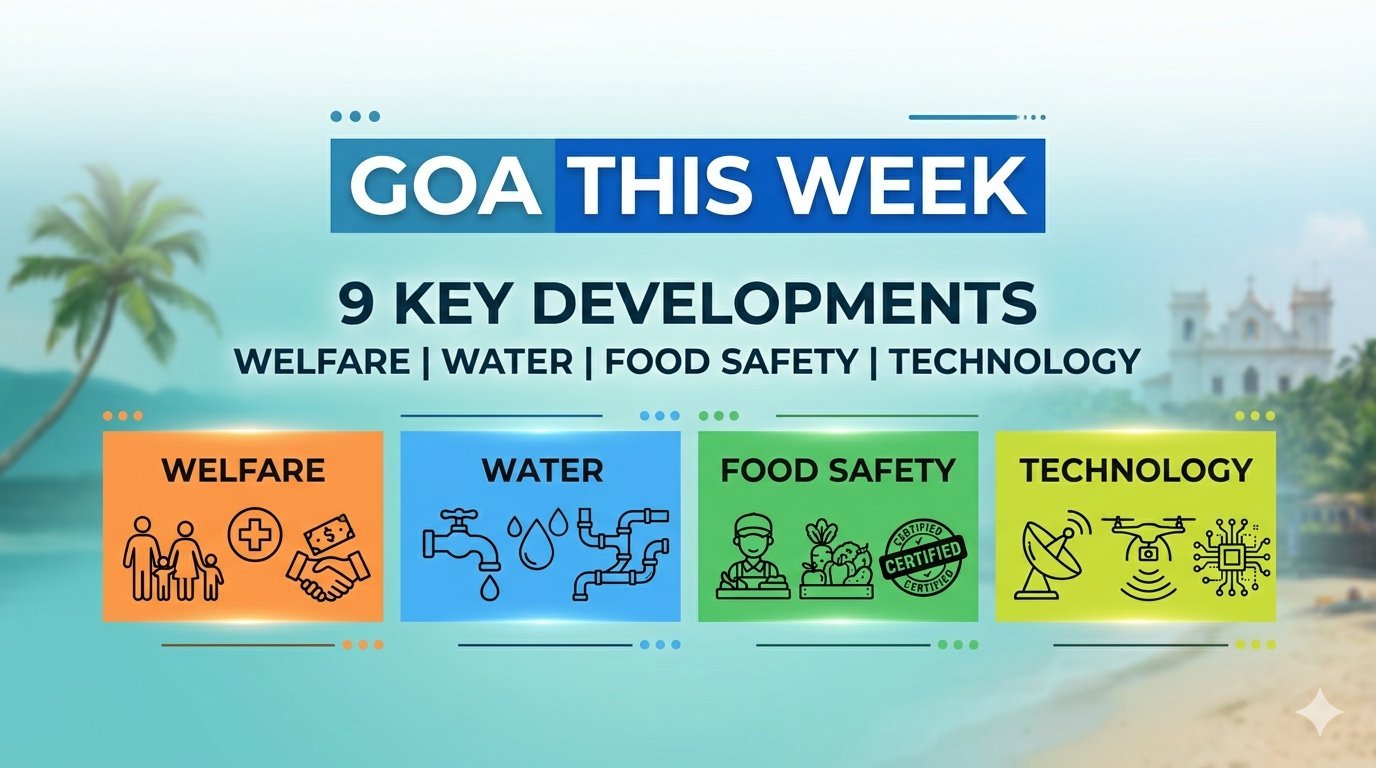
Goa’s public agenda this week covered a range of issues affecting residents, from water infrastructure and food safety enforcement to voter registration and access to essential supplies. The developments also highlighted the state’s focus on water conservation, Konkani language proficiency and the potential role of artificial intelligence in governance.
Here is a closer look at nine developments to watch.
1. Goa Raises Wildlife Death Compensation to ₹15 Lakh
Goa has increased compensation to ₹15 lakh for human deaths caused by wild animals, enhancing the financial assistance available to families affected by such incidents.
The revised amount brings attention to the challenges of human-wildlife interactions and the need to support affected households. The applicable eligibility criteria and implementation details would determine how families can access the enhanced compensation.
2. New Pumping Station Inaugurated in Calangute
Water infrastructure received attention with the inauguration of a new pumping station in Calangute.
Pumping stations play an important role in moving water through distribution networks and supporting supply management. The new facility is intended to strengthen local water infrastructure, although its specific capacity and the areas expected to benefit would need to be confirmed through official details.
3. FDA Launches Drive Against Unlicensed Caterers and Unregistered Party Halls
Goa’s Food and Drugs Administration (FDA) has launched an enforcement drive targeting unlicensed caterers and unregistered party halls.
The action places food safety compliance in focus, particularly at venues and businesses involved in preparing and serving food for gatherings and events. Appropriate licensing, registration and adherence to food safety requirements are important safeguards for consumers.
The drive also serves as a reminder to food businesses to verify that their operations meet the applicable regulatory requirements.
4. 80 of 100 Planned Bandharas Reportedly Completed
Goa has reportedly completed 80 of the 100 planned bandharas, marking progress in the state’s water conservation efforts.
Bandharas, or small barriers built across streams and water channels, can help retain water and support groundwater recharge, depending on their design, location and local conditions. They can also contribute to water availability during drier periods.
With 80 structures reportedly completed, the remaining work will be important in determining the overall reach of the initiative. The locations of the completed bandharas and their measurable impact on water storage would provide a clearer picture of the programme’s progress.
5. Free Konkani Proficiency Training for Eligible GSSC Candidates
Eligible candidates appearing for Goa Staff Selection Commission (GSSC) recruitment can access free Konkani proficiency training, according to the announcement.
Konkani proficiency is an important consideration in Goa’s public administration, where the local language plays a significant role in communication with residents. The training initiative could help candidates strengthen their language skills as they prepare for government recruitment requirements.
Candidates should check the official announcement for eligibility conditions, registration procedures and training schedules.
6. Proposed Goa AI Policy 2026 Outlines Technology Roadmap
The proposed Goa AI Policy 2026 sets out a roadmap for artificial intelligence adoption and governance in the state.
Artificial intelligence is increasingly being explored for applications ranging from public service delivery and administrative efficiency to data analysis and digital systems. A policy framework can help establish priorities, define governance principles and guide the responsible use of emerging technologies.
The policy’s eventual impact will depend on its final provisions, implementation plan, safeguards and the sectors selected for adoption. Details on proposed projects, timelines and funding would help clarify how the roadmap is expected to translate into practical outcomes.
7. Special Voter Enrolment Camps Organised
Special voter enrolment camps have been organised to help eligible citizens register on the electoral roll, including in North Goa.
Such camps can make the registration process more accessible by helping citizens understand the required procedures and submit applications. Electoral enrolment is particularly relevant for eligible first-time voters and those who need to update their details or correct entries.
Residents should consult official Election Commission and electoral registration resources for camp schedules, documentation requirements and application status.
8. Goa Announces November 2026 Ration Quota
The state has announced the ration quota for November 2026, bringing attention to the monthly distribution of essential foodgrains through the public distribution system.
For eligible households, the public distribution system remains an important channel for accessing subsidised food supplies. Clear information about allocation quantities, beneficiary categories and distribution schedules helps households plan their monthly requirements.
Beneficiaries should refer to the official notification or their local fair-price shop for the applicable quota and collection details.
9. Goa Impact Drive: Outreach and Activities
The Goa Impact Drive is another initiative to feature in the week’s roundup. Its significance will be clearer with verified information about the activities undertaken, the communities reached and the outcomes recorded.
Details such as the number of beneficiaries, locations covered, services delivered and follow-up measures would help establish the initiative’s reach and impact. These figures should be confirmed through official material before being included in a final assessment.
From Public Welfare to Technology: What Goa’s Week Reveals
This week’s developments cover several aspects of life in Goa. The increase in wildlife death compensation centres on support for affected families, while the Calangute pumping station and bandhara construction bring water infrastructure and conservation into focus.
At the same time, the FDA’s enforcement drive highlights regulatory compliance in the food sector. Konkani proficiency training and voter enrolment camps address language preparedness and civic participation, while the proposed AI Policy 2026 points towards emerging technology and governance.
Together, these updates offer a snapshot of the issues shaping Goa’s public agenda. Their longer-term significance will depend on implementation, measurable outcomes and the benefits residents ultimately receive.