
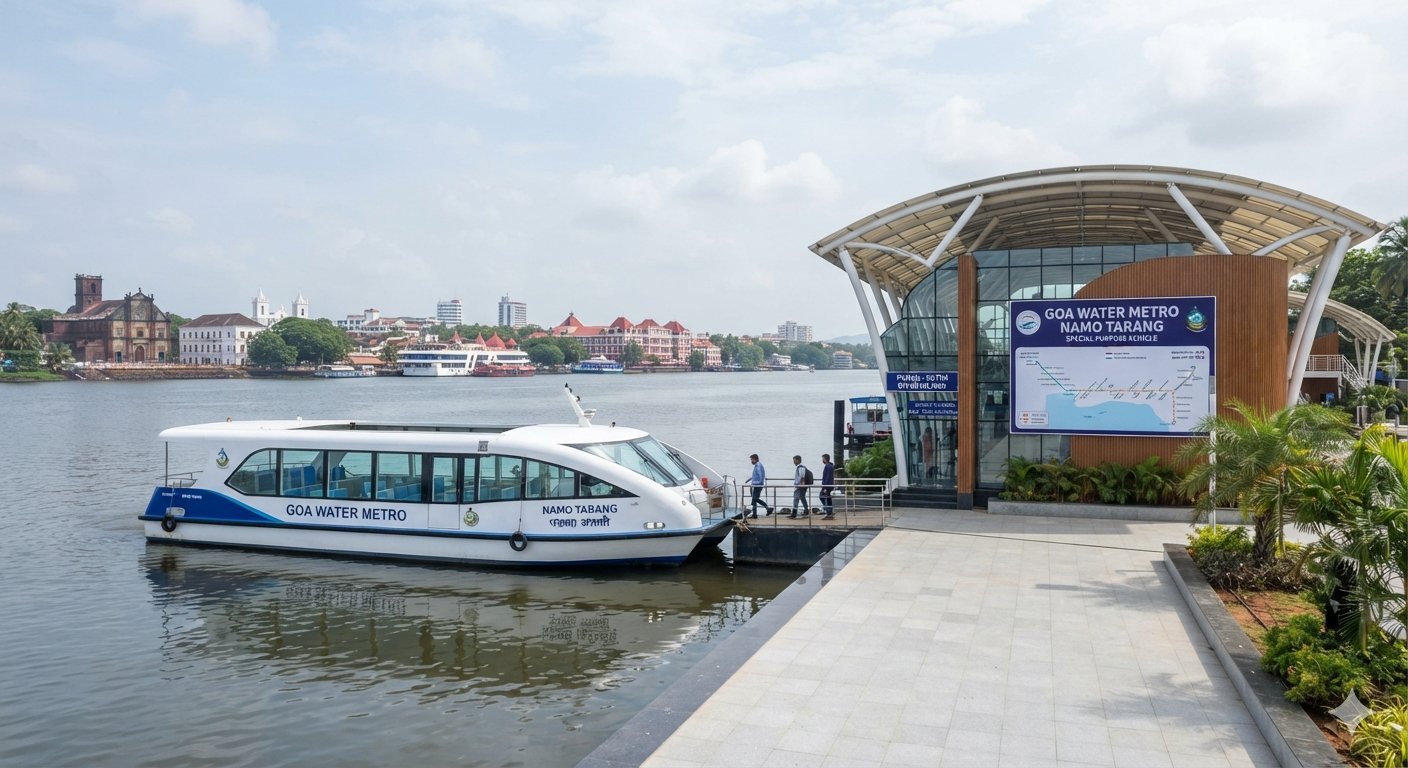
PANAJI: In a definitive move toward sustainable public infrastructure, the Goa Cabinet has officially cleared the deck for its highly anticipated ₹3,100 crore water metro project. The state government has approved the formation of a dedicated Special Purpose Vehicle (SPV), provisionally named “Namo Tarang”, to spearhead the financing, construction, operation, and long-term maintenance of the massive inland waterways network.
Positioned as an eco-friendly alternative to the state’s increasingly congested coastal roads, the project aims to seamlessly connect remote island communities with major urban economic hubs.
A Massive Blueprint for Riverine Connectivity
The ambitious transit network is designed to heavily mirror the successful operational model of the Kochi Water Metro. According to initial state briefs, the blueprint outlines a comprehensive ecosystem optimized for clean, high-frequency commuter transit:
- Extensive Network: The first phase will span 111 kilometres across 9 distinct river routes, carving out a viable secondary transit grid through Goa’s intricate river systems.
- Terminal Infrastructure: Plans include the development of 32 modern passenger terminals. Key identified locations include Panaji, Betim, Aldona, Cortalim, Divar, Chorao, Vanxim, Sarmanas, Narve, Madkai, Adpai, and Durbhat.
- Hybrid Fleet: The network will deploy a fleet of over 100 hybrid-electric vessels, significantly lowering the carbon footprint of the state’s public transportation sector.
- Commuter Impact: Once fully operational, the water metro is projected to support over 1 lakh daily commuters, drastically easing gridlock on major arterial highways.
Project Roadmap and Federal Backing
The state’s River Navigation Department (RND) has been designated as the nodal agency tasked with incorporating the SPV. To ensure world-class technical execution, Kochi Metro Rail Limited (KMRL) has been roped in to draft the Comprehensive Detailed Project Report (DPR). The finalized DPR is slated for formal submission by October 2026.
Financing remains a core focus for the state administration. Given the project’s alignment with national green energy and maritime logistics goals, the Goa government is aggressively pursuing 100% central funding from the Union Ministry of Ports, Shipping, and Waterways.
By utilizing its natural geographic advantage—an expansive network of navigable rivers and backwaters—Goa is positioning the “Namo Tarang” initiative not just as a transport upgrade, but as a critical cornerstone of its future green economy.
Read Also : ₹13 Crore Seafarers’ Welfare Centre Set To Boost Mormugao Port