


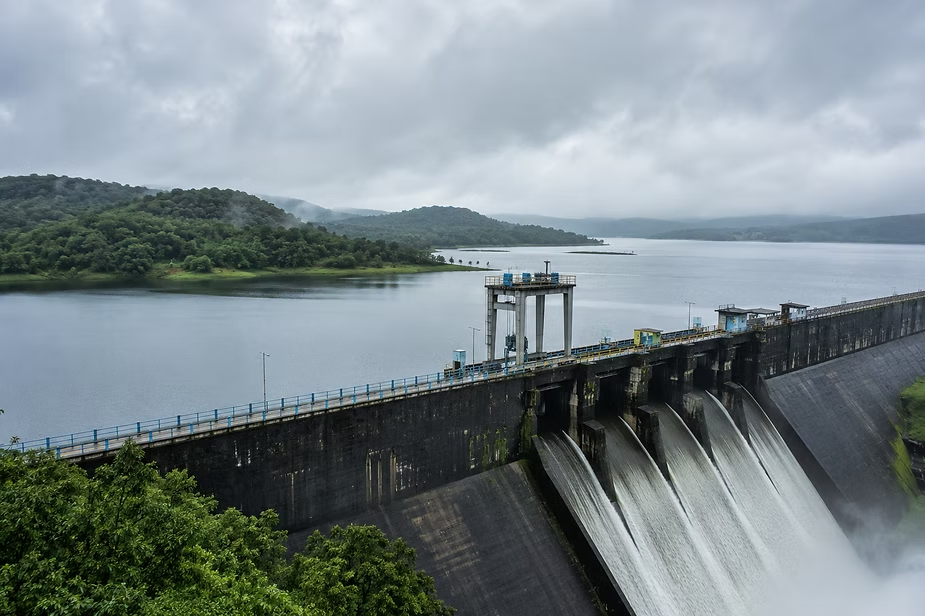
Just weeks after concerns over drinking water availability dominated public discussion, Goa’s major reservoirs have witnessed a sharp improvement following sustained monsoon rainfall. The turnaround offers relief, but also highlights why long-term water planning remains critical.
At a Glance
- Reservoir storage across Goa has increased significantly after continuous monsoon rains.
- Gaunem, Amthane, Chapoli, Selaulim and Tillari have all recorded notable improvements.
- Improved storage eases immediate concerns over drinking water supply.
- Authorities continue to monitor rainfall and reservoir inflows.
- Experts caution that one good monsoon should not replace long-term water management.
When Goa Looked Headed for a Water Crisis… Nature Changed the Script
A month ago, the conversation across Goa was remarkably different.
Questions about drinking water security dominated political debates. Concerns over falling reservoir levels sparked discussions about emergency planning, alternative water sources and whether the state needed to rethink its long-term strategy.
Then the monsoon arrived in full force.
Steady rainfall across the Western Ghats and major catchment areas transformed the picture within weeks. Reservoirs that had been under pressure began filling rapidly. Daily storage reports started telling a story that looked very different from the one many Goans had become accustomed to hearing.
Today, the state’s reservoirs are climbing steadily, offering reassurance to households, businesses and farmers alike.
It is a reminder that in a monsoon-dependent state like Goa, the water story can change remarkably fast.
The Numbers Quietly Started Moving in the Right Direction
The biggest shift has been visible in the official reservoir data.
Recent Water Resources Department figures show:
- Gaunem approaching nearly 69% storage.
- Amthane crossing approximately 65%.
- Chapoli moving beyond 53%.
- Selaulim, Goa’s largest drinking water reservoir, crossing 42%.
- Tillari also showing consistent gains.
These numbers represent a significant improvement compared to conditions before the active phase of the southwest monsoon.
Every day of sustained rainfall has translated into fresh inflows, steadily rebuilding the state’s stored water reserves.
Why This Matters Beyond Just Reservoir Levels
Reservoir percentages are not merely engineering statistics.
They determine how confidently authorities can plan drinking water supply during the coming months.
Higher storage reduces immediate stress on water distribution systems. It provides greater operational flexibility for municipalities, industries and rural supply networks.
For farmers, improving storage increases confidence about irrigation availability.
For households, it reduces fears of prolonged supply disruptions.
For businesses, especially tourism and hospitality, stable water availability is equally important during the peak visitor season.
Goa’s Geography Makes Every Monsoon Count
Unlike many states that depend on perennial river systems, Goa relies heavily on seasonal rainfall.
The southwest monsoon replenishes reservoirs, rivers and groundwater.
A delayed or weak monsoon can quickly affect storage.
Conversely, sustained rainfall across catchment regions can dramatically improve the situation within weeks.
This annual cycle makes reservoir monitoring one of the most important indicators of the state’s water security.
What It Means for Ordinary Goans
For most residents, improved reservoir levels translate into peace of mind.
Families are less likely to worry about emergency water cuts.
Businesses dependent on continuous water supply can plan with greater confidence.
Agricultural communities gain reassurance during the cultivation season.
Tourism establishments benefit from stronger infrastructure reliability.
While responsible water use remains essential, rising storage significantly improves the state’s immediate outlook.
Government Says the Situation Has Improved
The government has maintained that reservoir levels are improving as monsoon rainfall continues across catchment areas.
Officials have pointed to regular monitoring of storage levels and inflows while continuing to manage water distribution across the state.
Authorities have also reiterated that reservoir conditions are reviewed continuously throughout the monsoon to guide operational decisions.
Opposition Raised Concerns Over Water Security
Opposition leaders had earlier expressed concern about reservoir storage and future drinking water availability.
Several leaders called for discussions on additional long-term solutions and questioned whether existing infrastructure would remain sufficient under changing climatic conditions.
Those concerns formed part of a broader debate on how Goa should prepare for future water demand.
The recent improvement in reservoir levels has eased immediate pressure, although discussions about long-term planning continue.
Experts Say Relief Is Welcome, But Planning Cannot Stop Here
Water experts often distinguish between short-term storage recovery and long-term water security.
A strong monsoon can refill reservoirs rapidly.
However, population growth, urban expansion, tourism demand and changing rainfall patterns continue to pose long-term challenges.
Experts generally recommend:
- Better watershed conservation.
- Reduced leakage in supply systems.
- Improved groundwater recharge.
- Scientific demand forecasting.
- Efficient water use across sectors.
The recent recovery provides breathing room, but it does not eliminate the need for future planning.
The Data Behind the Turnaround
Key indicators include:
- Five major reservoirs reporting steady gains.
- Continuous monsoon rainfall across catchment regions.
- Improved storage compared with pre-monsoon conditions.
- Better outlook for drinking water availability.
- Reduced immediate pressure on water resource management.
Daily reservoir monitoring remains one of the most important indicators of Goa’s seasonal water outlook.
If rainfall continues across Goa’s catchment areas, reservoir storage is expected to rise further over the coming weeks.
Water managers will continue tracking inflows, storage percentages and distribution requirements.
Attention is also likely to shift toward maintaining infrastructure, conserving water resources and strengthening resilience against future dry years.
The current recovery offers welcome relief, but long-term water security will continue to depend on sustained planning rather than rainfall alone.
Goa’s water story has changed rapidly.
What began as widespread concern over shrinking storage has become a story of recovery driven by sustained monsoon rainfall. The rising reservoir levels provide genuine relief to citizens, farmers and businesses alike.
But perhaps the biggest lesson is this: reservoir data is a moving story, not a fixed headline.
As the rains continue, Goa has gained valuable breathing room. The challenge now is to use that time wisely by strengthening the systems that will determine the state’s water security long after this monsoon has passed.